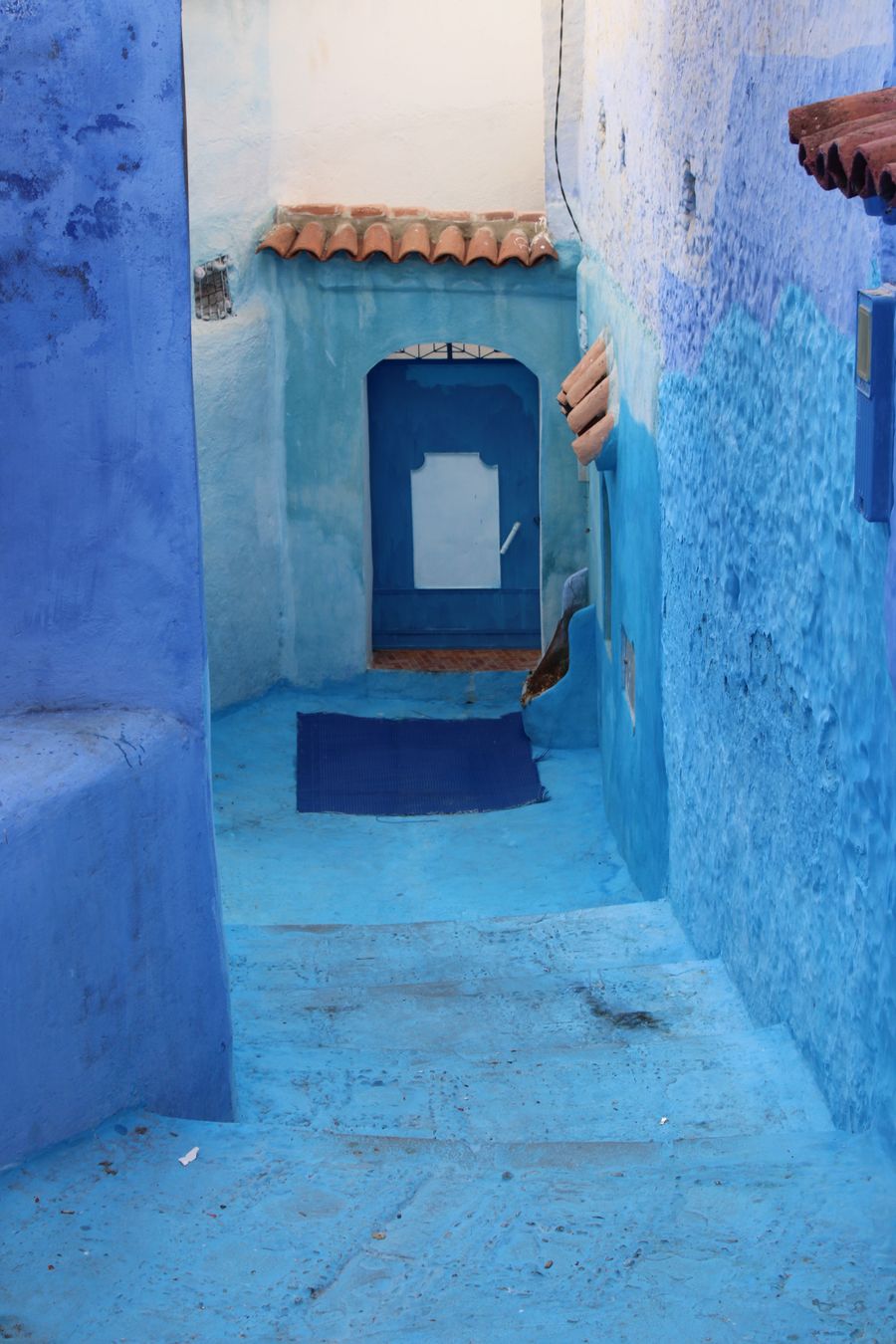
Perched high in the Rif Mountains at 600 metres above sea level, Chefchaouen is arguably Morocco's most visually arresting city. Its medina — a cascading maze of alleyways washed in every shade of blue from pale lavender to deep indigo — has made it one of the most photographed places on Earth. Yet for all its Instagram fame, Chefchaouen retains a genuine, unhurried character that draws visitors back again and again.
History of the Blue City
Chefchaouen — whose name derives from the Berber words chaoua (horns) referring to the twin peaks of Jebel Tisouka looming above town — was founded in 1471 by Moulay Ali ben Rachid, a Moroccan sharif, as a fortress city to resist Portuguese expansion along the Atlantic coast. The original settlement was small, confined to the area around the kasbah.
The city's character transformed dramatically in 1492, when the fall of Granada sent waves of Muslim and Jewish refugees from Al-Andalus into Morocco. Many settled in Chefchaouen, bringing Andalusian architectural traditions — whitewashed walls, terracotta roof tiles, carved plasterwork — that shaped the medina's appearance. The city was so sacred to Muslims that Christians were reportedly forbidden from entering under penalty of death; it was not visited by a European until 1883, when journalist Charles de Foucauld entered disguised as a rabbi.
Chefchaouen remained virtually isolated from the outside world until the Spanish occupation of northern Morocco in 1920, when Spanish troops finally entered the city and found a population still speaking a form of 15th-century Castilian Spanish. Today, traces of this linguistic heritage survive in local dialect words and family names.
The Story Behind the Blue Paint
The single most common question visitors ask: why is everything blue? The honest answer is more recent and more layered than most guides admit.
One widely repeated theory links the blue to Chefchaouen's Jewish community, brought from Andalusia. In Jewish tradition, the colour tekhelet (blue) represents the sky, the divine, and is used in prayer shawls. Jewish families are said to have painted their homes blue to reinforce spiritual connection and ward off evil. This tradition spread among Muslim neighbours until the entire medina was transformed.
However, many historians note that widespread blue painting is largely a 20th-century phenomenon. Old photographs from the Spanish colonial era (1920s-40s) show a largely white city. The current saturation of blues developed as the city attracted increasing tourism from the 1970s onward — a case of a cultural practice being enthusiastically amplified by visitor expectations.
The practical effect of the blue paint is real regardless of its origins: the lime-based whitewash mixed with blue dye acts as a mild insecticide and fungicide, keeping insects away and preventing mould in the mountain climate. Many residents now repaint their facades annually in spring, choosing from a vast palette that ranges from sky blue to cobalt, teal, and cornflower — each household selecting its own shade.
Best Photography Spots
Chefchaouen rewards early risers above all others. By 9am in summer, tour buses from Fes and Tetouan have already begun disgorging hundreds of visitors. The following spots are best visited in strict chronological order on your first morning:
Spanish Mosque at Sunset / Sunrise (Anytime Before 7am)
The Spanish Mosque sits on a hill a 20-minute walk from the medina via a switchback path beginning near Bab Onsar. Built during the Spanish Protectorate but never used as a mosque (it had no water supply), it now stands roofless and romantic, offering the best panoramic view of the entire medina spread against the mountain backdrop. At sunrise, the city glows orange-pink before turning blue as daylight strengthens. At sunset, the light is warm and golden. Avoid midday — harsh overhead sun flattens the medina's texture.
Blue Staircase (Before 6:30am)
Known locally as the "Instagram staircase," this narrow alley near Place Uta el-Hammam becomes the most photographed spot in Chefchaouen by mid-morning, with queues of visitors waiting for their solo shot. Arrive before 6:30am and you may have it entirely to yourself. The staircase is located off Rue Targhi — follow the blue archways from the central square and bear left at the second junction.
Rue Targhi
The entire stretch of Rue Targhi, running southwest from Place Uta el-Hammam, is a continuous photographic feast: flower pots hanging at head height, cat-height doorways, layers of blue receding into soft focus. The best light hits this street from 7am-9am in summer, 8am-10am in winter.
The Kasbah Walls
The ochre kasbah walls provide striking contrast against the blue alleyways that frame them. The entrance facing the main square offers a classic composition. Admission to the kasbah museum costs 20 MAD and includes access to the tower with views over the medina rooftops.
Ras El Maa Waterfall
A 10-minute walk east of the medina brings you to a small but pretty waterfall where locals do laundry in the traditional way and children play in the water. The combination of running water, mountain greenery, and blue buildings rising behind makes for compelling photographs distinct from the usual medina shots.
Exploring the Medina
The medina is genuinely small — you can walk across it in 15 minutes — which means getting lost is more charming than frustrating. Start at Place Uta el-Hammam, the central square anchored by the kasbah and the 15th-century Grand Mosque with its distinctive octagonal minaret (the only octagonal minaret in Morocco).
The Kasbah
Entry: 20 MAD. The kasbah was built by Moulay Ali ben Rachid and expanded under later sultans. Inside: a small ethnographic museum with Andalusian ceramics, traditional costumes, and old photographs of the city. The garden courtyard is planted with orange trees and roses. Climb the tower for rooftop views.
The Souks
Chefchaouen's souks are gentler than Fes or Marrakech — less pressure, more browsing. Key purchases: djellabas (traditional robes) woven locally in mountain wool, blankets with geometric Berber patterns, handmade leather goods in the tannery quarter near Bab el-Ain, and kif pipes (the Rif Mountains are historically associated with cannabis cultivation — purchasing pipes is legal, the substance less so for foreign visitors).
The main market street runs from Place Uta el-Hammam toward Bab el-Ain. Fixed-price shops exist alongside haggling stalls; the former often offer better value for casual shoppers unfamiliar with local pricing.
Neighbourhood Walks
The medina divides into roughly two characters: the tourist-facing central quarter (intensive blue, souvenir shops) and the quieter residential quarters to the northwest, where families live ordinary lives among the blue walls. The latter is worth an hour of wandering — fewer crowds, more cats, more authentic domestic textures.
Day Trips from Chefchaouen
Akchour Waterfalls (Full Day)
The most rewarding day trip from Chefchaouen, Akchour requires approximately one hour by grand taxi (negotiate at the taxi stand near Bab el-Ain; expect 150-200 MAD per person for a group of 4) followed by a hike through the Talassemtane National Park. Two options present themselves:
- God's Bridge (Pont de Dieu): A natural rock arch spanning the Farda River, reached by a relatively flat 5km trail (1.5 hours one way). Suitable for most fitness levels.
- The Big Waterfall: A more demanding 8km trail gaining 400m elevation, reaching a dramatic 100m waterfall plunging into a turquoise pool. Allow 3-4 hours each way. The swimming is excellent June-September.
Start early (depart 7am) to beat afternoon heat. Bring 2 litres of water per person. The trail is unmarked in places — local guides (available at the Akchour trailhead for 150-200 MAD) are recommended for the waterfall route.
Talassemtane National Park
The park surrounding Chefchaouen encompasses 580 km² of Rif Mountain forest, including rare Spanish fir (Abies pinsapo) and Barbary macaque habitat. A 5km loop trail from town through the park edges is walkable independently and offers views of the fir forest with the medina below.
Ouezzane
An hour south by grand taxi (60 MAD), Ouezzane is a hilltop holy city little visited by tourists despite its fine zaouia (Sufi religious complex) and lively Thursday market. A useful half-day trip for visitors wanting to see a functioning Moroccan market town without Chefchaouen's tourism overlay.
Where to Eat
Café Rif
Occupying a prime position on Place Uta el-Hammam with terrace seating overlooking the square and kasbah, Café Rif is the most celebrated eating spot in town. The menu leans heavily on harira (tomato-lentil soup, 15 MAD), bocadillos (sandwiches, reflecting the Andalusian heritage), and Rif mountain trout from nearby rivers — baked with chermoula and served with bread and salad for 80 MAD. Breakfasts of coffee, msemen flatbread, and argan oil honey are excellent. Arrive early for terrace seats; they fill by 8:30am.
Bab Ssour
Set into a restored section of the old city walls, Bab Ssour offers a more intimate setting than the main square restaurants. Specialities include tanjia de poulet (slow-cooked chicken), mountain herb salads, and excellent freshly squeezed orange and pomegranate juices. Evening meals on the rooftop terrace with the medina walls glowing below are a highlight. Mains: 70-110 MAD.
Restaurant Beldi
The best value set menu in Chefchaouen: 60 MAD for soup, salad, tagine, and tea. Located two minutes from the central square in a residential alley — look for the hand-painted sign. Frequented by local families rather than tourists, which is recommendation enough.
Street Food
The medina's edge near Bab el-Ain hosts a small but excellent street food cluster in the evenings: brochettes (grilled meat skewers) for 5 MAD each, merguez sandwiches (10 MAD), and vendors selling amlou — a Berber paste of crushed almonds, argan oil, and honey (35 MAD per 200g jar) eaten spread on bread. The best amlou in Morocco is widely considered to come from the Rif Mountain region.
Getting There
From Fes
CTM bus: 4 hours, 65 MAD. Departures from Fes CTM station at approximately 7am, 12pm, and 5pm (verify at ctm.ma). Supratours also operates the route. Grand taxi from Fes: 4 hours, approximately 100-120 MAD per seat (6 passengers) — faster and more direct but less comfortable.
From Tangier
CTM bus: 3 hours, 60 MAD. Departures several times daily from Tangier Moghoga bus station. This is the most common approach for travellers arriving by ferry from Spain.
From Tetouan
Grand taxi: 1 hour, 35 MAD per seat. The quickest and cheapest connection, frequently used by Moroccan day-trippers. Taxis leave from the Tetouan grand taxi stand near the bus station.
From Marrakech
No direct bus. Options: overnight bus to Fes (8 hours, 150-180 MAD via CTM), then connection to Chefchaouen the following morning — allow two travel days. Alternatively, fly Marrakech-Tangier with Royal Air Maroc (from 400 MAD) and take the bus from Tangier (3 hours).
By Car
Vehicles are not permitted inside the medina. Parking is available at the main entrance near Bab el-Ain and along the road below the medina. The mountain road from Fes via Taounate is dramatic and well-surfaced; from Tangier via Tetouan is faster (A4 motorway to Tetouan, then N2 mountain road).
Practical Information
When to Visit
Best months: April-May and September-October. Spring brings wildflowers and lush mountain greenery; autumn offers clear air after summer heat. Summer (June-August) is the busiest period — the cool mountain air (24°C average) makes it popular with Moroccan families escaping coastal heat, but the medina becomes crowded. Winter can be cold (5-8°C at night) and occasionally snowy, but the empty medina has a haunting beauty and guesthouses offer significant off-season discounts.
Budget Guide
- Budget hostel dorm: 80-120 MAD/night
- Mid-range guesthouse: 300-600 MAD/night (double room)
- Riad with character: 700-1,200 MAD/night
- Meals: 40-120 MAD (street food to sit-down restaurant)
- Daily budget (mid-range): 450-650 MAD all-in
Connectivity
Mobile signal is reasonable throughout the medina; Maroc Telecom has the strongest coverage. Wi-Fi is available in most guesthouses and cafés. There are no coworking spaces — this is a leisure destination rather than a digital nomad hub.
Safety
Chefchaouen is among Morocco's safest cities for visitors. The main nuisance is occasional drug-related approaches — the Rif region's association with cannabis means some young men will offer to sell to tourists. A polite but firm refusal is sufficient. Do not accept offers of "guided tours" from strangers near the bus station; use your guesthouse for local orientation.