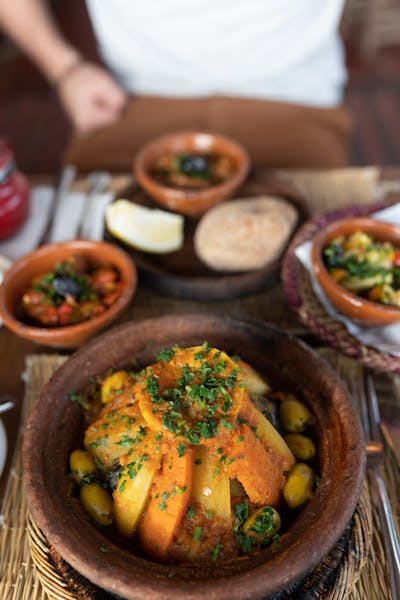
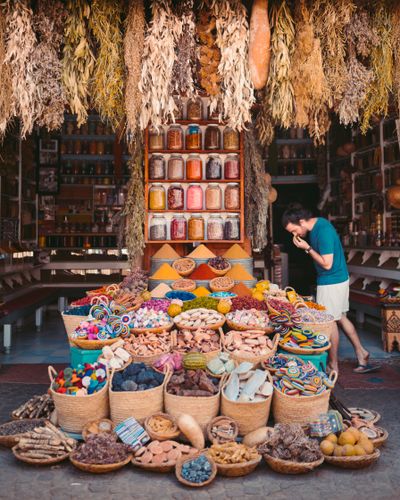
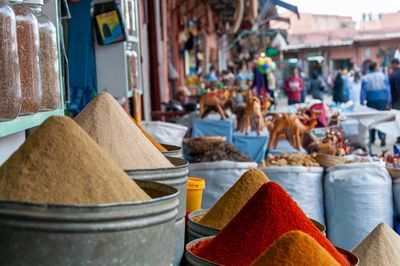
In December 2020, couscous became the first food added to UNESCO's Intangible Cultural Heritage list by multiple countries simultaneously — Algeria, Mauritania, Morocco, and Tunisia submitted a joint nomination. The inscription acknowledged something North Africans have long known: couscous is not merely a dish but a social institution, a sacred meal, and a living embodiment of hospitality that has sustained communities across the Maghreb for over a thousand years. In Morocco specifically, couscous occupies a place in cultural life that no other food approaches.
History and Cultural Significance
The origins of couscous are ancient and contested. Archaeological evidence suggests a form of couscous was being prepared in North Africa as early as the 9th century AD; a 13th-century cookbook from Andalusia, the Manuscrito Anónimo, contains the earliest known written recipe. The dish spread westward through the Maghreb and eastward into the Middle East, northward into Andalusia and Sicily (where it survives as cuscusu), and eventually into all of sub-Saharan West Africa via trans-Saharan trade routes.
The word "couscous" derives from the Berber seksu or kuskus — an onomatopoeic word describing the sound of steam passing through the grain as it cooks. This etymological detail points to what makes couscous distinct from every other grain preparation: it is not boiled or baked but steamed, ideally multiple times, over a broth that simultaneously cooks the accompanying meat and vegetables.
In Morocco, couscous carries explicit spiritual weight. The Prophet Muhammad is reported in hadith literature to have praised couscous and encouraged its consumption. Serving couscous is considered an act of baraka (divine blessing), and the dish appears at every significant moment of Moroccan social life: weddings, the naming of children, the return of pilgrims from Mecca, the mourning of the dead, and the celebration of religious festivals. To be invited to a Moroccan family's Friday couscous is among the highest forms of hospitality you can receive.
The Friday Couscous Tradition
Friday is the sacred day of couscous in Morocco. The tradition connects to the Muslim holy day (yawm al-juma'a) — after Friday prayers, families gather for a communal meal that is, almost without exception, couscous. The preparation typically begins Thursday evening, when women of the household start rolling and steaming the grain. By Friday midday, the couscous is ready to receive the family.
The Friday couscous is eaten communally from a single large dish — a wide, shallow ceramic or wooden bowl placed at the centre of the table or on a mat on the floor. Everyone eats with the right hand (or spoon), reaching into their section of the bowl. The host will push pieces of meat toward favoured guests. It is polite to eat slowly, to compliment the food explicitly, and to leave a little in the bowl when finished (eating everything suggests the portion was insufficient).
For visitors to Morocco, timing a Friday lunch at a local restaurant — or better, accepting a family invitation — to coincide with the Friday couscous tradition is one of the most culturally immersive experiences available. Many riads offer Friday couscous lunches as a dining experience; these vary in authenticity but are generally a good starting point.
How Traditional Couscous is Made
The couscous sold in European supermarkets — pre-cooked, requiring only boiling water — bears a relationship to traditional Moroccan couscous similar to instant coffee to espresso. Real couscous making is a multi-hour process that cannot be meaningfully abbreviated.
Rolling the Grain
Traditional couscous begins with semolina flour — coarsely milled durum wheat. The flour is placed in a large ceramic bowl (gsaa) and a small amount of salted water is sprinkled over it. Using a circular hand motion, the cook works the moistened flour into tiny irregular pellets. This rolling process requires practice — too much water produces clumps; too little produces dust. The resulting raw couscous is then sieved to separate fine from coarse pellets, which cook at different rates. In cities, most families now buy pre-rolled couscous from the market; hand-rolling is more common in rural Berber communities where the tradition is most intact.
The Couscoussier
Traditional couscous is cooked in a couscoussier — a two-part steamer. The lower pot (barma) holds the broth with meat and vegetables; the upper pot (keskes), which sits on top of the lower via a tight-fitting connection, holds the couscous grain. Steam rising from the broth passes through the grain, cooking it while simultaneously absorbing the flavour of the broth. The connection between upper and lower pots is traditionally sealed with a strip of cloth to prevent steam escaping — this seal is critical to proper cooking.
Three Steamings
Traditional couscous is steamed three times. After each steaming (20-25 minutes), the grain is turned out onto the gsaa, sprinkled with cold salted water, raked through with fingertips to separate any clumps, rubbed with butter or argan oil, and returned to the keskes for the next steaming. This three-pass process is what produces the characteristic light, separate, individually distinct grains of proper Moroccan couscous — a texture that pre-cooked supermarket versions cannot replicate.
Regional Variations
Couscous varies significantly across Morocco's regions, reflecting local agricultural traditions and cultural influences:
Marrakech: Couscous Tfaya
The signature Marrakchi variation tops the couscous with a sweet-savoury caramelised onion and raisin compote (tfaya) alongside the meat. The contrast of the slightly sweet, jammy onions against the savoury broth-soaked grain and tender lamb is one of Moroccan cuisine's greatest flavour combinations. Served at celebrations and weddings throughout the south.
Fes: Couscous with Chicken and Preserved Lemon
The Fassi tradition favours chicken over lamb, seasoned with preserved lemon (citron confit), olives, and a spice mixture weighted toward saffron and ginger rather than the cumin-forward profile of the south. The broth is lighter and more aromatic, the overall effect more delicate than the hearty lamb versions.
Atlas Mountains: Barley Couscous (Imin)
In Berber mountain communities, barley couscous (imin in Tachelhit Berber) predates wheat couscous. Made from barley semolina rather than durum wheat, it is denser, nuttier, and slightly darker in colour. Often served with buttermilk (lben) rather than broth, and with wild mountain greens, dried figs, and argan oil. This version is rarely found in tourist restaurants but can be encountered at rural guesthouses and Berber home stays in the High Atlas.
Coastal: Couscous with Fish (Seffa de Poisson)
In Essaouira, Agadir, and other Atlantic coastal cities, a distinctive couscous with fish replaces the usual meat — whole fish (sea bass, bream, sardines) or fish fillets steamed over the grain, then served on top with a saffron-tomato sauce. This variation is harder to find than meat couscous but worth seeking in fishing port restaurants.
Sweet Couscous (Seffa)
Seffa is the dessert form of couscous — the grain steamed, then mixed with butter, powdered sugar, and cinnamon, decorated with blanched almonds, raisins, and sometimes toasted sesame seeds. Served as a dessert or a separate sweet course at celebrations. The version topped with vermicelli noodles instead of grain is called seffa de cheveux d'ange. Both are extraordinary if you encounter them.
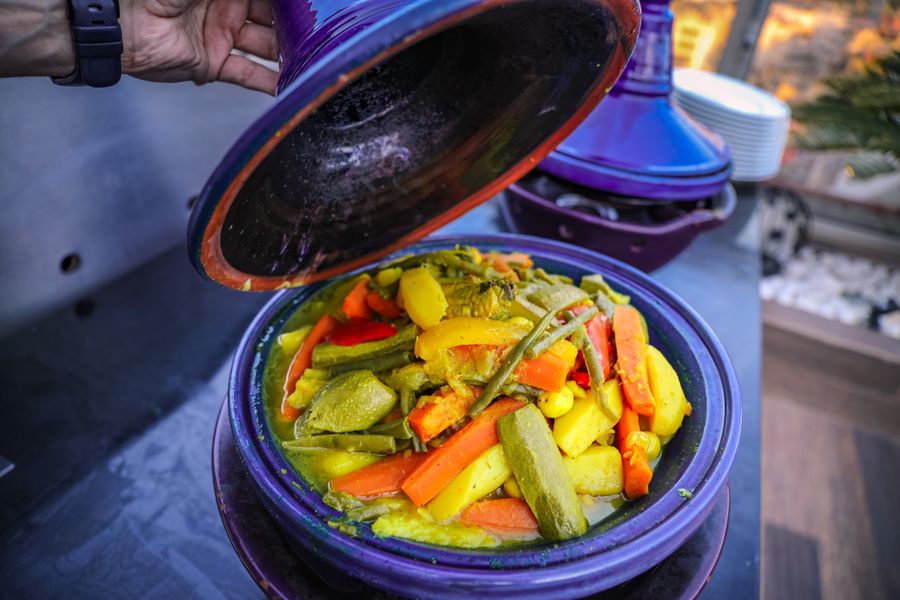
The Classic 7-Vegetable Couscous
Couscous aux Sept Légumes (Serves 6-8)
- 1kg lamb shoulder, cut into pieces
- 2 onions, quartered
- 400g chickpeas (soaked overnight)
- 3 tbsp olive oil
- 1 tsp ground ginger
- 1 tsp ground turmeric
- 1 tsp ground cumin
- ½ tsp black pepper
- Pinch saffron threads
- Salt to taste
- Large bunch flat-leaf parsley and coriander
- 2 medium carrots, halved lengthways
- 2 medium turnips, quartered
- 2 courgettes, halved lengthways
- ¼ small cabbage, cut into wedges
- 2 medium tomatoes, quartered
- 1 small butternut squash, cubed
- 100g green beans
- 500g medium couscous
- 3 tbsp butter or smen (aged butter)
- Salt to taste
Method: Brown lamb in olive oil with onions in the lower couscoussier pot. Add spices, herbs, chickpeas, and enough water to cover. Bring to a boil. Add couscous to the upper pot, seal the join, and steam for 20 minutes. Remove couscous, spread on a tray, sprinkle with cold salted water, work through with fingertips to separate grains. Return to steamer. Add the harder vegetables (carrots, turnips, squash) to the broth. Steam couscous another 20 minutes. Repeat grain working process, rub with butter. Add remaining vegetables (courgettes, tomatoes, green beans, cabbage) to broth. Final 20-minute steaming. Pile couscous in the centre of a large serving dish; arrange meat and vegetables on top; ladle broth generously over all. Serve remaining broth in a bowl on the side.
Where to Eat Couscous in Morocco
Best by City
- Marrakech: Al Fassia (women-only chef collective, renowned for traditional Marrakchi couscous, 120 MAD), Dar Yacout (spectacular riad setting, 200+ MAD), or simply any local neighbourhood restaurant on Friday lunchtime (50-80 MAD).
- Fes: Dar Roumana (chef Vincent Bonnin's refined Fassi couscous, 150-200 MAD), Restaurant Nour (see our Fes medina guide), or the local restaurants near Bab Boujeloud (40-70 MAD Friday only).
- Essaouira: Chalet de la Plage (fish couscous, 90 MAD), or ask your guesthouse to recommend the nearest neighbourhood restaurant serving Friday couscous.
- Rural Atlas: Any gîte d'étape (mountain guesthouse) will serve couscous — often the barley version with locally grown vegetables. Meals typically 60-80 MAD all-in including tea and bread.
Bringing Couscous Home
Couscous is one of the most practical Moroccan ingredients to carry home. Dried couscous grain (properly labelled couscous moyen — medium couscous) keeps for months. The best Moroccan couscous brands — Dari, Dari Ble Dur, and Brahim's — are available in souks and supermarkets throughout Morocco for 15-30 MAD per kilogram and are significantly more flavourful than supermarket equivalents in Europe or North America.
The couscoussier itself is a worthwhile kitchen investment if you plan to cook couscous seriously at home. Moroccan-made aluminium couscoussiers (40-100 MAD depending on size) are available in the hardware sections of medina souks — specifically in the copper and metalworkers' quarters of Fes (Souk Seffarine) and Marrakech. The pots are functional rather than decorative; the ceramic versions sold as tourist souvenirs are beautiful but often impractical for actual cooking.