In This Article
Morocco has quietly become one of Africa's best digital nomad destinations — and one of the most underrated globally. It sits in the GMT/GMT+1 timezone (same as Portugal and the UK in winter, one hour behind Central Europe), meaning you can work full European business hours without any of the clock gymnastics that plague nomads based in Asia or the Americas. Direct flights connect it to 50+ European cities in under 3 hours. The cost of living is a fraction of anywhere in Western Europe. And the quality of life — good food, extraordinary culture, Atlantic beaches, mountain hiking — is genuinely exceptional.
I've worked remotely from Morocco for a combined total of 14 months over three years. This guide is what I wish I had when I first arrived with a laptop and no clear plan.
Why Morocco for Nomads
- Timezone: GMT in winter, GMT+1 in summer (Morocco observes daylight saving). Perfectly aligned with European business hours.
- Connectivity: 4G LTE covers all major cities and most towns. Urban 5G rollout began in 2024. Fibre broadband widely available in apartments.
- Visa: 90-day visa-free entry for EU, US, UK, Canadian and most Western passport holders. Extendable by brief border exit.
- Cost: Monthly budget of 12,000–18,000 MAD ($1,200–1,800 USD) covers comfortable accommodation, food, coworking and activities.
- Safety: Morocco is one of Africa's safest countries. Political stability, low violent crime, large expat and nomad community in major cities.
- Culture: Working from a Marrakech riad or a Casablanca café is not comparable to working from a WeWork in any European city. The backdrop is extraordinary.
Internet & Connectivity
Morocco's internet infrastructure is genuinely good in urban areas. The three main providers — Maroc Telecom, Orange Maroc and INWI — all offer reliable 4G LTE with decent coverage maps. For a SIM card: buy on arrival at the airport (all three providers have kiosks in Marrakech and Casablanca airports). A data-heavy plan (20–30GB) costs 80–120 MAD/month. INWI currently has the best data speeds in Marrakech; Maroc Telecom has the widest rural coverage.
Riad wifi ranges enormously — from 5 Mbps (fine for email, painful for video calls) to 50 Mbps (comfortable for everything). Always ask specifically about wifi speed when booking a riad for work stays. Coworking spaces reliably offer 30–100 Mbps on fibre connections.
Best Cities to Work From
Marrakech — Best Overall Nomad Base
Marrakech has the largest English-speaking expat and nomad community in Morocco, the best selection of rooftop cafés with wifi, and the most varied accommodation options for long stays. The medina is extraordinary to live in, though finding an apartment (rather than a tourist riad) for stays of a month+ requires some legwork — Facebook groups "Marrakech Expats" and "Digital Nomads Morocco" are the best resources. Monthly riad or apartment rental starts at 6,000 MAD for a basic medina apartment, 10,000–18,000 MAD for a comfortable riad room with good wifi.
Casablanca — Best for Professional Infrastructure
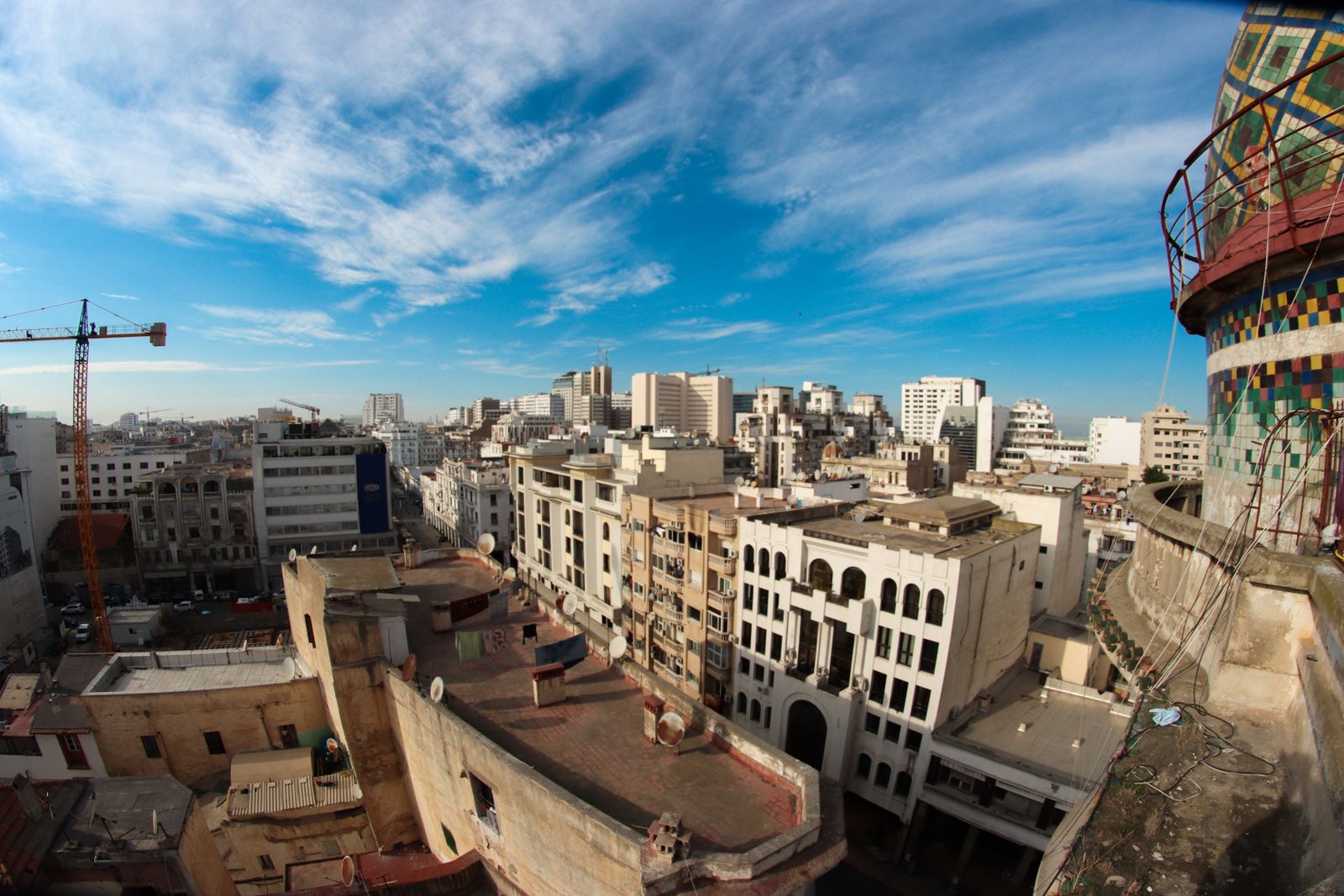
Morocco's economic capital has the most developed business infrastructure: multiple Regus and international coworking operators, reliable high-speed internet everywhere, direct flight connections to 70+ cities, and a sophisticated urban professional culture. Less atmospheric than Marrakech but significantly more functional for serious work. Monthly apartment rental: 5,000–12,000 MAD in the Maarif or Gauthier neighbourhoods.
Chefchaouen — Best for Deep Work and Low Distraction
The Blue City is slow, beautiful and extremely low-stimulation — which makes it surprisingly productive for focused work. Limited coworking options (most people work from café terraces), but reliable wifi and a very relaxed atmosphere. Excellent for writers, designers and anyone who needs sustained concentration without urban interruption. Monthly apartment rental: 2,500–5,000 MAD.
Rabat — Underrated Nomad Destination
Morocco's capital is quieter than Marrakech and more manageable than Casablanca. Good coworking infrastructure (Impact Hub, La Ruche), excellent tram system, calm medina. Strong expat community of diplomatic staff and NGO workers. Monthly apartment: 4,000–9,000 MAD.
Coworking Spaces
Cafés as working spaces: Morocco has an excellent café culture and most cafés with wifi are nomad-tolerant for 2–3 hours per visit (order something every 90 minutes). Best working cafés: Café des Épices (Marrakech, rooftop, 50 MAD coffee + wifi), Café Clock (Marrakech and Fes, expat-friendly, fast wifi), Café Maure (Rabat, garden setting, surprisingly fast internet).
Cost of Living
- Accommodation: 2,500–5,000 MAD/month (budget apartment), 6,000–12,000 MAD (comfortable), 15,000–25,000 MAD (luxury riad or serviced apartment)
- Food: Street food and local restaurants 80–150 MAD/day. Mid-range restaurants 200–400 MAD/day. Cooking at home from souk: 50–100 MAD/day.
- Transport: Petit taxi in medina 10–20 MAD. Monthly bus pass 200 MAD. Bike rental 300 MAD/month.
- Coworking: 2,500–4,000 MAD/month for a dedicated desk.
- SIM card with data: 80–120 MAD/month.
- Total comfortable monthly budget: 12,000–18,000 MAD ($1,200–1,800 USD). Significantly less than any Western European city.
Visa & Legal Status
There is currently no digital nomad visa for Morocco. You enter as a tourist and are permitted to stay 90 days. Overstaying is technically illegal but rarely enforced — however, it creates complications when you eventually leave, and it's simply not good practice.
The most common solution: the Tarifa run. Take the ferry from Tangier to Tarifa in Spain (35 minutes, 350–500 MAD return), spend a few hours in Spain, and return with a fresh 90-day stamp. This is widely done, generally accepted, and Morocco's immigration authorities are aware of the practice. Do it no more than twice in succession — at some point extended stays without income evidence attract questions.
Community & Networking
The nomad community in Morocco is friendly, well-connected and surprisingly large. Key communities: Facebook: Digital Nomads Morocco (10,000+ members, weekly meetups posted), Facebook: Marrakech Expats (accommodation listings, local tips), Meetup.com (Impact Hub Casablanca and Marrakech both run regular events). The Café Clock venues in Marrakech and Fes function as informal nomad hubs — Thursday evening events are consistently well-attended.
Tips for Long Stays
- Negotiate monthly rates: Any riad or apartment will discount significantly for stays of 3+ weeks. A room that costs 600 MAD/night on Booking.com often rents for 8,000–10,000 MAD/month direct.
- Get a local SIM on arrival: Don't rely on your home data plan — Moroccan data is cheap and coverage is good. INWI has the best urban data speeds.
- Join the nomad Facebook groups before arrival: Accommodation recommendations, roommate opportunities, co-working recommendations from people who arrived last week.
- Learn basic Darija: Even 20 words of Moroccan Arabic transforms your daily interactions. "Shukran" (thank you), "La shukran" (no thank you), "Bshal hada?" (how much is this?). Locals are delighted when visitors attempt Darija.
- Embrace the rhythm: Morocco operates on a different temporal logic. Friday afternoon slows down for prayer. Ramadan reshapes the entire social day. Working with these rhythms rather than against them is the mark of a long-term resident rather than a frustrated tourist.