In This Article
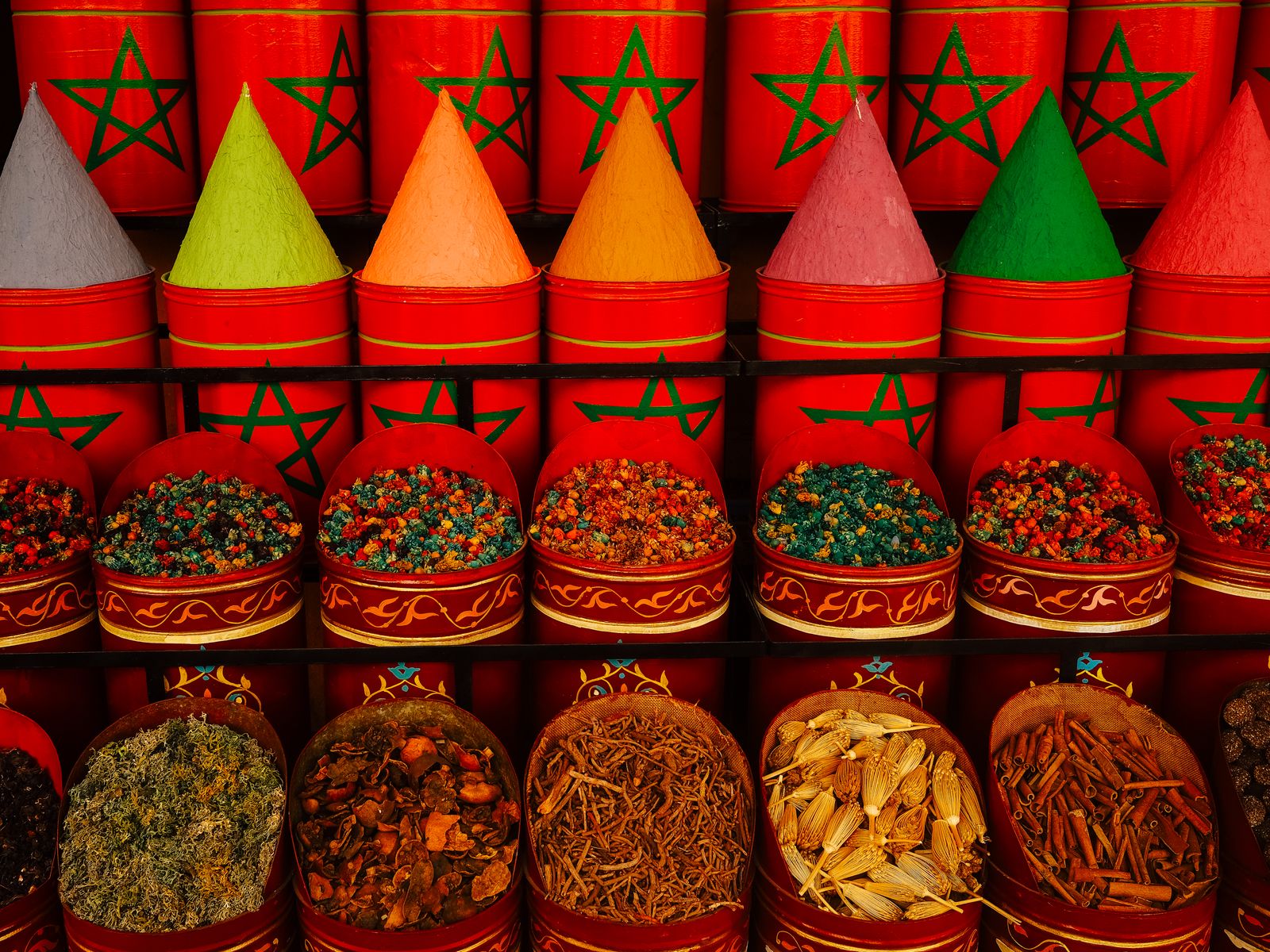
The spice souk is one of Morocco's most intoxicating sensory experiences — pyramids of vivid colour, the mingled aromas of cumin, coriander, rose water, dried ginger and a dozen things you can't quite identify. It is also one of the easiest places to spend a lot of money on things you don't need, or to pay tourist prices for spices worth a fraction of what you're charged.
This guide gives you the knowledge to shop intelligently. Know what to buy, what it should cost, how to test quality, and what to do with it when you get home. The spices you bring back from a Moroccan souk will change how you cook for years.
The Most Important Moroccan Spices
1. Ras el Hanout — the master blend
The king of Moroccan spices. A complex blend of 20–35 individual spices. See the full explanation below. Buy a 100g bag for 30–60 MAD.
2. Cumin (Kmoun)
The backbone of Moroccan cooking. Appears in almost every savoury dish. Moroccan cumin is earthy and pungent — noticeably more aromatic than supermarket cumin in Europe. Buy whole seeds and grind at home for the best flavour. 20–30 MAD per 100g.
3. Coriander (Qsbour)
Used both as dried seeds (slightly citric, warm) and as fresh leaves in tagines and salads. The seeds are gentler and sweeter than cumin. Often combined with cumin in chermoula marinades and tagine spice bases. 15–25 MAD per 100g.
4. Ginger (Skinjbir)
Dried ground ginger is a constant in Moroccan cooking — chicken tagines, lamb dishes, harira. Fresh ginger is rarer in traditional recipes. The dried version has a more concentrated, warmer flavour than fresh. 20–30 MAD per 100g.
5. Turmeric (Kharkum)
Gives the yellow colour to chicken tagines and many soups. Moroccan turmeric tends to be very fresh and aromatic compared to the dusty versions common in Western supermarkets. 20–25 MAD per 100g.
6. Cinnamon (Karfa)
Used in both sweet and savoury dishes — the sweet tagines (lamb with prunes, mrouzia), pastilla, and Moroccan pastries. Buy cinnamon sticks rather than ground — they keep for years. 15–25 MAD per 100g.
7. Saffron (Zafran) — Handle With Care
Morocco's Taliouine saffron, grown in the Anti-Atlas mountains, is considered among the world's finest. Authentic Taliouine saffron costs 50–100 MAD per gram — if someone is selling it for 5 MAD, it is not real saffron. See the saffron testing section below.
8. Paprika (Felfa Hamra)
Both sweet and smoked versions used widely. The smoked paprika (felfa hamra mdakhkha) is particularly good for marinades and sauces. 15–20 MAD per 100g.
9. Anise (Habbet Hlawa)
Used in Moroccan pastries and breads — sfenj, msemen, some celebration breads. Distinctive liquorice warmth. 15 MAD per 100g.
10. Smen (Preserved Butter)
Technically not a spice but an essential Moroccan flavouring — salted, aged butter with a funky, intensely savoury character. Used in couscous, tagines and as a finishing element. An acquired taste that becomes essential. 30–50 MAD per 100g.
Ras el Hanout Explained
The name means "head of the shop" — the spice merchant's best blend, the one that represents their skill and taste. There is no single standardised ras el hanout recipe. Every souk merchant has their own formula, typically 20–35 spices. A serious ras el hanout might include: cumin, coriander, cinnamon, ginger, turmeric, black pepper, cardamom, nutmeg, mace, allspice, dried rose petals, lavender, galangal, grains of paradise, long pepper, orris root, dried ginger, fenugreek, and more.
The best approach is to smell before you buy. A quality ras el hanout should smell complex, warm, and slightly floral — not just "curry-powder generic." The smell should develop as it opens up, revealing different notes. If it smells flat, the spices are old or the blend is poor.
How to Buy Spices in the Souk
The spice souks to head for: Souk el-Attarine in Marrakech (northeast of Djemaa el-Fna, follow the smell) and Souk el-Attarine in Fes (directly behind the Al-Qarawiyyin Mosque). Both are streets lined entirely with spice merchants who have been selling in the same locations for generations.
The buying process: browse, ask to smell, agree a price before any spice is scooped. Prices are by weight (per 100g or per 500g). Bring a list of what you want — vendors will often assemble your full order more efficiently if you tell them everything upfront. Ask if they can grind whole spices fresh for you (they usually have a grinder).
Avoiding Tourist Traps
Customs Rules
Moroccan spices are freely exportable with no quantity restrictions for personal use. EU customs allow personal quantities of spices without restriction. UK customs: same. US customs: dried spices are allowed, but declare them on your customs form (no duty, just declaration). Fresh herbs and fresh plant material are subject to stricter rules in some countries — buy dried.
Note: some "aphrodisiac" spice blends sold in Moroccan souks may contain substances subject to import restrictions in certain countries. The standard culinary spices (cumin, coriander, ras el hanout, saffron, etc.) have no restrictions anywhere.
Recipes to Try First
- Chermoula marinade — Coriander, cumin, garlic, olive oil, lemon juice, paprika. Use on fish or chicken before grilling.
- Simple lamb tagine — Ras el hanout, ginger, turmeric, cinnamon, honey. Lamb shoulder, onions, dried apricots or prunes. 3 hours in a low oven.
- Harira soup — Cumin, coriander, ginger, cinnamon. Tomatoes, lentils, chickpeas, celery. Your first Moroccan cooking project.
- Spiced tea blend — Cinnamon stick + cardamom + dried rose petals + green tea + fresh mint. A luxury version of the classic.
Storage Tips
Whole spices keep for 2–3 years stored correctly; ground spices for 6–12 months. Store in airtight glass jars away from heat, light and moisture. Never store spices above the stove — the steam and heat degrade them rapidly. Label with the purchase date. Smell before using: if there's no aroma, there's no flavour left.