In This Article
The tagine is Morocco's most misunderstood dish. Abroad, it has become a generic term for anything slow-cooked in a conical clay pot — which misses the point entirely. In Morocco, the tagine is a precisely calibrated culinary form. Every combination of protein, fruit, spice and technique has a name, a regional identity, a season and a correct occasion. The lamb-and-prune tagine you eat on a cold Fes evening is as different from the fish tagine in Essaouira as a boeuf bourguignon is from a bouillabaisse.
This guide will teach you the vocabulary of tagine — so that instead of just ordering "a tagine," you'll know exactly which one you want, why it tastes the way it does, and how to find the best version of each.
What Is a Tagine
The word tagine refers to two things simultaneously: the conical clay cooking vessel and the slow-cooked stew prepared inside it. The vessel design is a stroke of engineering genius. The conical lid creates a convection system: steam from the cooking food rises, condenses on the cooler cone, and drips back down over the ingredients. The tagine is essentially self-basting, requiring little added water and producing extraordinarily concentrated flavours.
Traditional tagines are placed directly over charcoal braziers, where they cook slowly for two to four hours. The thick clay walls distribute heat evenly and gently. The result is meat so tender it falls apart at the touch of a fork, vegetables that have absorbed every spice in the pot, and a sauce so reduced and complex it is worth eating with bread long after the main ingredients are gone.
A Brief History
The tagine vessel was invented by the Berber (Amazigh) people of North Africa, almost certainly predating the Arab conquests of the 7th century. Archaeological evidence suggests clay conical-lid cooking vessels were used across the Maghreb region for at least 2,000 years. The Berber technique of slow-cooking over charcoal in sealed clay pots was adopted, refined and elevated by successive dynasties — Arab, Andalusian, Ottoman-influenced — each adding new ingredients and spice combinations.
The most influential contribution came from the Moorish chefs expelled from Andalusia (southern Spain) in 1492, who brought with them a sophisticated tradition of combining sweet and savoury flavours — dried fruits with meat, honey with spices, almonds with poultry — that defines the most complex Moroccan tagine preparations to this day.
The 8 Classic Types
1. Lamb with Prunes and Almonds (Mrouzia)
The king of sweet tagines. Lamb shoulder slow-cooked with dried prunes, honey, toasted almonds, cinnamon, ginger and ras el hanout until the sauce becomes a dark, glossy, intensely aromatic reduction. Traditionally prepared for Eid al-Adha, now available year-round. The balance of sweet fruit, savoury meat and warm spice is extraordinary.
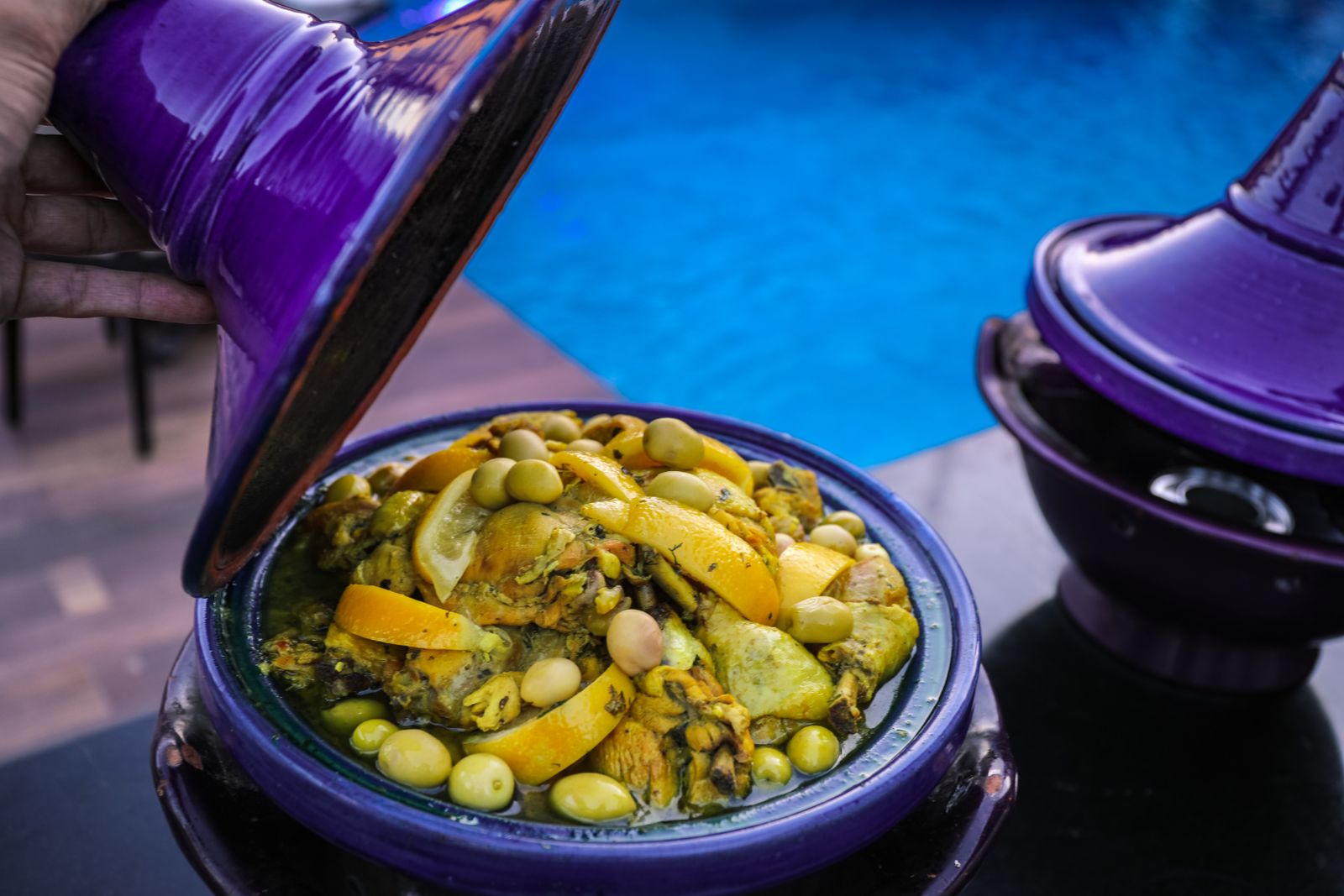
2. Chicken with Preserved Lemon and Olives
The most famous Moroccan tagine internationally and the most frequently eaten domestically. The preserved lemon (a whole lemon fermented in salt for weeks) provides a funky, intensely citric flavour that transforms the chicken. Green olives add bitterness to balance. Saffron, ginger and turmeric are the primary spices. A perfect tagine.
3. Kefta with Egg and Tomato
The everyday tagine. Spiced minced meat (kefta) meatballs in a rich tomato, onion and herb sauce, topped with raw eggs that poach in the hot sauce in the final minutes of cooking. Street restaurants serve this for lunch; it's eaten by dunking bread directly. 40–60 MAD. Outstanding.
4. Fish Tagine (Essaouira Specialty)
The Atlantic coast version: fresh fish (sea bass, sole, grouper) cooked over a bed of potatoes, tomatoes, peppers and preserved lemon with chermoula marinade (coriander, cumin, garlic, olive oil). The fish cooks in 20–30 minutes — the only fast tagine. Best eaten within 500 metres of the sea it came from.
5. Vegetable Tagine (Berber Tagine)
Arguably the most honest expression of the form. Potato, tomato, carrot, courgette, onion and dried herbs layered in the tagine and left to cook in their own juices. No meat, no fuss. The vegetables caramelise and collapse into a concentrated vegetable stew that is deeply satisfying.
6. Lamb with Artichokes and Preserved Lemon
Spring tagine, available March–May when artichokes are in season. One of the most refined in the repertoire — the artichoke hearts absorb the lamb stock and become extraordinarily tender. Seasonal and worth seeking out.
7. Camel Tagine (Merzouga Speciality)
Available at desert-region restaurants, particularly in Merzouga and Zagora. Camel meat is lean, slightly gamey and tougher than lamb — it benefits enormously from the long tagine cooking time. Served with dates, almonds and desert spices. A novelty that is also genuinely delicious.
8. Lamb with Quince (Autumn)
An autumnal speciality — quince (a sour, firm fruit) cooked with lamb, cinnamon and honey until the quince becomes translucent and sweet. One of the most complex tagine flavour profiles. September–November only.
Key Spice Combinations
The spice base varies by tagine type, but several key spices appear repeatedly:
- Ras el hanout — The master blend. Used in rich meat tagines (lamb with prunes, kefta, camel). Adds depth and complexity.
- Chermoula base — Coriander, cumin, garlic, olive oil, lemon. Used with fish and chicken. Brighter, more herbaceous.
- Saffron + ginger + turmeric — The yellow tagine base. Used in chicken with preserved lemon, lamb with artichokes.
- Cinnamon + ginger + honey — Sweet tagine base. Lamb with prunes, quince, or dates.
Where to Eat the Best Tagine
Marrakech
- Restaurant Al Fassia — Female-run, entirely authentic, the best traditional Moroccan cooking in the city. Chicken with preserved lemon tagine is definitive. 150–200 MAD. Reservations essential.
- Café Argana — On Djemaa el-Fna with a direct view of the square. Kefta tagine 70 MAD, consistently good. The location is the main event but the food holds up.
- Souk Kafé — Hidden in the souk above a carpet shop. Rooftop seating, excellent lamb tagine, 90 MAD.
Fes
- Café Clock — Crossroads of traditional and contemporary. Their bastilla and tagine are both excellent. 80–120 MAD.
- Dar Hatim — In a riad with rooftop views over the medina. The lamb with prunes and almonds tagine is exceptional. 150 MAD.
Cooking Class Options
Learning to make tagine in Morocco is one of the best souvenirs you can bring home. Most classes include a market visit to buy ingredients, then three hours of cooking and eating. You'll leave with recipes and the muscle memory of building a spice base properly.
- Le Jardin Secret, Marrakech — Morning market tour + full tagine cooking class. 550 MAD per person. Small groups, serious instruction.
- Café Clock, Fes — Their cooking class is well-priced at 300 MAD and includes three dishes. Tagine, bastilla and a dessert.
- Riad cooking classes — Most mid-range and luxury riads offer private cooking classes in their own kitchen. 400–700 MAD. More intimate, excellent for couples.
Making It at Home
You don't need a tagine pot to make tagine at home — a heavy-based casserole with a lid works nearly as well. What you cannot substitute is the spice quality. Buy proper ras el hanout from a Moroccan souk (or a specialist online supplier), use genuine preserved lemons (or make your own — they take 30 days but are trivially easy), and don't rush the cooking time. A tagine made in 45 minutes is not a tagine. Three hours minimum.