In This Article
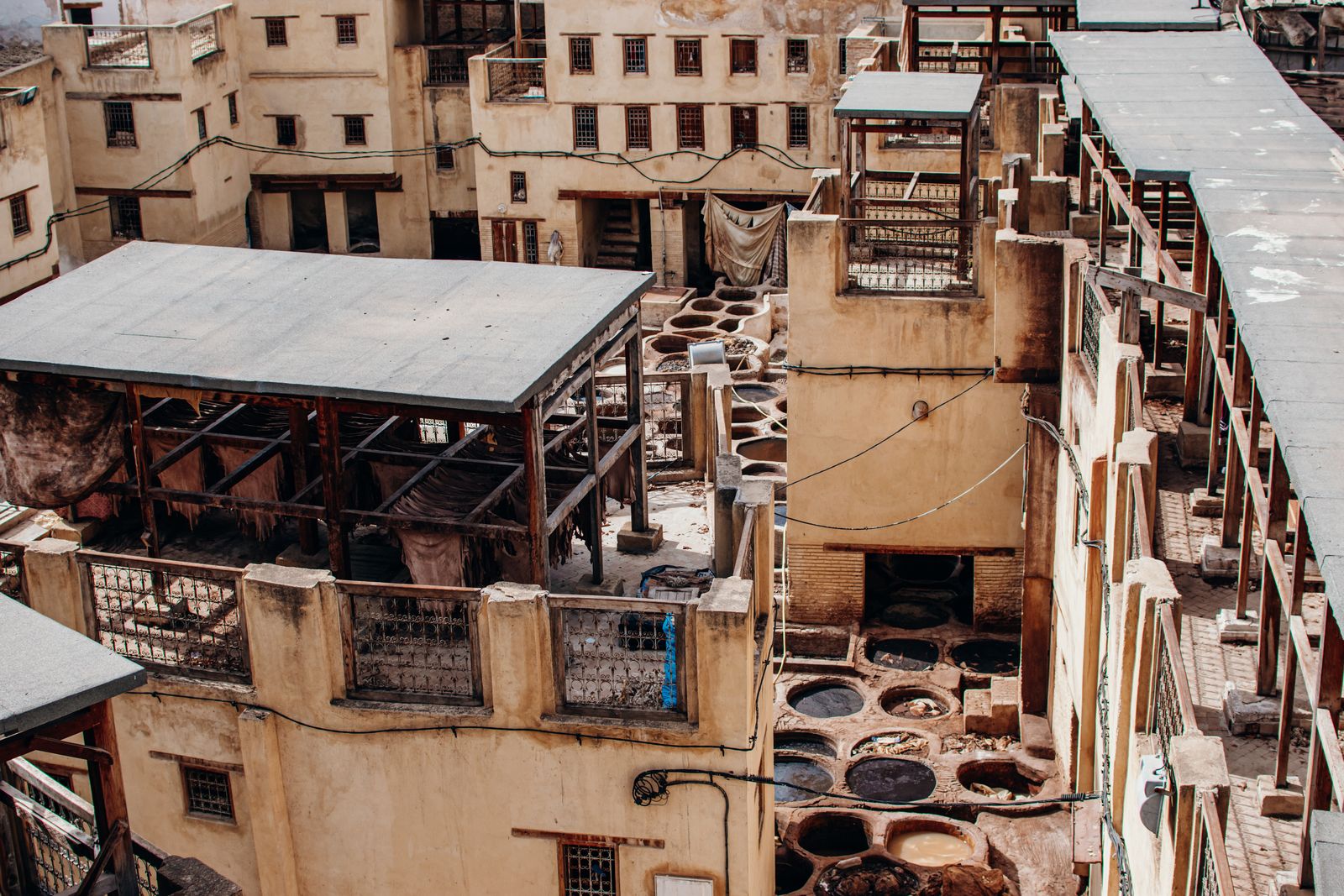
From above, the Chouara tannery looks like a palette of paints — honeycomb pits filled with white lime, saffron yellow, earthy brown, vivid blue and deep red. From ground level, it smells of something ancient and sharp that no amount of the complimentary mint sprigs the shop owners hand you will fully mask. From either vantage point, it is one of the most extraordinary sights in Africa.
The Chouara tannery was established in the 11th century. It has been in continuous operation ever since, using methods that have changed remarkably little in a thousand years. The workers who stand waist-deep in dye vats today are doing essentially the same work their ancestors did when Fes was the intellectual capital of the medieval world. That continuity is the reason to visit — and the reason to understand what you're looking at before you arrive.
A Living Relic
Chouara is not a museum or a heritage display. It is a functioning industrial facility employing around 800 workers, producing leather that is sold locally and exported internationally. The men you see working here — dabbagha, leather tanners — typically start as young as 15 and continue for decades. Many come from tanning families where the craft has passed down through generations.
The tannery complex occupies an area roughly the size of a city block in the northeastern corner of Fes el-Bali, bounded by the leather souk shops whose rooftop terraces provide the famous aerial views. It is one of three major tanneries in Fes — Sidi Moussa and Ain Azliten are the others — but Chouara is the largest and most visited.
How Leather Tanning Works
The tanning process at Chouara involves three distinct stages, each carried out in purpose-built stone pits. The process takes approximately three weeks from raw hide to finished leather.
Stage 1: Depilation
Raw animal hides — mostly cow, sheep, goat and camel — arrive at the tannery and are first soaked in large white pits filled with a mixture of water, quicklime and pigeon dung. The ammonia in the pigeon droppings loosens the hair follicles and softens the hide. Workers stand in these pits and work the hides with their feet and hands, treading and turning for up to three days. The white pits you see from the terraces above are these depilation vats — the workers moving slowly through them are doing this most labour-intensive and physically demanding stage of the work.
Stage 2: Tanning
The depilated hides move to the tanning pits, which contain a solution of water and mimosa bark (vegetable tannin). This stage converts the raw hide into stable leather by cross-linking the collagen fibres — the chemical process that has given us the word "tanning." The leather soaks for days to weeks depending on the thickness of the hide.
Stage 3: Dyeing
The tanned leather is then transferred to the colourful dye pits that make the tannery so visually distinctive. Traditional dyes are plant-based and have been in use for centuries.
The Colours & What They Mean
The rainbow of colours in the tannery vats corresponds directly to the natural dye sources used:
- Yellow — Saffron (the world's most expensive spice, grown in Morocco's Taliouine region)
- Red / Orange — Poppy flowers or pomegranate skin
- Blue — Indigo plant
- Green — Fresh mint or henna
- Brown / Tan — Cedar bark or pomegranate peel (the natural "undyed" leather tone)
- Black — Iron sulphate combined with gall nuts
- White — Lime pits (the depilation stage, not dyeing)
Modern tanneries worldwide use synthetic chrome tanning, which is faster and cheaper. Chouara still uses natural vegetable dyes for much of its production — a distinction that serious leather buyers value and pay a premium for. Vegetable-tanned leather develops a rich patina over time that synthetic alternatives cannot replicate.
Best Viewing Points
You cannot enter the tannery itself. Visitors view it from the rooftop terraces of the leather shops that ring the complex — these shops have built elevated platforms specifically for this purpose. The viewing experience is essentially the same at all of them; the shops use the view as a draw to get you inside to see (and hopefully buy) their leather goods.
The best light for viewing and photography is between 9am and 11am, when the morning sun illuminates the dye pits directly. By afternoon the light goes flat and the workers often take their lunch break, reducing the visual activity in the pits.
For photography, a wide-angle lens from the highest terrace gives you the full honeycomb effect. Zoom lenses let you isolate individual workers in the vats — with their consent in mind, though the distance makes interaction impossible.
How to Visit
Getting to the Chouara tannery requires navigating deep into the northeastern medina — it's not on the main tourist trail. The simplest approach from Bab Boujloud (the Blue Gate): follow the main alley northeast through the souks, past the Al-Attarine Madrasa, and ask any shopkeeper for "Chouara" — you'll be pointed in the right direction repeatedly.
Once at the tannery, you don't need to pay anyone to go up. Simply walk into any of the leather shops surrounding the tannery — they all have rooftop viewing access. You are under no obligation to buy, though browsing is polite after using the viewing platform. A 20 MAD tip to the shop owner is a fair gesture if you spend time on the terrace without purchasing.
Shopping the Leather Souks
The leather souk surrounding Chouara is the best place in Morocco to buy quality leather goods. The proximity to the tannery means you can see the production source, and the competition among shops keeps quality high.
- Babouche slippers — The classic Moroccan leather slipper. Pointed toe (traditional, Fes style) or round toe (Marrakech style). Price: 150–400 MAD depending on quality and leather type. Camel leather is softer and more expensive.
- Leather bags — Shoulder bags, clutches, tote bags. Price: 300–800 MAD for quality hand-stitched pieces.
- Belts — 80–200 MAD, often customisable with your initials stamped in Arabic.
- Poufs — The embossed leather floor cushions you've seen in every Morocco Pinterest board. 400–800 MAD in the souk, triple that in European import shops.
Environmental Context
The Chouara tannery is both a cultural treasure and an environmental challenge. The lime and ammonia from the depilation pits, and the dye run-off from the colouring stage, have historically discharged directly into the Oued Fes river running through the medina. Modern wastewater treatment facilities have been installed in recent years as part of Morocco's UNESCO heritage site obligations, but the environmental impact of traditional tanning processes remains a legitimate concern.
The workers themselves face health challenges — prolonged exposure to lime, ammonia and dyes takes a physical toll. Pay for leather that's priced to reflect the human labour involved. Aggressive bargaining at the tannery shops understates the cost of the extraordinary work you've just watched.
Related Articles
- Food in Fes: A Culinary Journey Through the Ancient Medina
- Fes Medina Walking Guide: 24 Hours in the World's Oldest Living City
- Zellige: The Sacred Art of Moroccan Tilework Explained
4 Perfect Days in Fes
Includes the definitive tanneries visit guide — best viewpoints by time of day, what to wear, how to navigate the surrounding souk and which riad to book nearby.
Get it — $12.99 →