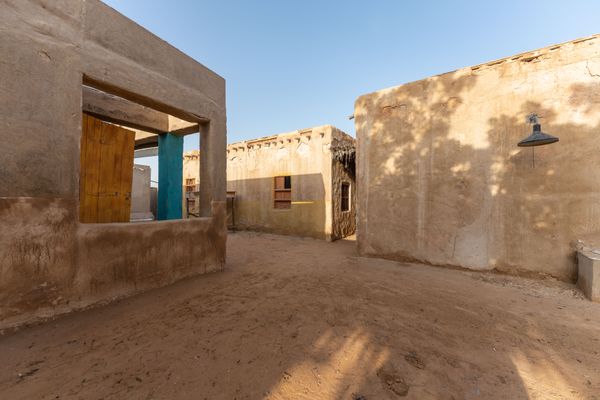
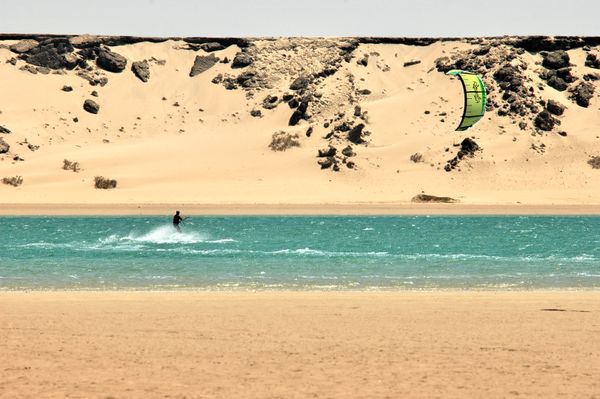
Africa's kitesurfing capital and Morocco's most dramatic remote destination. A turquoise lagoon where Sahara sand dunes meet the Atlantic, flamingos wade in the shallows, and the wind blows 300 days a year. A once-in-a-lifetime destination.
Dakhla sits on a narrow peninsula jutting into the Atlantic in the Western Sahara — 1,500km south of Casablanca, closer to Mauritania than to Marrakech. It is remote in the best possible sense: pristine, wild, uncrowded and unlike anywhere else on earth.
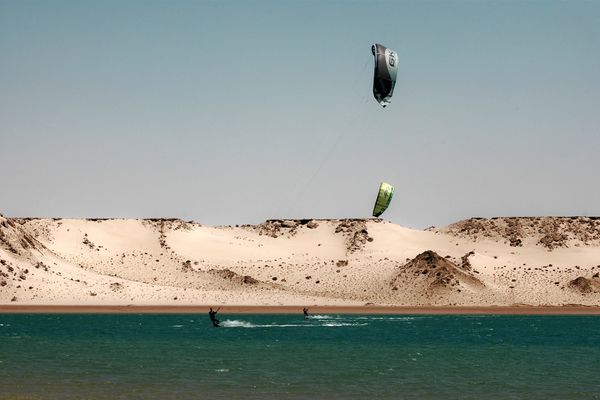
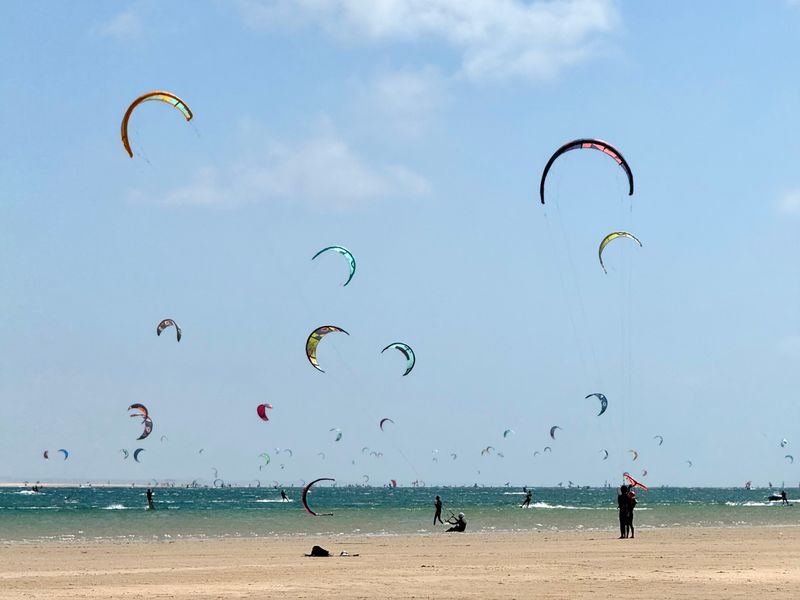
The Dakhla Lagoon is what makes this place extraordinary — a shallow 40km expanse of turquoise water sheltered from Atlantic swells, with a constant cross-shore wind. This combination creates the world's most consistent and beginner-friendly kitesurfing conditions. Professionals and beginners from 50+ countries come here every year. Some never leave.
But Dakhla is not only for kitesurfers. Flamingo colonies, Atlantic oyster farms, sand dunes rolling directly into the lagoon, fishing villages, spectacular sunsets and a frontier-town rawness make Dakhla one of Morocco's most memorable destinations for any traveler willing to make the journey.
Trade winds at peak strength (25–35 knots consistent). The flat lagoon is glassy. Temperature 22–28°C — warm but not brutal. The prime kitesurf season. Camps run to full capacity.
Second peak wind season. Warm days (24–30°C), reliably windy, fewer crowds than spring. Flamingo flocks at their largest in September. Excellent for foiling and freestyle in the lagoon.
Very hot (30–38°C). Wind remains consistent — this is Dakhla, it's always windy. But the heat makes land activities uncomfortable. Stay on the water. Busy with Moroccan tourists.
Wind drops slightly in January (15–25 knots vs 25–35 in peak). Mild temperatures (18–22°C). Great for beginners learning in lighter winds. Quieter, cheaper, the ocean very clear.
Complete Insider Guide
The Dakhla Guide — Hotels, Restaurants & Hidden Gems
PDF guide · 40+ pages · Instant download · 30-day money-back
Wind, waves, flamingos and the world's most spectacular lagoon
The main event. The Dakhla Lagoon offers flat water conditions perfect for beginners learning to ride, and long open stretches for freestyle tricks. Multiple IKO-certified schools operate year-round. Lessons start from $50/day including equipment. Come for at least a week.
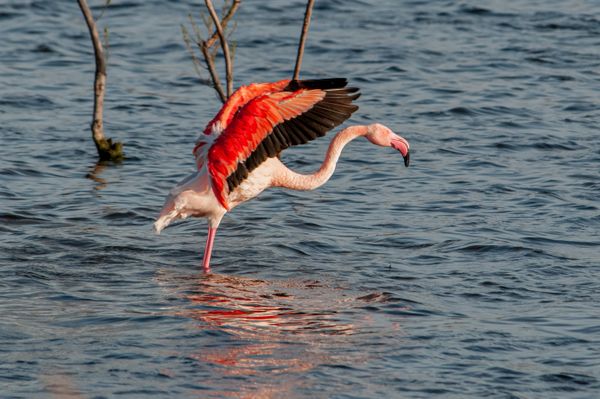
Hundreds of greater flamingos feed in the shallow lagoon waters. Most kite camps have flamingos literally 50–100m from their launching areas. A surreal sight — bright pink birds against turquoise water with kite riders in the background.
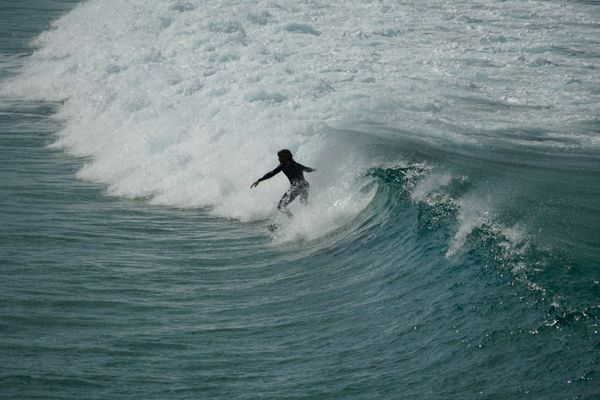
The outer coast of the Dakhla peninsula faces the open Atlantic with powerful waves and consistent swell. Pointe de l'Or and other breaks attract surfers seeking uncrowded, powerful waves. Very different energy from the calm lagoon — both magnificent.
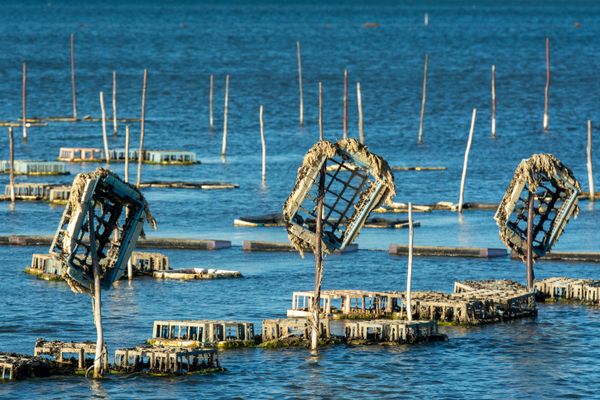
The lagoon's pristine, cold Atlantic waters produce some of Africa's finest oysters. Visit an oyster farm, eat them fresh from the water with just a squeeze of lemon, and wash them down with a cold Casablanca beer at a lagoon-side restaurant. A Dakhla essential.
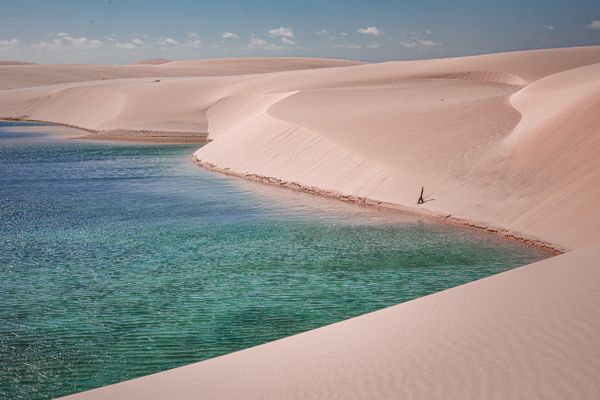
The "Dune Rose" — a spectacular spot 15km south of the city where golden sand dunes roll directly into the turquoise lagoon. Utterly photogenic and utterly unique on earth. Quad bikes, camel rides and photography sessions all available here.
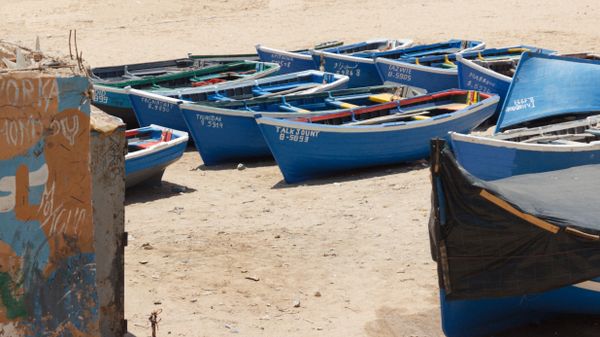
Dakhla has authentic Sahrawi fishing communities that have fished these waters for centuries. Visit the fish market at dawn, watch fishing boats unload massive tuna and grouper, and eat the freshest grilled fish you've ever tasted at a port-side grill for almost nothing.
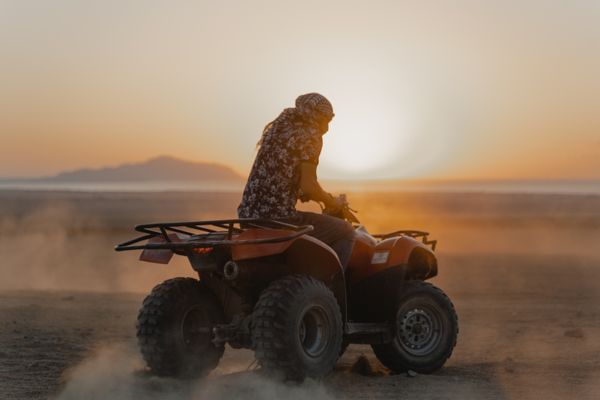
Ride quad bikes through the desert hinterland of the Dakhla peninsula — vast flat sandy expanses punctuated by remote dunes and hidden oases. Half-day and full-day tours available from most kite camps.
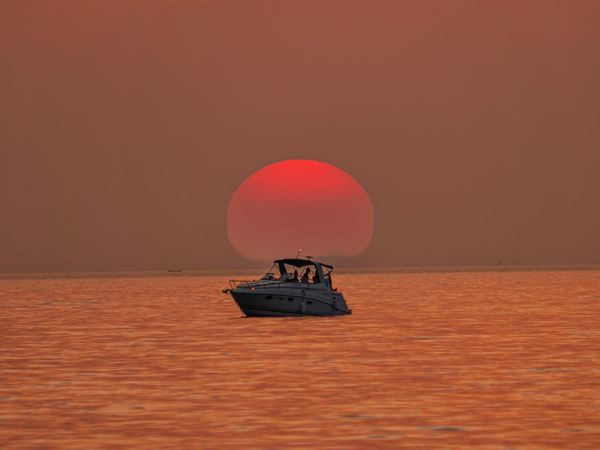
Charter a small boat to explore the lagoon at sunset — wading through flamingo territories, past oyster racks and into remote corners of the bay that are inaccessible by land. Utterly peaceful and staggeringly beautiful.
The compact old town around the Grand Mosque and the working fishing port is the authentic heart of Dakhla — entirely separate from the resort strip. Watch boats unload their catch at dawn, browse the fish market, and explore narrow streets where daily life carries on with zero tourist overlay.
The iconic white sand dune that rises directly from the edge of the lagoon — one of the most photographed spots in southern Morocco. Reached by 4x4 across the peninsula or by boat from the camp side. The contrast of blinding white sand, turquoise water and kites in the air is extraordinary.
Our Dakhla guide covers every kite school with honest reviews, the best camps by budget, how to get there cheaply (flight vs. the epic desert road trip), the flamingo spots, oyster farm visits, surf breaks, and a 1-week Dakhla itinerary.
Kite camps, boutique hotels and glamping on the lagoon
The most popular option — camps right on the lagoon shore with kite school, equipment, accommodation and meals all on-site. Weekly packages available. The ultimate convenience for kitesurfers.
Budget and mid-range hotels in Dakhla city. Cheaper than the lagoon camps, with easier access to restaurants, shops and the fish market. Use taxis to reach the lagoon (10–20 min).
Luxury tented camps in the desert south of the city — near the dunes, away from the wind. Perfect for non-kitesurfers seeking nature, silence and extraordinary stargazing.
Compare lagoon camps, city hotels and glamping experiences
Royal Air Maroc and Air Arabia fly direct from Casablanca (2h). Alternatively, the epic 1,500km desert road from Agadir through Western Sahara is one of the world's great road trips — 2 days, perfectly safe, utterly memorable.
Dakhla gets consistent wind almost year-round but the strongest and most reliable months are December–March and June–September. April–May and October–November can be lighter — check wind forecasts on windy.com before booking.
Flamingos are present in the lagoon year-round — not seasonal. The southern part of the lagoon (near Dune Rose) has the highest concentrations. No jeep or guide needed — just walk along the lagoon shore at dawn.
Dakhla's seafood is extraordinary and extremely cheap — the freshest Atlantic produce in Africa. A dozen oysters costs 60 MAD ($6). A full grilled sea bass is 80 MAD ($8). Eat seafood at every meal. You will never eat it this fresh again.
Mobile internet (Maroc Telecom) works in the city but can be patchy at remote lagoon camps. Download offline maps and content before arriving at a camp. This is a feature, not a bug — embrace the digital detox.
The all-inclusive kite camp packages (accommodation + meals + kite equipment + lessons) often work out cheaper than booking each element separately. Compare weekly packages across camps — Dakhla Attitude, Dakhla Club and Ocean Vagabond are the established names.
Dakhla sits at 24° latitude with a near-permanent breeze that tricks you into forgetting the UV intensity. You will burn faster here than anywhere in northern Morocco. SPF 50+, full-coverage wetsuit for water sports, and a wide-brim hat are not optional.
Dakhla is in Western Sahara — you may be asked for your passport at police checkpoints on the road south from Agadir. Keep it accessible. The formalities are quick and hassle-free; it's not a problem, just be prepared.
Dakhla is not a weekend destination — the journey alone takes 2 days by road or a flight. Most kite camps are set up for weekly stays. A week gives you enough sessions to genuinely improve; less than 5 days is barely worth the distance.
The fastest route: Royal Air Maroc flies Casablanca→Dakhla in 2.5h for around 500–900 MAD one-way depending on timing. Flights run 3–4x weekly. Book 3–4 weeks ahead for best fares — the route fills quickly in kite season (March–May, October–November).
1,200km south from Agadir down the N1 — one of Africa's great road trips. The route passes Tan-Tan, Laayoune and the endless Atlantic coast. Allow 2–3 days. Fuel up at every opportunity (stations are sparse south of Laayoune). 4WD unnecessary — road is paved throughout.
CTM and Supratours run overnight buses from Agadir to Dakhla: 12–14h on the N1 coastal road, ~250–300 MAD. Departs Agadir evening, arrives Dakhla morning. Air-conditioned and reliable. The most affordable option but a long ride.
Most kite camps in Dakhla offer airport pick-up packages. If you're booking a camp stay (Dakhla Attitude, Dakhla Club, Ocean Vagabond), ask about arrival transfers — often included in the weekly package or available for ~100–200 MAD from the airport.
A car is useful for exploring beyond the lagoon — the Atlantic coast north of Dakhla, the flamingo spots, and the peninsula's southern end. Local agencies are cheaper than airport pickups. The N1 north to Boujdour is an extraordinary empty-desert drive.
The kite spots are 20–30km south of Dakhla city on the peninsula. Most camps provide shuttles from the city. A grand taxi to the "speed strip" (main kite spot) costs ~80–100 MAD. Petit taxis rarely go this far — arrange through your accommodation.
Speedboat or traditional wooden vessel tours cross the lagoon to Sahrawi fishing villages on the eastern shore — communities reachable only by water. Fresh-caught fish lunches, Hassani tea, and a culture untouched by tourism. 300–500 MAD/person, 3–4 hours. Organised through most kite camps.
Beyond the lagoon, the wild Atlantic coast stretches uninterrupted. Lassarga beach has powerful waves, fossil-studded cliffs and complete solitude. Taxi: ~80 MAD one-way. Bring food and water — no facilities. Combine with an inland dune walk (1–2 hours on foot).
200km inland on the R101 piste, Aousserd is the only town in the deep Western Sahara interior. The drive crosses ochre hamada (rocky desert), passes nomad encampments and reaches a Sahrawi village untouched by tourism. Full-day by 4x4, 5–6h driving. A guide is essential — the piste requires GPS and desert navigation experience.
The seasonal salt lake (sebkha) north of Dakhla attracts rare migratory birds on the East Atlantic Flyway: ruddy turnstones, dunlins, Audouin's gulls. Peak passage Oct–Nov and March–April. Free entry; hire a 4x4 (300 MAD half-day). No guide needed but bring binoculars and a long lens.
Dakhla's lagoon delivers flat-water conditions, thermal winds and near-zero chop — ideal for beginners and advanced riders alike. Wind blows 300+ days/year from the northeast. 3-day beginner IKO course: €200–250 including equipment. Multiple IOC-certified schools: Dakhla Attitude, Dakhla Club, Ocean Vagabond. March–September best for beginners.
The Dakhla lagoon shelters thousands of greater flamingos, Sandwich terns and oystercatchers. Guided kayak tours paddle through the shallows to flamingo feeding grounds at dawn. 300–400 MAD/person, 2h. Early morning is essential — birds disperse by 9am. Most kite camps organise this.
The Dakhla Peninsula is 40km of sand dunes, Atlantic cliffs, fossil beds and desert wilderness. Guided 4x4 excursions explore the interior: Sahrawi nomad encounters, ancient fossil sites (~70 million years old) and wild Atlantic coastline unreachable on foot. Half-day: 400–600 MAD/person.
The same conditions that make Dakhla world-class for kite also create perfect windsurfing: steady 20–25 knot winds, flat water. 2-hour SUP session: 200 MAD; windsurf rental: 300 MAD/h with instructor. The lagoon's shallow south end is perfect for first-timers on SUP boards.
No major city within 500km means Dakhla has some of the darkest skies in Africa. The Milky Way is clearly visible most nights. Drive 20 min inland from the city for complete darkness; many camps organise evening desert fire sessions under the stars. Self-guided: free. Guided tour: 200–300 MAD.
The Atlantic-side beaches of the Dakhla peninsula have powerful waves — not for beginners, but excellent for experienced surfers. Surfboard rental: 150 MAD/h. The Lassarga beach (20 min south) has the most consistent Atlantic breaks. Ocean temperatures: 18–22°C year-round.
Dakhla's food scene is shaped by the Atlantic — the freshest fish anywhere in Morocco, Saharan Hassani tea culture, and kite-camp dining under the stars.
Dakhla's industrial port lands some of West Africa's largest Atlantic hauls. The port-side restaurants serve what came off the boats hours earlier: sea bass, john dory, octopus, lobster. Full fish lunch: 100–160 MAD. Ask for the daily catch — don't order from the menu.
Most Dakhla kite camps include dinner in their packages: grilled fish, Saharan tagines, Hassani flatbreads, and tea ceremonies around a fire on the lagoon edge. Typically included in camp rates. Dakhla Attitude and Dakhla Club are the most established — quality dinners nightly.
Local family restaurant in the medina quarter serving traditional Saharan food: goat tagine, dried fish couscous, argan-spiced lamb with dates. Under 120 MAD/pp. No English menu but the patron speaks French. A rare window into Hassani cooking beyond tourist restaurants.
Dakhla's Saharan Hassani tea ritual is different from northern Morocco — three rounds of glass tea (each sweeter), prepared on a portable charcoal brazier. Free as a cultural exchange if invited by a local family, or organised through your accommodation. Watch the pouring technique: held high to create foam.
The main boulevard through the city has French-Moroccan cafés open from 7am: café au lait, fresh msemen flatbreads with honey and argan, hard-boiled eggs. Under 30 MAD. Watch Dakhla's mix of fishermen, kite instructors and Sahrawi families starting their day.
Several kite camps along the lagoon road operate sundowner terraces open to non-guests: fresh juices, Moroccan mint lemonade, light bites as the sunset turns the lagoon copper. 50–80 MAD for drinks. The 6pm light on the lagoon is extraordinary — arrive early for the best table.
At the southern extreme of Morocco, Dakhla's food is shaped by the Atlantic, the Sahrawi desert culture, and a surprising French bakery scene — a legacy of the Western Sahara's colonial history.
The lagoon's cold, nutrient-rich waters produce Morocco's finest lobster and shellfish. Order it at the port-side restaurants grilled simply with garlic butter — a full lobster costs 150–250 MAD at local restaurants, half that from the port stalls. The season runs October to March.
Atlantic calamari and octopus are the everyday staples in Dakhla — grilled, fried or cooked in chermoula (herb-garlic marinade). The port market in the morning has the freshest catch. Ask the fish stalls to grill to order — 30–60 MAD for a full plate.
The international kite crowd has spawned a generation of health-conscious café-restaurants around the lagoon. Smoothie bowls, açaí, avocado toast and grain salads sit alongside Moroccan tagine on most camp menus. Dakhla Club and Ocean Vagabond both have good international kitchens.
The Sahrawi desert tradition of slow-roasting whole lamb in a pit oven (mechoui) is alive in Dakhla — traditionally served at weddings and festivals, but available at specialist restaurants. The meat is incredibly tender. Ask your guesthouse to arrange a traditional mechoui dinner.
A quirk of Dakhla's Western Sahara history — excellent French-style boulangeries selling croissants, pain au chocolat and baguettes. The best are in the city centre near the main square. Breakfast of fresh bread, coffee and jam costs under 20 MAD.
Chez Adda (port area) — legendary for fresh fish; Restaurant La Perle du Sud — lobster and grilled seafood; Sahrawi harira (lentil-tomato soup) is the cheapest and most warming meal in Dakhla at 15–20 MAD. The desert atay (green tea with mint) is served in tiny glasses — refills are infinite.
Most visitors come for a week of kiting. This 5-day structure mixes water time with the best of what else Dakhla has to offer.
Our complete Dakhla guide — every kite school, the flamingo spots, the oyster farms and how to get there for the epic desert road trip or direct flight.
Dakhla is Morocco's adventure sports capital, renowned worldwide as one of the best kitesurfing and windsurfing destinations on earth. The Dakhla Lagoon — a 40 km long shallow lagoon sheltered from Atlantic swell — offers flat water, consistent trade winds and warm temperatures year-round. The region is also known for spectacular desert landscapes, fresh Atlantic seafood and flamingo-filled wetlands.
Dakhla is around 1,700 km south of Marrakech — one of Morocco's most remote destinations. Royal Air Maroc flies direct from Casablanca in about 2.5 hours (the quickest option). Driving takes 18 to 20 hours via the Atlantic coast road through Agadir, Tiznit, Laayoune and Boujdour — a spectacular road trip through the Western Sahara. CTM buses also cover the route but take over 24 hours.
Yes — Dakhla is safe for tourists. The city and lagoon area are well-established on the international kitesurfing circuit and host thousands of visitors annually. The region is administered as part of Morocco. Standard travel precautions apply. Check your government's current travel advice before visiting.