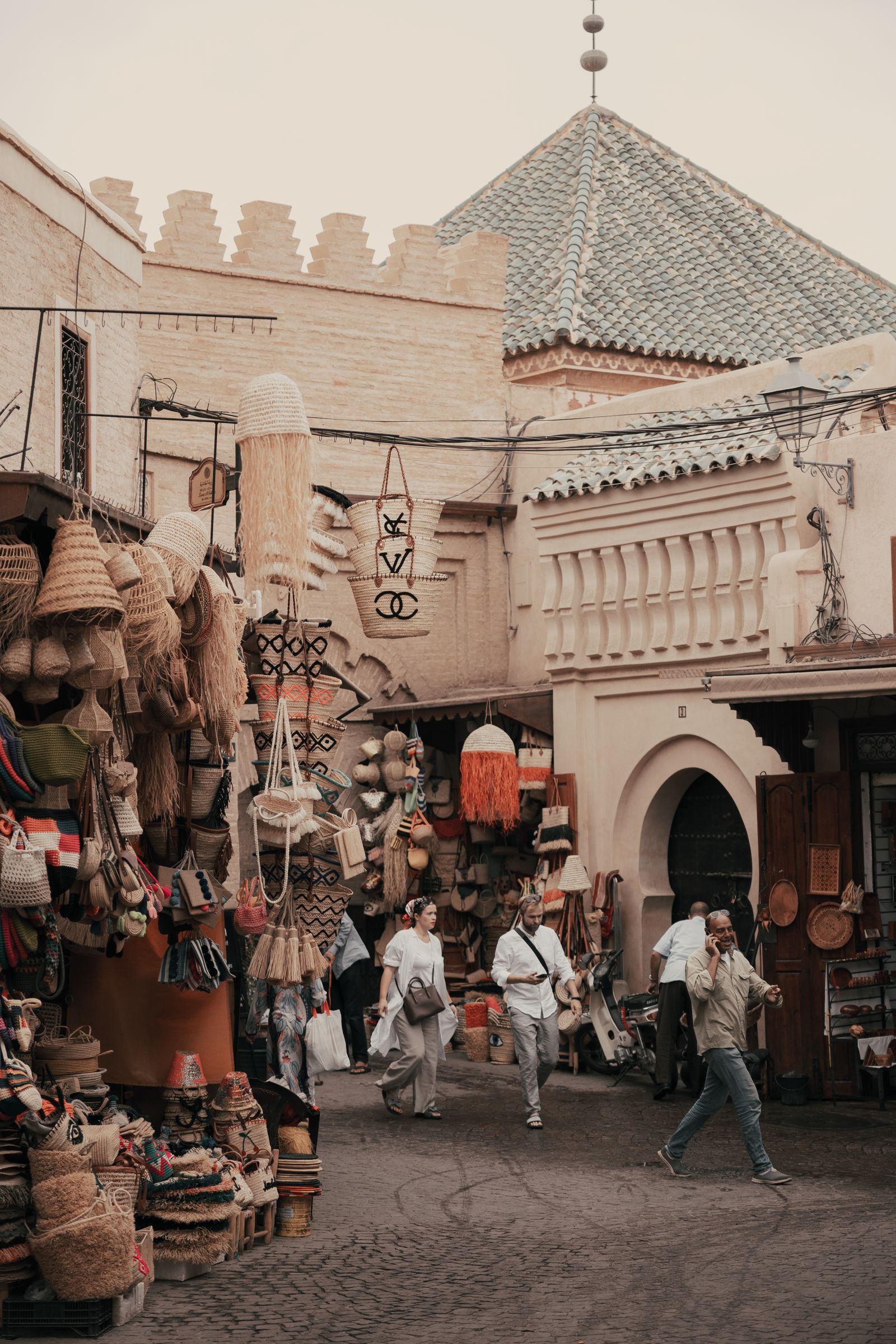
Overall Safety Assessment
Morocco is generally safe for tourists. It welcomed over 14 million international visitors in 2024 and has a well-established tourism infrastructure. Violent crime targeting tourists is rare. The overwhelming majority of trips to Morocco are completed without any serious incident.
That said, Morocco is not without risks. The main ones are petty crime and scams — pickpocketing in crowded medinas, dishonest taxi drivers, and persistent touts in tourist zones. Understanding these in advance means you can navigate them easily.
The one-line answer: Morocco is as safe as most southern European destinations — more street scams, slightly more hassle, but genuinely low risk of violent crime for tourists who take basic precautions.
| Risk Type | Level | Notes |
|---|---|---|
| Violent crime | 🟢 Low | Rare against tourists; Morocco has a strong police presence in tourist zones |
| Petty theft | 🟡 Medium | Pickpocketing in crowded souks and bus stations; use a zip-close bag |
| Scams & touts | 🟡 Medium–High | Most common issue tourists face — see section below |
| Road safety | 🟡 Medium | Traffic is chaotic; fatality rates higher than Western Europe; use licensed taxis |
| Food & water | 🟡 Medium | Traveller's stomach common first few days; drink bottled water outside cities |
| Natural hazards | 🟢 Low | Occasional flooding in south after rain; earthquake risk (south); no active volcanoes |
Is Morocco Safe for Solo Female Travellers?
Yes — but with important caveats. Hundreds of thousands of women travel Morocco solo every year, and the vast majority have positive experiences. However, Morocco requires more awareness and resilience than many Western destinations.
What to expect
Street harassment — unwanted comments, hissing, persistent following — is common in medinas and tourist zones. It's almost never physical, but it can be exhausting and demoralising. It is worst in tourist-heavy areas of Marrakech, less prevalent in Rabat and Chefchaouen.
What genuinely helps
- Modest clothing — cover shoulders and knees in medinas and traditional areas. It reduces (though doesn't eliminate) unwanted attention.
- Confidence — walk purposefully, make eye contact minimally with men who approach, give a firm "la shukran" (no thank you) and keep moving.
- Avoiding walking alone at night in deserted medina alleyways, especially in Fes and Marrakech. Well-lit main streets are fine.
- Staying in well-reviewed riads — riad owners are incredibly protective of their guests and a great source of advice.
- Using petit taxis with meters rather than accepting rides from men who approach you.
Useful phrase: "Imshi" (go away) said firmly and loudly in Arabic is often more effective than politely declining in English.
The Most Common Scams in Morocco
Scams are the biggest practical safety issue tourists face in Morocco. None are violent — they're nuisances rather than genuine dangers. Know these five and you'll avoid 95% of problems:
1. The Fake Guide
Someone offers to help you find a restaurant, a hotel, or a landmark. After walking with you, they demand payment for "guiding services." Never accepted unsolicited guides. If lost, ask in a shop (shop owners won't expect a commission).
2. The Tannery Viewing Scam (Fes)
You're led to a leather shop roof for a "free" tannery view. After you've looked, you're in a hard-sell environment with pressure to buy. You can see the Chouara tanneries for free from the rooftops of shops with clear signage — you'll be asked to buy leather but the pressure is less intense if you choose these directly.
3. The Carpet/Argan Shop Routine
Often preceded by an offer of "mint tea with no obligation." The obligation is very much there. Politely decline if you have no intention of buying. If you do go in and want to leave, simply stand up and say "shukran, la."
4. Taxi Without a Meter
Always insist on the meter in petit taxis. If the driver claims it's broken, get out. From airports, use official taxi desks or pre-agreed prices. Grand taxis are shared and have fixed routes — agree price per seat, not per taxi.
5. The "Closed" Landmark
A "student" or "local" tells you that the place you're heading to is closed today (festival/holiday/renovation) and offers to take you somewhere better. It's never closed. Keep walking.
General rule: Any unsolicited approach in a tourist area is likely a setup for a scam or a commission. This sounds cynical — and 5% of the time the person genuinely is being kind — but the default assumption saves you 95% of hassle.
Areas to Be Cautious In
The vast majority of Morocco is safe to visit. A few specific areas require extra caution:
- Port areas of Tangier and Casablanca — avoid walking alone here at night; petty crime and drug-related activity are higher than city centres
- The Rif Mountain region near Ketama — this area has a long association with cannabis farming; independent travellers are frequently approached and occasionally robbed on the road; best avoided entirely
- Western Sahara border zones — while Dakhla and Laayoune are safe cities, areas near the Mauritanian border require current government travel advice; check before visiting
All major tourist destinations — Marrakech, Fes, Chefchaouen, Essaouira, Sahara, Atlas, Agadir, Rabat — are safe to visit.
Health & Emergency Information
Medical Care
Morocco has reasonable medical facilities in major cities. Private clinics in Marrakech, Casablanca and Rabat provide decent care. Rural areas have very limited facilities. Travel insurance with medical evacuation cover is strongly recommended.
Food & Water Safety
Tap water is technically treated in cities but many travellers get an upset stomach in the first few days as their gut adjusts to different bacteria. Drink bottled water especially in the first week. Avoid salads washed in tap water at street stalls. Cooked food from busy street stalls is generally safe — high turnover means fresh food.
Emergency Numbers
- Police: 19
- Ambulance: 15
- Tourist Police (Brigade Touristique): available in Marrakech, Fes and Agadir
- General Emergency: 112 (works from any mobile)
Travel insurance: Always get it before visiting Morocco. See our Morocco travel insurance guide for recommended providers and what to look for.
Top Safety Tips for Morocco
- Keep a photocopy of your passport separately from the original
- Use a money belt or hidden pouch for cash and cards in busy medinas
- Book accommodation with strong reviews and confirmed addresses before arrival
- Download Maps.me or Google Maps offline for navigation — getting lost in a medina makes you an easier target
- Tell someone your itinerary if trekking alone in the Atlas
- Learn 5 words of Arabic or Darija — it transforms how locals interact with you
- Trust your instincts — if something feels wrong, walk away immediately
Morocco Unveiled
Plan your trip with confidence
Our city guides include neighbourhood-by-neighbourhood safety notes, licensed riad recommendations and scam-free restaurant lists.
Browse City Guides →