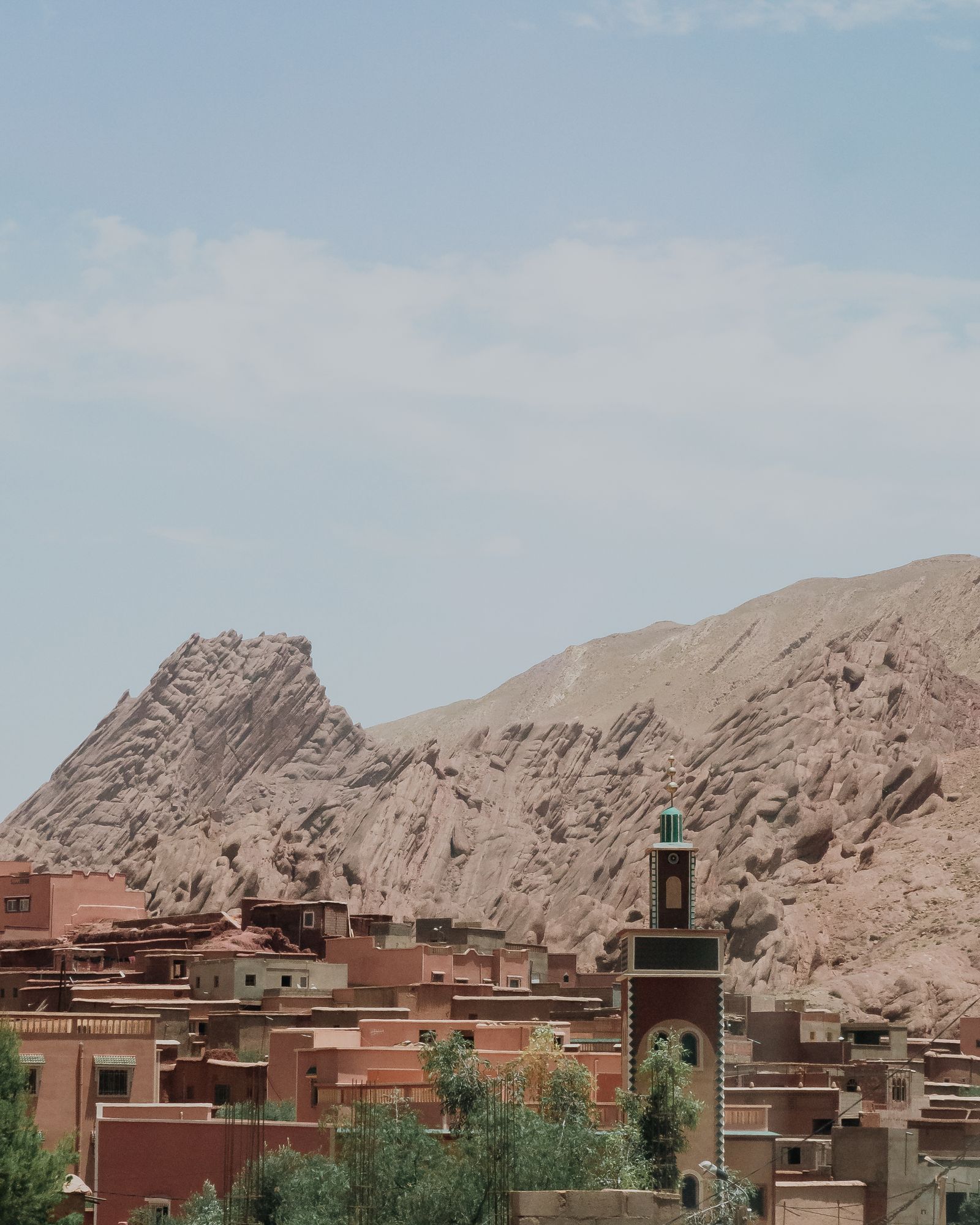
Why 10 Days Is the Sweet Spot
Ten days gives you enough time to experience Morocco's three essential pillars — the imperial cities, the Sahara desert, and the mountains — without rushing. Seven days is possible but thin; two weeks opens up the coast and the south. Ten days hits the best ratio of depth to breadth.
This route runs south-first: fly into Marrakech, head into the Atlas and down to the Sahara, then loop north to Fes and fly home. It flows with the geography, avoids doubling back, and builds from the familiar (Marrakech) to the extraordinary (the dunes).
The Route at a Glance
| Days | Location | Highlight |
|---|---|---|
| 1–3 | Marrakech | Djemaa el-Fna, Majorelle, hammam, souks |
| 4 | Atlas Mountains (Aït Benhaddou) | High Atlas pass, ksar, Draa Valley drive |
| 5 | Draa Valley → Dades Gorge | Rose Valley, Skoura palmeraie, gorge walk |
| 6–7 | Merzouga Sahara | Camel trek, overnight camp, sunrise dunes |
| 8 | Midelt → Fes | Cedar forests, cedar monkeys, Ifrane |
| 9 | Fes | Tanneries, Bou Inania Madrasa, medina |
| 10 | Fes → Departure | Morning medina, flight home |
Days 1–3: Marrakech
Day 1 Arrival + Djemaa el-Fna
Arrive Marrakech Menara Airport (RAK). Take a petit taxi to your riad in the medina (15–20 min, ~80 MAD). Afternoon: wander the Djemaa el-Fna square, the world's greatest open-air theatre. Watch the snake charmers, acrobats and storytellers appear as the day cools. Evening: dinner on a rooftop terrace overlooking the square — order harira soup, bastilla, lamb tagine.
Day 2 Majorelle Garden + Souks
Morning (8am): Majorelle Garden — arrive when it opens to beat the crowds. The cobalt-blue garden is extraordinary in early light. Adjacent Yves Saint Laurent Museum is worth an hour. Afternoon: plunge into the souks — leather workers in the Charia Chouari, dyers in the Souk des Teinturiers, spice merchants near the Djemaa el-Fna. Evening: hammam at a traditional bathhouse (Hammam El Bacha or Les Bains de Marrakech).
Day 3 Palaces + Bahia Riad
Morning: Bahia Palace — the most beautiful 19th-century palace in Morocco, a maze of painted cedar ceilings and zellij courtyards. Then the Saadian Tombs (UNESCO), rediscovered in 1917 after being sealed for 200 years. Afternoon: El Badi Palace ruins and a cooking class in the afternoon. Evening: Jemaa el-Fna night market — eat from the food stalls (stall 1 is the local favourite for grilled meats).
Days 4–5: Atlas Mountains & Draa Valley
Day 4 Marrakech → Aït Benhaddou → Ouarzazate
Depart Marrakech by grand taxi or private transfer (~4h). The Tizi n'Tichka pass (2,260m) is one of the world's great mountain drives — snow-capped peaks, Berber villages, hairpin bends. Stop at the Aït Benhaddou ksar (UNESCO, 20 min from Ouarzazate) — the most iconic mud-brick fortress in Morocco, filmed in Gladiator, Game of Thrones, and The Mummy. Stay overnight in Ouarzazate, the film capital of Morocco.
Day 5 Draa Valley → Dades Gorge
Morning: drive the Draa Valley — 200km of date-palm oases stretching south from Agdz to Zagora. Stop at Agdz lookout, walk into the Draa palmeries (free). Continue east via Skoura's famous palmeraie (hire a mule for the best experience). Afternoon: arrive Dades Gorge — the dramatic canyon walls turn orange and red in the late afternoon light. Walk up the gorge road at sunset for the "monkey fingers" rock formation. Stay in a guesthouse in the gorge.
Days 6–7: Merzouga — The Sahara Desert
Day 6 Dades Gorge → Todra Gorge → Merzouga
Morning: Todra Gorge — Morocco's most dramatic canyon. The walls rise 300m and narrow to 10m. Walk the 2km gorge path; early morning light is magical. Afternoon: drive across the Tafilalt plains toward Merzouga. First sight of the Erg Chebbi dunes — 150m high, perfectly formed, stretching to the Algerian border. Check into your desert camp or guesthouse at the dune base. Sunset camel trek into the dunes (~90 min). Watch the sky turn from gold to pink to purple. Dinner by firelight, Berber musicians, million stars.
Day 7 Sahara — Full Day
Pre-dawn (5am): wake before sunrise, climb the nearest high dune on foot. The light from the east hits the dunes in waves of gold and shadow — one of the most beautiful things you will ever see. Morning: optional sandboarding or quad biking (150–300 MAD/h). Visit Khamlia village to hear Gnawa music from the West African-descended community. Afternoon: rest during peak heat. Sunset: second camel ride or sand walk. Sleep one more night — you won't want to leave.
Days 8–9: Drive North to Fes
Day 8 Merzouga → Midelt → Ifrane → Fes
The northern drive is the most underrated in Morocco. Leave Merzouga early (~7am). Stop at Midelt for breakfast and apple tart (the town is Morocco's apple capital). Continue through the cedar forests of Ifrane — you'll encounter wild Barbary macaques begging for food at the roadside. Ifrane itself looks surreally Swiss, with pitched roofs and a famous lion sculpture. Arrive Fes by late afternoon (~7–8h total drive). Stay in a riad in the medina.
Day 9 Fes el-Bali — Full Day
Morning (8am): hire a licensed guide for the medina (300–400 MAD/half day) — essential in Fes, which is genuinely easy to get lost in. Highlights: Bou Inania Madrasa (the finest Marinid architecture in Morocco), the Chouara Tanneries (view from a leather shop balcony — ask any shopkeeper, it's free), Nejjarine Fountain and the wood-working museum. Afternoon: explore independently — the Andalusian Quarter across the river is calmer. Evening: dinner at a riad restaurant — Fes cuisine (bastilla, pastilla au lait) is Morocco's most refined.
Day 10: Fes Departure
Day 10 Fes medina morning + flight
Most flights from Fes-Saïss Airport (FEZ) depart afternoon or evening. Use the morning for anything you missed — the Mellah (Jewish quarter), the Potters' Quarter outside the medina walls, or a final café au lait in Place R'cif. The airport is 15km south of the medina (25 min by taxi, ~80 MAD). Fes has direct flights to London, Paris, Amsterdam, Madrid and other European hubs.
Getting Around This Route
Option A — Private Driver (Most Popular)
A private driver for the Marrakech–Sahara–Fes circuit costs €250–400 for the full 10 days (car + driver, not accommodation). This is the most flexible option — you stop where you want, when you want. Your riad can usually arrange a trusted driver.
Option B — Shared Transfers + CTM Bus
Budget option. CTM buses run Marrakech–Ouarzazate–Errachidia (for Merzouga) and Errachidia–Fes. Total transport cost: ~400 MAD for the full circuit. Takes longer and requires more planning, but very doable.
Option C — Rent a Car
Excellent if you're comfortable driving. Roads on this route are good (mostly paved). A small car costs ~€25–40/day from Marrakech airport. Drop off in Fes for ~€30–50 extra. Note: the Draa Valley road and Dades Gorge require no 4x4 — standard cars are fine.
Budget Breakdown — 10 Days
| Category | Budget | Mid-Range | Comfort |
|---|---|---|---|
| Accommodation (9 nights) | $180 ($20/night) | $450 ($50/night) | $900 ($100/night) |
| Transport | $60 (buses + taxis) | $200 (shared driver) | $400 (private driver) |
| Food | $100 ($10/day) | $200 ($20/day) | $400 ($40/day) |
| Activities & Entry | $60 | $120 | $200 |
| Desert Camp (2 nights) | $80 (basic) | $160 (mid) | $400 (luxury) |
| Total per person | ~$480 | ~$1,130 | ~$2,300 |
Budget note: Flights are not included. Marrakech and Fes both have budget carriers from Europe (Ryanair, easyJet, Air Arabia). Return flights typically run €60–180 depending on season and origin.
Morocco Unveiled
Get the complete day-by-day guide
Detailed maps, restaurant picks, riad recommendations and offline use. Covers every stop on this route.
Browse City Guides →