Why Northern Morocco Is Morocco's Best-Kept Secret
Most travellers land in Marrakech and head south — to the Sahara, the Atlas, the coast. The north is almost entirely overlooked. This is a mistake. Northern Morocco is Morocco at its most culturally layered — Phoenician ports, Roman ruins, Andalusian architecture, Rif Berber villages, Spanish enclaves, and the most dramatic mountain scenery in the country.
Tangier, Tetouan, Chefchaouen, the Rif Mountains and Fes fit neatly into 7–8 days and can be driven in a rented car or covered by a mix of buses and grand taxis. The roads are good, the accommodation is excellent, and you will encounter almost no other tourists beyond Chefchaouen itself.
The Route at a Glance
| Day | Location | Distance from Previous |
|---|---|---|
| 1–2 | Tangier | Fly in / ferry from Spain |
| 3 | Tetouan | 40km (45 min) |
| 4–5 | Chefchaouen | 60km from Tetouan (1h 15min) |
| 6 | Ouezzane + Rif drive | 45km (1h) |
| 7–8 | Fes | 200km from Chefchaouen (3h) |
Days 1–2: Tangier
Day 1 Arrival + Medina + Café Hafa
Arrive Tangier Ibn Battouta Airport (TNG) or via ferry from Tarifa/Algeciras (Spain — 35 min crossing). Check into a riad in the medina. Afternoon: explore the Grand Socco and the medina — smaller and calmer than Marrakech, retaining a genuinely bohemian 1950s atmosphere (Kerouac, Burroughs and Matisse all lived here). Evening: Café Hafa on the cliffs, one of Morocco's great atmospheric cafés — terraced down the hillside, mint tea, views of the Strait of Gibraltar, unchanged since 1921.
Day 2 Kasbah + Hercules Caves + Cap Spartel
Morning: the Kasbah Museum (former sultans' palace, excellent Islamic art collection) and the Kasbah quarter — quieter than the lower medina, great city views from the ramparts. Afternoon: Cap Spartel, 14km west of Tangier — the point where the Atlantic meets the Mediterranean. Just below it, the Hercules Caves, where the sea has carved a cave in the shape of Africa's outline. One of Morocco's most photogenic natural sites. Return via the corniche.
Day 3: Tetouan — The Andalusian City
Day 3 Tetouan medina + Tamuda ruins
Drive or take a grand taxi from Tangier (40km, 45 min, ~25 MAD shared). Tetouan's medina was built in 1492 by Muslims expelled from Granada — it is the most authentically Andalusian city in Morocco. The alleyways are wider than Fes, the craftwork is extraordinary (particularly leather and embroidery), and there are almost no tourist touts. Must-see: the Musée Archéologique (Moroccan archaeology in a beautiful 1940s Spanish colonial building), and the Tamuda Roman ruins 5km outside town — completely unvisited, walk in solitude through a 3rd-century BC Mauritanian-Roman city. Continue to Chefchaouen the same afternoon (1h 15min).
Days 4–5: Chefchaouen — The Blue City
Day 4 Blue medina + Spanish Mosque sunset
Arrive and allow yourself to be stopped dead by the colour. The entire medina of Chefchaouen is painted in shades of blue — cobalt, cerulean, indigo — a tradition started in the 1930s. Afternoon: wander freely without a guide — Chefchaouen is small enough to navigate intuitively. The Plaza Uta el-Hammam is the social heart; the kasbah on one side contains a garden and small ethnographic museum. Sunset: hike 20 minutes up to the Spanish Mosque on the hill above town — the view of the blue rooftops against the Rif peaks is one of Morocco's iconic images.
Day 5 Ras el-Maa waterfall + Rif hike
Morning: Ras el-Maa, the waterfall at the edge of the medina where local women still wash clothes in the stream. Follow the stream path up into the forest for a 2–3h hike with views back over the city. Afternoon: the artisan souks — Chefchaouen is known for its handwoven wool blankets, leather goods, and pottery. Less aggressive bargaining than Marrakech. Evening: dinner at Aladdin restaurant (terrace overlooking the medina, excellent pastilla).
Day 6: Rif Mountains Drive
Day 6 Chefchaouen → Ouezzane → Rif traverse → Fes
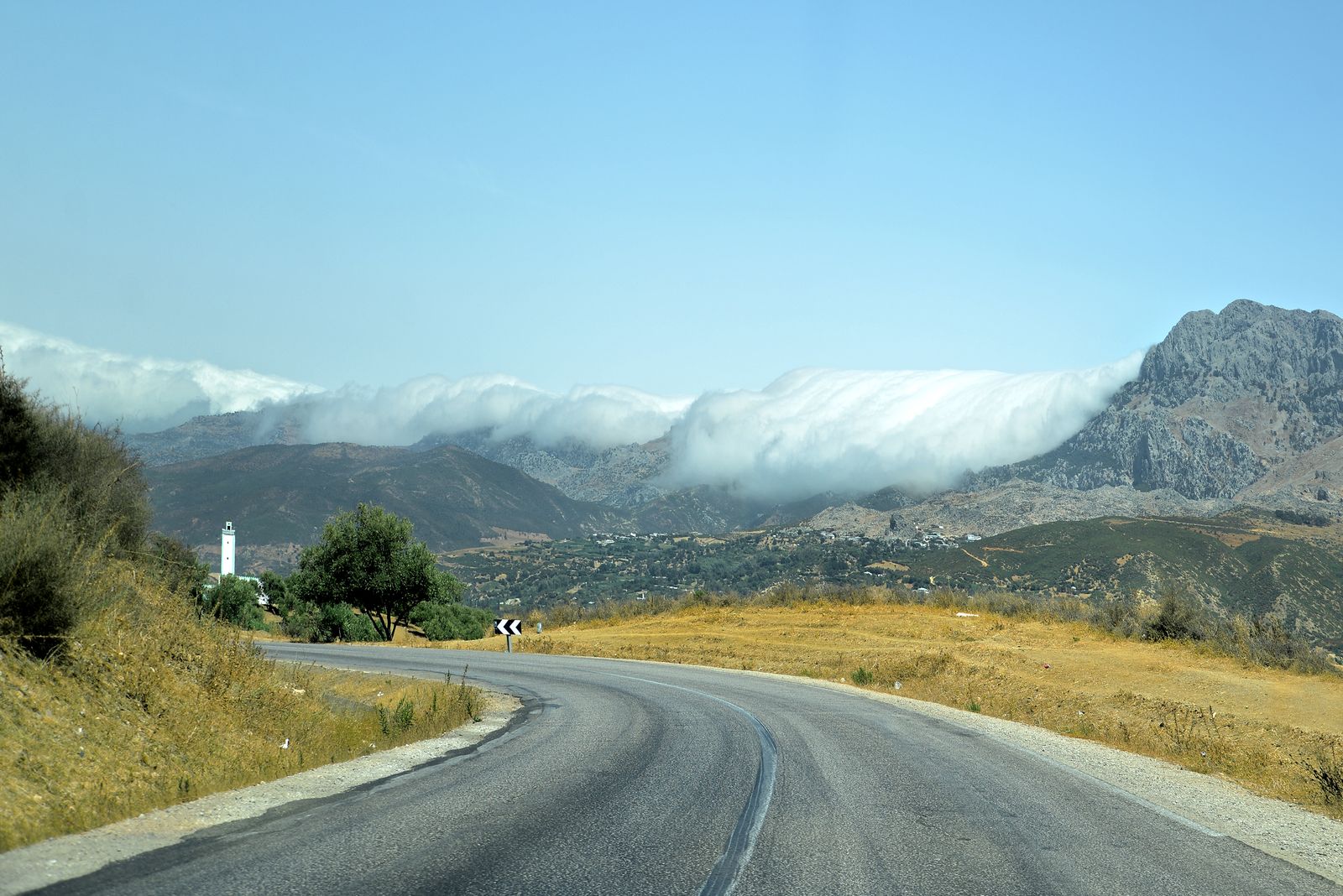
The drive from Chefchaouen to Fes via the Rif Mountains is one of the most spectacular in Morocco, and almost nobody does it. The N2 road passes through cedar and oak forest, Berber villages perched on ridgelines, and the old holy city of Ouezzane (pilgrimage centre, famous for its olive oil and zaouia). Stop at the Bab Taza viewpoint (1,600m elevation, looking north over the Rif to the Mediterranean on clear days). Stop in Ain Aicha for lunch at a roadside Berber grill. Arrive Fes late afternoon.
Road note: The Rif Mountain roads are well-maintained tarmac. A standard rental car is fine. Allow 3.5–4h for the Chefchaouen–Fes drive with stops. Avoid night driving in the mountains.
Days 7–8: Fes
Day 7 Fes el-Bali medina
Hire a licensed guide (300–400 MAD/half day) for Fes el-Bali — the world's largest car-free urban area and a genuinely disorienting medieval maze. Essential stops: Bou Inania Madrasa (finest Marinid architecture in Morocco, 14th century), the Chouara Tanneries (view from leather shop balconies — ask any shop owner, it's free), Nejjarine Fountain, the Al-Quaraouiyine University (the world's oldest functioning university, founded 859 AD).
Day 8 Fes el-Jedid + Volubilis (optional) + departure
Morning: Fes el-Jedid (New Fes — 13th century) and the Royal Palace gates. The Mellah (Jewish quarter) has remarkable architecture. Optional: if you have an afternoon flight, consider driving 55km to Volubilis (the best-preserved Roman ruins in Africa, ~1h visit) then on to Meknes for lunch before returning to Fes airport. Fes-Saïss Airport (FEZ) has direct flights to European hubs.
Driving Tips & Road Conditions
Renting a Car
Rent in Tangier, drop in Fes — most international agencies (Europcar, Hertz, Sixt) allow one-way rentals for ~€20–35 extra. A small car (Dacia Sandero class) costs €20–35/day. Book in advance in peak season.
Road Quality
- Tangier–Tetouan: Motorway A4, excellent
- Tetouan–Chefchaouen: N2 mountain road, good tarmac, scenic
- Chefchaouen–Fes (via Rif): N2/N13, good tarmac, winding mountain sections
- Chefchaouen–Fes (via Ouezzane/Meknès): R505/N13, faster, less dramatic
Speed cameras: Morocco has extensive fixed speed cameras on national roads. Limits are 40km/h in towns, 80km/h on rural roads, 120km/h on motorways. Fines are issued on the spot.
No Car? Bus + Grand Taxi Option
CTM and Supratours buses connect all the major stops. Grand taxis fill in the gaps (Tetouan–Chefchaouen: ~40 MAD/person shared). The route is fully doable without a car — just add a few hours to each leg.
Morocco Unveiled
City guides for every stop on this route
Tangier, Chefchaouen and Fes guides — maps, restaurants, hotels and offline use.
Browse City Guides →