In This Article
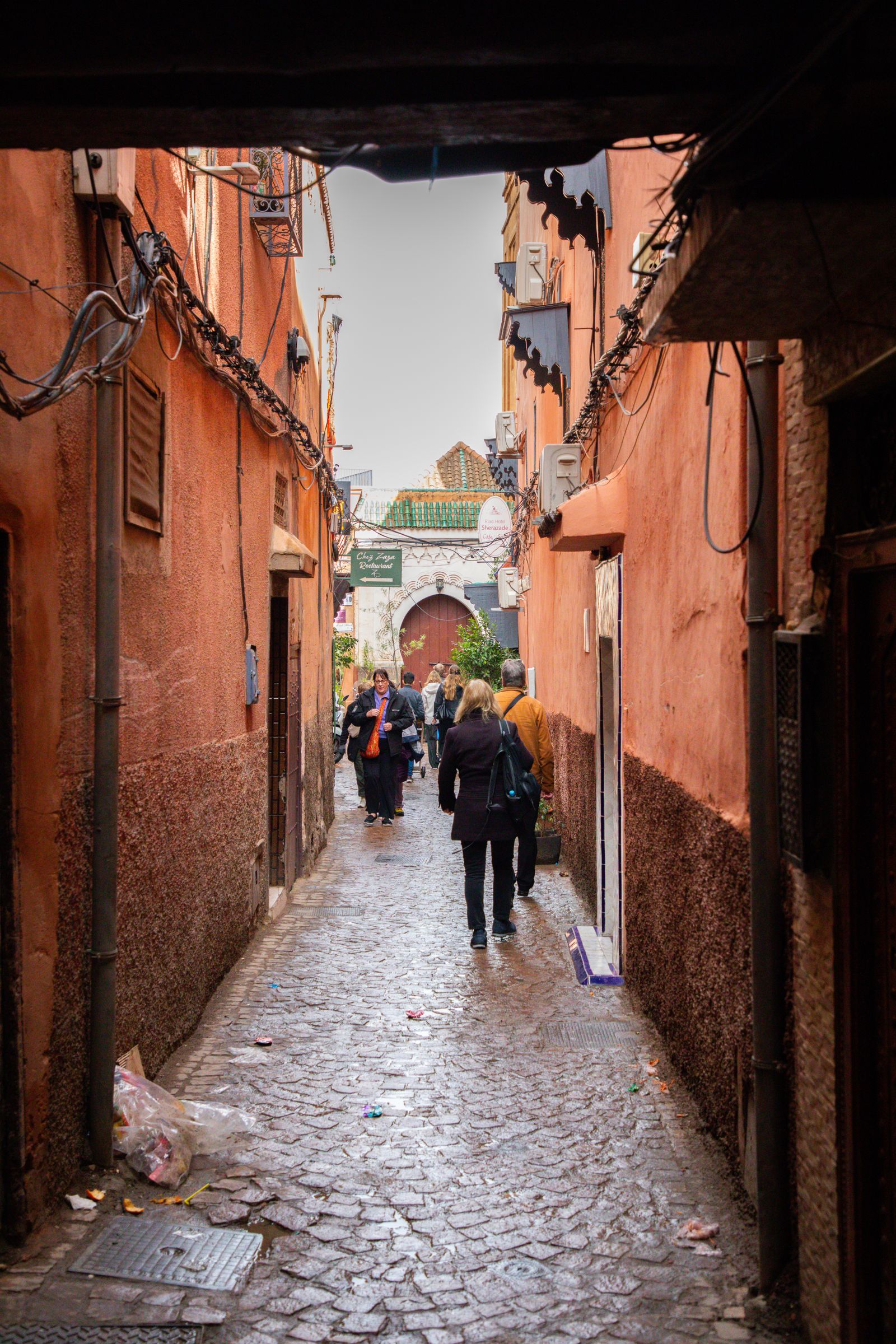
The Marrakech medina has 9,000 alleys, more than a million residents, and exactly zero street signs that make sense to a first-timer. It will disorient you, bewitch you, exhaust you, and then pull you back in for more — usually within the same hour. I've been lost in it seven times and loved every minute of it. Here is everything I wish I had known before stepping through Bab Doukkala for the first time.
This guide is not about telling you to "just wander." Wandering is wonderful once you understand the structure. But going in blind, without knowing where the souks are or how the taxi system works, leads to frustration and, often, getting led into the wrong shop by the wrong "guide." Let's fix that.
Getting Your Bearings
The medina is best understood as a series of concentric layers around a central public square: Djemaa el-Fna. Everything radiates outward from this square, and it is your compass, your meeting point, and your fallback whenever you're lost. If you can find Djemaa el-Fna, you can always find your way home.
Two landmarks will save you repeatedly. The Koutoubia Mosque minaret (the 70-metre tower visible from almost anywhere in the southern medina) rises southwest of Djemaa el-Fna — if you see it, you're close to the main square. The Ben Youssef Madrasa is your northern anchor in the souks district. Learn to find these two and the medina suddenly feels navigable.
The medina is split into two rough zones: the southern medina (Djemaa el-Fna, the palace district, Mellah, Bahia Palace) and the northern medina (the souks, Ben Youssef Madrasa, carpet souk). Most first-timers spend their time in the north — the souks — but don't neglect the quieter, more atmospheric south.
The Main Souks — What's Where
The souk district is not one market — it is a dense web of specialist markets, each trading in a single craft. Knowing which souk is which stops you from wandering aimlessly and means you can head directly to what interests you.
- Souk Cherratine — Leather goods: belts, bags, babouche slippers. The largest leather souk in the medina.
- Souk el-Attarine — Spices and perfumes. The smell hits you from 50 metres away. Buy your ras el hanout here.
- Souk Haddadine — Metalwork: lanterns, mirrors, decorative ironwork. The sound of hammering echoes all day.
- Souk des Tapis — Carpets and rugs, often displayed on rooftops. Be prepared for a serious sales pitch and mint tea.
- Souk Semmarine — The main artery, lined with textile shops. This is the one everyone photographs.
- Souk Berber — Jewellery and traditional Berber items: amber, silver, fossils.
- Souk Chouari — Woodwork: carved cedarwood boxes, furniture, mirrors.
Navigation Tips
Google Maps works surprisingly well in the medina — download the Marrakech offline map before arrival. Maps.me is the local favourite and shows alley-level detail that Google sometimes misses. Turn-by-turn navigation in the souks is futile because alleys are too narrow for GPS accuracy, but the apps are excellent for orientating yourself every 10 minutes.
Hire a licensed guide for your first half-day (200–300 MAD for 3 hours). Not a "student" who approaches you on the street — a licensed guide with an official badge, bookable through your riad or the ONMT (Office National Marocain du Tourisme) office near the Koutoubia. After that half-day orientation, you'll have the confidence to explore solo.
Eating & Drinking
Breakfast on Djemaa el-Fna is one of the great medina rituals. The cafés ringing the square open by 7am and offer the classic Moroccan spread: msemen (flaky flatbread), khobz with argan oil and honey, olives, and mint tea or café cassé (half coffee, half milk). Budget 25–35 MAD per person. The terrace seating above the square is iconic — worth the 5 MAD premium for the view.
For lunch in the medina, the small restaurants tucked off the main souk alleys serve fixed-price menus (tagine + bread + tea) for 60–90 MAD. Avoid any restaurant with a laminated tourist menu in five languages displayed outside — the quality rarely matches the price. Instead, follow the locals to the tiny lunch spots near Rahba Kedima square or the mechanics' quarter near Bab Doukkala.
The best mint tea in the medina is served at the rooftop café Café des Épices overlooking Rahba Kedima square (20 MAD for tea, 50 MAD for tea + wifi password). At sunset, Djemaa el-Fna comes alive with orange juice vendors (freshly squeezed, 4–5 MAD), and the night market food stalls serve grilled meat, harira soup, and snails from 100 stalls starting at sundown.
Avoiding Scams
Marrakech scams are well-known, repetitive, and easily avoided once you understand the script. None of them are dangerous — they're all commercial, not criminal. But they can sour your first day if you're unprepared.
Best Times to Visit
The medina is a living city with a genuine daily rhythm. Understanding that rhythm means you'll be in the right place at the right time — and avoiding the worst of the tourist crush.
- 6:30–9am: The medina wakes up slowly. Bread ovens fire up, locals buy breakfast, the souks are empty of tourists. The best time for photography and unhurried wandering.
- 9am–12pm: Souks open fully, tour groups arrive. Still manageable on weekdays, busy on weekends.
- 12–3pm: Hottest part of the day in summer, many locals rest. Good time for a long lunch or palace visit.
- 4–7pm: Second life of the souks. Light improves for photography, temperatures drop, artisans work. My favourite time to be in the souks.
- Sunset onwards: Djemaa el-Fna transforms. Snake charmers, storytellers, acrobats, food stalls. This is the medina's greatest performance — don't miss it.
Your Perfect Day Plan
Here is a single-day medina itinerary that covers the essential highlights without overwhelming you. It's designed for a first visit, walks roughly 5km, and costs around 200–400 MAD all-in excluding lunch.
- 7:00am — Breakfast at a Djemaa el-Fna terrace café. Watch the square wake up.
- 8:00am — Walk north through Souk Semmarine before the crowds. Buy spices at Souk el-Attarine.
- 9:30am — Ben Youssef Madrasa (entry 70 MAD, extraordinary 14th-century courtyard, usually quieter before 10am).
- 11:00am — Wander back south through the metalwork and carpet souks. Browse without pressure.
- 12:30pm — Lunch at a local restaurant near Rahba Kedima. Tagine + bread + tea for 70 MAD.
- 2:00pm — Bahia Palace (entry 70 MAD, 19th-century palace with extraordinary painted cedarwood ceilings).
- 3:30pm — Saadian Tombs (entry 70 MAD, 16th-century royal necropolis, small but stunning).
- 5:00pm — Return to souks for final shopping in the golden light.
- 6:30pm — Fresh orange juice on Djemaa el-Fna (4 MAD). Watch the square transform.
- 7:30pm — Dinner at the night market stalls. Fixed price menus 60–90 MAD.
Related Articles
- Essential Morocco Travel Tips Every First-Timer Needs
- Food in Fes: A Culinary Journey Through the Ancient Medina
- Solo Travel in Morocco: The Honest Guide
7 Perfect Days in Marrakech
85-page hour-by-hour Marrakech guide — hidden souks, 40+ restaurant picks, riad recommendations and a souk bargaining phrasebook. Instant download.
Get it — $12.99 →