Six Morocco trips. Countless mistakes. Every single one is on this list so you don't have to repeat it.
💰 Money & Prices
Always agree on the taxi price before getting in
Or insist on the meter ("compteur, s'il vous plaît"). Petit taxis (small, metered) should always use the meter. Grand taxis (shared, longer distances) have fixed rates — ask before boarding. If a driver won't use the meter, walk away.
Carry small change constantly
Most everyday transactions are under 100 MAD. Vendors and taxis often claim they have no change for large notes — sometimes true, sometimes strategic. Keep 5, 10, and 20 MAD coins in your pocket at all times.
Never pay the first price at a souk
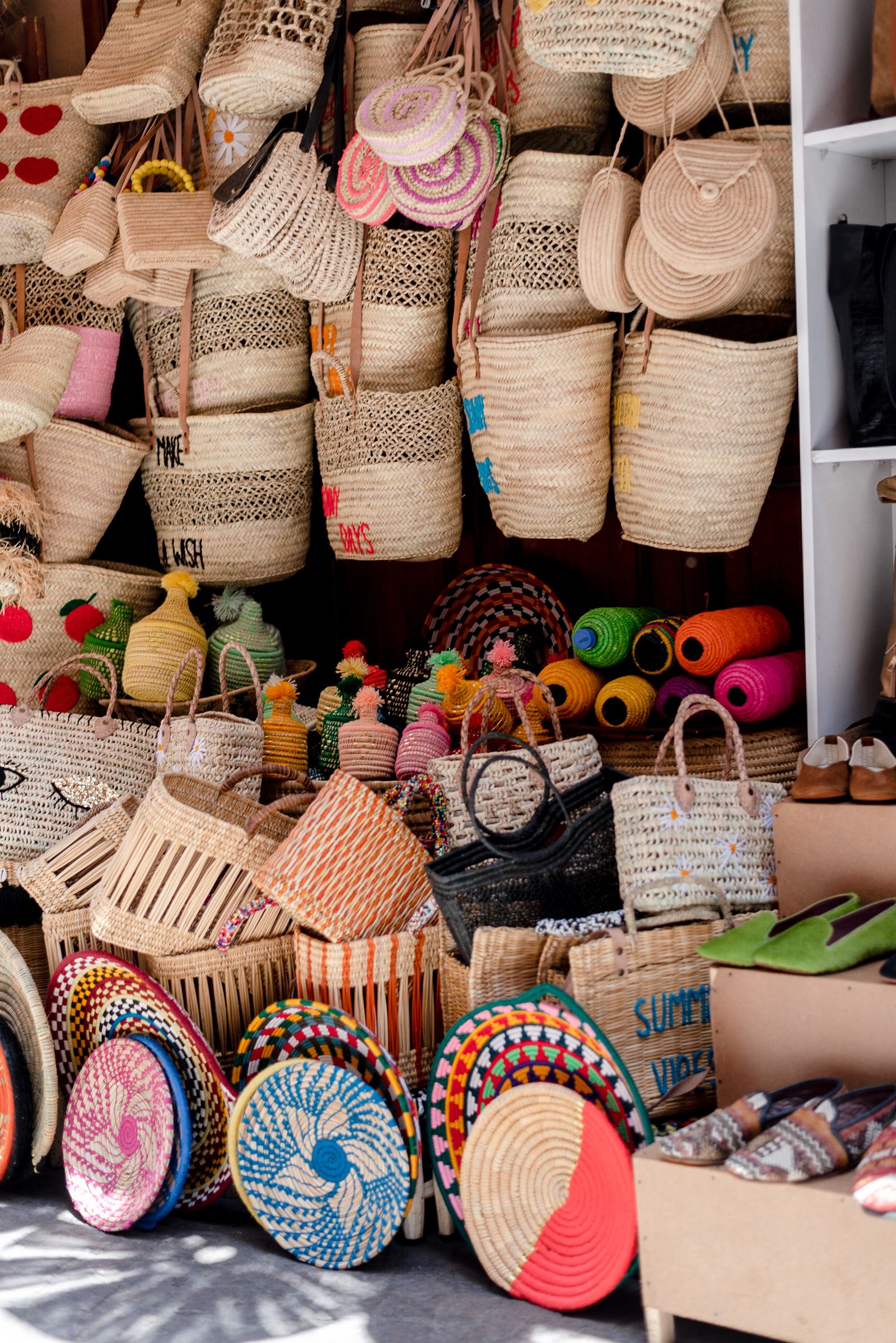
Haggling is expected and respected — but only if you're genuinely interested in buying. Start at 40% of the asking price for most items. Never bargain if you won't buy; it's considered deeply rude.
ATMs are everywhere; use bank ATMs only
Wafa Bank, BMCE, Attijariwafa — all safe. Avoid standalone ATMs in tourist areas with no visible bank branding. Notify your home bank before travel. Withdrawal fee: typically 20–35 MAD per transaction.
Budget 50% more than you think for shopping
The souks are extraordinary and the prices are genuinely low by Western standards. It is almost impossible to leave without buying things you didn't plan to. Build this into your budget honestly.
🗺️ Navigation & Getting Around
Download offline maps before you go
Google Maps works in Morocco with data but is patchy in deep medinas. Maps.me has better medina coverage offline. Download both with offline packs for each city before you leave home Wi-Fi.
Getting lost in a medina is not a crisis
Every medina has multiple exit points. Follow the sound of traffic to find a main gate. Look up — the minarets are navigation landmarks. Ask any woman for directions rather than men — almost universally more helpful and less likely to lead you to a carpet shop.
Book long-distance buses online in advance
CTM (ctm.ma) and Supratours connect all major cities comfortably. Book online — the app works well. Morning buses are more punctual than afternoon ones. Always reserve seats rather than showing up.
The train network is excellent — use it
ONCF trains connecting Casablanca, Rabat, Fes, Marrakech, and Tangier are comfortable, punctual, and cheap. Book at oncf.ma. First class is worth the small premium on longer journeys.
🏨 Accommodation
Book your first night in advance everywhere
Arriving in an unfamiliar city without accommodation — especially in a medina — is exhausting and sometimes dangerous. Book in advance, share your arrival time, and use the riad/hotel's meet-and-greet service if offered.
Riads are worth every dirham
A riad — a traditional house around a courtyard — provides security, community, local knowledge, and often the best breakfast you'll eat. Even budget riads (from 250 MAD/night) are more rewarding than equivalent hotel rooms.
Read the riad's reviews specifically for solo travellers
Some riads are excellent for solo travellers — communal breakfasts, helpful staff, advice on navigation. Others are geared toward couples and can feel isolating. The reviews make this clear.
🍽️ Food & Water
Tap water: don't drink it, but relax about everything else
Drink bottled water (3–5 MAD for 1.5L). But you don't need to refuse salads, ice, or cooked food as some guides suggest. Moroccan restaurant food safety is generally good. The main stomach issues come from eating too much street food too fast, not from contamination.
Eat where the Moroccans eat
The best food in every city is not in the tourist restaurants. It's at the stall with five locals eating standing up, or the family restaurant with no English menu. The quality gap is enormous and the price difference is dramatic.
Try the set menu (menu du jour)
Most mid-range Moroccan restaurants offer a set menu at lunch: soup + main + dessert + mint tea for 70–120 MAD. Extraordinary value, typically the best food on offer.
🕌 Culture & Etiquette
Learn 10 words of Darija
Shukran (thank you), La shukran (no thank you), Bslama (goodbye), Labas? (How are you?), Labas (Fine), Smahli (excuse me), Wach katkellem Inglizia? (Do you speak English?). Ten words. The warmth they generate is disproportionate to the effort.
Remove shoes before entering homes and some shops
If you see shoes at the entrance, yours join them. In mosques (non-Muslim visitors can enter the courtyard of most — the interior of all except the Hassan II Mosque in Casablanca), shoes come off at the door.
Don't photograph people without asking
"Mumkin photo?" (May I take a photo?) goes a long way. In medinas and markets, some people — particularly elderly women and tradespeople — find cameras intrusive. A smile and a gesture of your camera first, then photograph only if they nod.
Friday is the Islamic day of prayer — plan accordingly
Many shops and some restaurants close on Friday afternoon. Mosques fill with worshippers from midday — the surrounding streets can be crowded and then suddenly empty. The communal feeling is worth experiencing, not avoiding.
🧠 Medina Survival
No stranger offering to "help" you is disinterested
Anyone who approaches you on the street claiming to be a guide, wanting to show you something, or offering directions has an economic interest in doing so. This doesn't make them bad people, but it means accepting "help" leads to a shop. Know this going in and navigate on your own terms.
Walk with purpose even when you have none
Confident walking — slightly fast, looking forward, not studying the map on your phone — dramatically reduces unsolicited attention. The moment you look lost, you become a target for touts. Pause to check maps inside a café or riad, not on the street.
The donkeys have right of way
Medina streets are narrow and shared with motorcycles, donkeys, and carts. The animal always has right of way. Flatten yourself against the wall when one passes — they are faster and less forgiving than they look.
☀️ Practical Logistics
Buy a local SIM card at the airport
Maroc Telecom, Orange, and Inwi all sell tourist SIMs at arrivals for 50–100 MAD with 10–20GB of data. Far cheaper than roaming. Get it before leaving the airport.
The desert requires more nights than you plan
One night in the Sahara is never enough. You arrive exhausted, sleep through the most magical hour (3am), and leave before you've processed where you are. Book two minimum. Book three if you can.
Go slower than you think you need to
Morocco rewards slow travel. The traveller who spends five days in Fes leaves knowing a city. The traveller who spends one night passes through a postcard. Morocco's depth — its food, its people, its complexity — reveals itself on day three, not day one.
🚿 Hammam & Hygiene
Do the local hammam, not the tourist spa
Every city has public hammams (10–20 MAD entry). They are gender-separated, genuinely authentic, and the most thorough clean you will experience. Buy savon beldi (black olive soap) and a kessa glove in the medina first. Ask your riad for the nearest local hammam — not the tourist "luxury hammam experience" which costs 10× as much.
Toilet strategy in medinas
Public toilets exist near major souks and mosques — look for the Arabic sign or ask "wain toilet?" A small fee (1–2 MAD) is collected by an attendant. Always carry your own small tissue packet — medina toilets frequently have no paper. Wet wipes are the most practical solution.
📸 Photography
Always ask before photographing people
"Imken ndir liik su'ra?" (Can I take your photo?) is the phrase. Many Moroccans — especially women and older people in rural areas — are uncomfortable being photographed. A refusal is not an invitation to photograph anyway from a distance. Some medina workers will expect payment for being photographed; agree the price before shooting.
The tanneries and the payment ambush
The leather tanneries in Fes (viewed from leather shop rooftops) are free to view. But the shop staff who escort you up will expect you to look at merchandise before leaving. You are not obligated to buy. Walk through firmly and with purpose. If you do want to buy, the tannery-adjacent shops are not the cheapest place to do it.
Best photography times
Golden hour (6–7:30am) in any medina: empty streets, extraordinary light, no crowds. The tanneries in Fes are best at 10–11am when the coloured dye vats are fully lit by the sun. The Djemaa el-Fna is best at dusk (6–7pm) when the food stalls open and smoke begins rising.
🌙 Nights & Safety
Morocco is safer than its reputation
Petty theft (bag snatching, pickpocketing) exists, especially in crowded medinas. Violent crime against tourists is rare. The main risks are: hassle and scams, not physical danger. Use common sense — don't flash expensive cameras in dark alleys, don't accept unsolicited guidance, trust your instincts about specific streets and situations.
Night buses are underrated
CTM runs overnight buses on major routes (Marrakech–Fes, Marrakech–Agadir, etc.) that depart around 11pm and arrive at dawn. You save a night's accommodation and arrive fresh (relatively). Bring a neck pillow and an eye mask. The buses are air-conditioned — bring a layer.