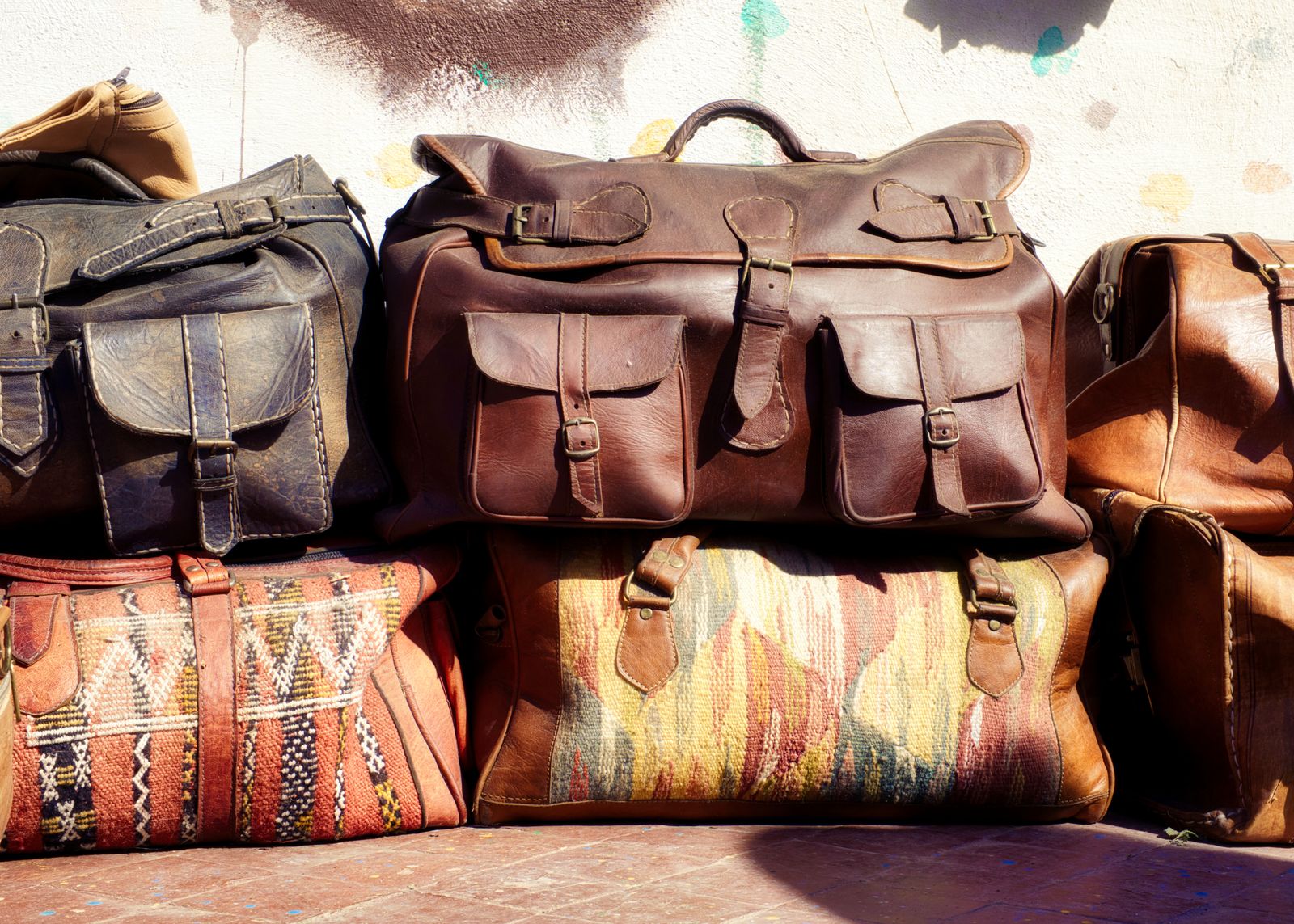
Six Morocco trips. One carry-on (40L backpack, 7kg). Here is exactly what comes with me, what I leave at home, and what I buy on arrival. Nothing on this list is aspirational — every item has been earned through the experience of not having it when I needed it, or lugging it around for two weeks without using it once.
The Non-Negotiables
Leave Behind
Buy on Arrival
Desert & Mountain Add-Ons
If your trip includes the Sahara or Atlas trekking, add:
- Warm layer — Desert nights can reach 5°C even in spring and autumn. A packable down jacket or thick fleece is essential.
- Trekking poles — Rental available in Imlil for the Atlas. Bring your own if doing serious trekking.
- Buff/neck gaiter — For Sahara sand and mountain wind.
- Good sunglasses — Essential in the desert. UV protection, not fashion.
- Extra water capacity — A 2L collapsible bottle in addition to your filtered bottle.
The Final Checklist Summary
Total weight target: under 8kg for carry-on travel. Pack your bag, weigh it, then remove 20% of what you packed. You still won't use half of what remains.
Morocco is a country where the local market can supply almost anything you've forgotten. The only genuinely irreplaceable items are your documents, your medication, and your electronics. Everything else can be replaced or borrowed.
Packing by Season — What Changes
Morocco's climate varies dramatically by region and time of year. The same country that has Atlantic beaches at 22°C in winter has a Sahara at 45°C in summer and High Atlas peaks under a metre of snow in February. One generic packing list doesn't serve all of this.
Spring (March–May) — The Ideal Season
Light layers are the answer. Mornings can be cool (14°C in Chefchaouen, 10°C in the Atlas), afternoons warm (24°C in Marrakech). Pack: two long-sleeve base layers, one light fleece, two pairs of light trousers. No heavy jacket needed in the south; absolutely one for the north and mountains.
Summer (June–August) — Heat Strategy
This is the "pack less clothing, more sun protection" season. In the interior cities (Fes, Marrakech) you want: lightweight, loose-fitting linen in muted colours, wide-brimmed hat, SPF 50. The coast and north are cooler — Essaouira is pleasantly breezy when Marrakech is 42°C. The Sahara in summer requires: early morning everything, serious shade, and a retreat to air-conditioning by 10am.
Autumn (September–November) — The Photographer's Season
Similar layering to spring. October is often the best month in Morocco — add a medium-weight jacket for evenings in the medina. Mountain trekkers should bring a proper warm layer; nights at the Toubkal refuge can reach 2°C in October.
Winter (December–February)
The coast is mild (Agadir: 18°C). The imperial cities are cold at night (Fes: 8°C). The Atlas is alpine. Pack: a proper warm jacket, thermal underlayer, waterproof outer. If you're crossing the Tizi n'Tichka pass in winter, bring a warm hat and gloves — the pass at 2,260m is genuinely cold.
The Hammam Pack
A hammam (traditional Moroccan bathhouse) is one of the great travel experiences. Most riads can recommend a local hammam, and most medinas have a public one open daily. What to bring:
- Savon beldi — Buy in the medina for 10–20 MAD. A black olive oil soap used for exfoliation. You cannot bring this from home (it's a liquid).
- Kessa glove — The rough exfoliating glove. 5–10 MAD in any souk. Essential for getting the full hammam effect.
- Flip flops — You packed these anyway. Mandatory in the hammam.
- Large cotton towel or fouta — Buy a Moroccan fouta (thin cotton wraparound, 50–80 MAD) in the medina. Lighter and faster-drying than any towel you'd bring from home.
- Modesty underwear — In public hammams, swimwear or underwear is worn. Bring one dedicated pair that can get wet.
Tip: go to the local hammam rather than the tourist spa version. The local version costs 10–15 MAD (entry) + 50 MAD for a kessa scrub from the attendant. The tourist spa version costs 200–400 MAD and is a sanitised approximation of the same experience.
Photography Gear — The Minimal Kit
Morocco rewards photographers. The light in the High Atlas, the colours of Chefchaouen, the chaos of Djemaa el-Fna — these are genuinely photogenic environments. But heavy camera gear creates problems: it makes you a target, it slows you down, and it signals "tourist" before you've even said hello.
- A good smartphone — 90% of the best Morocco travel photography you've seen online was shot on a phone. The medinas are too narrow and fast for a big camera most of the time.
- One compact mirrorless (optional) — If you're a dedicated photographer, a small mirrorless (Sony ZV-E10, Fujifilm X100VI equivalent) is a better choice than a DSLR. Less conspicuous, lighter, excellent quality.
- A 35mm or 50mm lens — Street photography in medinas. Fast aperture (f/1.8) for the low-light evening shots.
- Respectful photography policy — Always ask before photographing people, especially women. Many Moroccans are uncomfortable being photographed. "Imken ndir liik su'ra?" (Can I take your photo?) goes a long way. A "la" (no) is a no. Accept it gracefully.
- Drone note — Drones require a permit in Morocco and are heavily restricted near palaces, military sites, and city centres. Technically possible to fly in open desert, but carry your permit paperwork.
Related Articles
- 32 Essential Morocco Travel Tips →
- 10 Days in Morocco on $350 — Budget Breakdown →
- Solo Travel in Morocco: A Complete Guide →
Morocco: The Complete Travel Bible
The complete guide includes city-by-city packing addendums, climate charts and a gear checklist for Sahara, Atlas and coast in one download.
Get it — $24.99 →