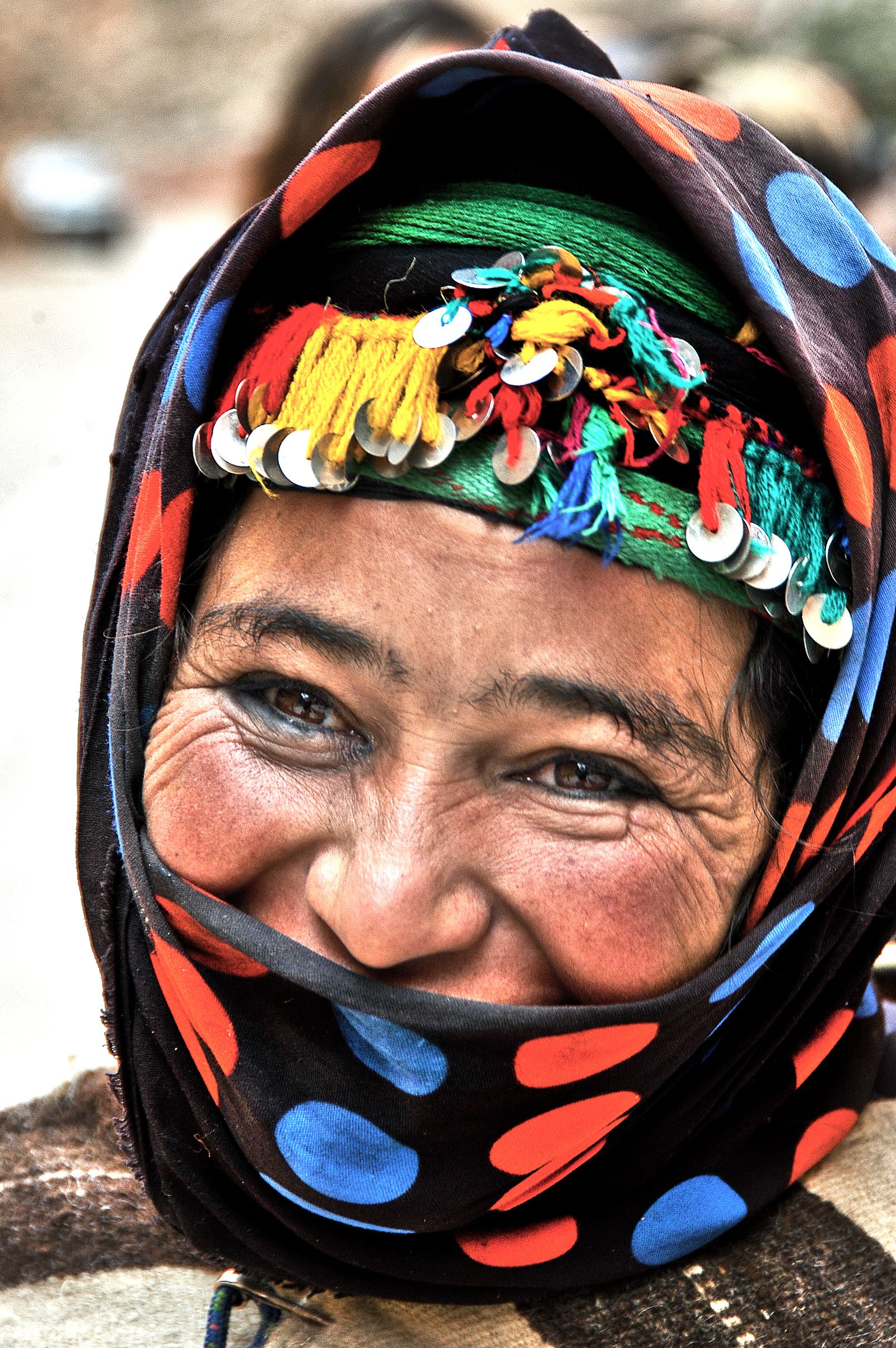
I had planned to trek Jbel Toubkal. Instead, a wrong turn in Imlil village led me to an invitation that changed everything.
Mohammed, a 60-year-old Amazigh farmer, gestured toward his house — a stone-and-earth building set into a terraced hillside above apricot trees — and said simply: "Come, eat." My guidebook said never to accept unsolicited invitations. I accepted it anyway. Three days later, I left with calloused hands, basic Tamazight vocabulary, and an understanding of Berber culture that no museum or tour could provide.
The Amazigh People — A Brief Introduction
The Amazigh (commonly called Berber, though many find the term reductive) are the indigenous people of North Africa. They predate the Arab conquest of the 7th century and maintain a distinct culture, language, and identity that has survived 1,400 years of political change.
In the High Atlas, most villages are still Amazigh-majority, with Tamazight as the primary language. The people here are farmers, herders, and increasingly guides — connected to the global economy through tourism while maintaining agricultural traditions unchanged for centuries. The tension between these worlds is visible everywhere and navigated with remarkable grace.
Day 1 — Arrival and the Orchard
Mohammed's house is four rooms around a central courtyard. Ground floor: a stable with two mules. First floor: a living room with kilim-covered benches, the kitchen, and two sleeping rooms. The roof: a terrace with a panoramic view of the Ounila Valley and the snow-capped ridge above.
His wife Fatima brought mint tea within minutes of my arrival — the three-pour ceremony, the correct height for foam, the correct amount of sugar (more than I wanted, exactly as much as she knew was right). Two of his daughters, in their twenties, switched between Tamazight, Darija, and fragments of French with casual fluency.
In the afternoon, Mohammed took me to the terraced orchards above the house. Walnut trees, apricot trees, apple trees, a few olive trees at the lower elevation. October is walnut harvest. We spread tarps under the trees and beat the branches with long poles. The walnuts fell in showers. We worked for two hours and collected three sacks.
"Everything in this mountain is a gift. The water, the wood, the walnuts — everything comes from the mountain and returns to it."
— Mohammed, Imlil farmer
The kitchen has no oven. Cooking happens over a wood fire in a clay brazier. Fatima made a lamb tagine from a process so fluid and practiced that it barely seemed like cooking — it seemed like something that happened naturally, the way breathing happens.
The ingredients: lamb, potatoes, carrots, onion, preserved lemon, olives, ras el hanout, fresh coriander, olive oil. The technique: everything layered cold into the clay tagine, fire lit, pot placed, nothing touched for 90 minutes. The result: one of the best things I have ever eaten. I asked to watch more carefully next time and to help.
Day 2 — The Weekly Market and Grinding Argan
On Tuesdays, a weekly market assembles in the next village — a 45-minute walk on a mule path along the terraces. Mohammed attended with two mules carrying empty sacks. We walked with four other men from the village, all of them carrying things to sell or trade: walnuts, dried apricots, homespun wool.
The market is not a tourist market. It is a functional economic event — seeds, livestock, second-hand tools, live chickens, fresh bread, hardware, fabrics. Mohammed sold one sack of walnuts (350 MAD), bought vegetable seeds, a spool of wire, and some sugar. We drank tea at the market café (3 MAD each) and walked back.
The Argan Stone Wheel
In the afternoon, Fatima showed me the stone wheel used to grind argan kernels for cosmetic argan oil. The process: crack the hard outer shell with a stone (requiring specific technique — I broke two shells incorrectly before getting it right), extract the kernel, roast the kernels lightly, grind on the stone wheel by hand in a circular motion.
It takes approximately 15 hours to produce one litre of oil this way. Fatima does this weekly. Her hands are extraordinary — strong, quick, precise. She found my attempts at grinding both insufficient and charming. She corrected my wrist angle three times.
Day 3 — The Mountain and Departure
Mohammed took me on a walk at dawn to a viewpoint above the village. The Atlas stretched in every direction — bare ridges at the top, terraces of green and brown below, the river glinting in the gorge. He pointed out the snow line from last winter, the rock face where his father's sheep once grazed, the route to the next village.
He spoke about the mountain the way people speak about a family member — with a mix of love, frustration, and deep obligation. Climate change has shortened the snowmelt season. The springs that fed the village run lower every year. His sons have left for Marrakech. His daughters will probably leave.
I left with: a jar of argan oil wrapped in newspaper (a gift, firmly refused to accept payment), a handful of walnuts, and a vocabulary of perhaps 25 Tamazight words. I gave what felt like a fair amount for three days of food and accommodation (300 MAD/day) — slightly more than asked, accepted graciously.
How to Have This Experience Yourself
- Base village: Imlil (1,740m) is the most accessible — 1.5 hours by grand taxi from Marrakech. Aroumd (2,000m) is quieter and higher.
- Cost: Village family stays typically cost 150–300 MAD/night including meals — paid directly to the family
- Language: Most families have a member who speaks basic French. A few words of Darija or Tamazight go an enormous distance in goodwill.
- Best season: September–November for harvest; March–May for spring flowers; any time outside July–August for uncrowded trails
- What to bring: A gift for the household (tea, sugar, or fruit is always appropriate), modest clothing, genuine curiosity
- What not to do: Photograph family members without asking; compare prices or complain about anything; arrive without notifying the family in advance
Language — The Three Layers
In the Atlas villages, language operates in layers that took me a day to understand. The men generally speak Tamazight (the Amazigh language), Darija (Moroccan Arabic), and at least enough French to transact with outsiders. The older women speak Tamazight almost exclusively — French literacy was largely male in the colonial education system, and many women of Mohammed's mother's generation were never enrolled in school at all.
I spoke French badly, which was enough. Mohammed translated my stumbling French into Tamazight for his mother and grandmother, then translated their responses back. His grandmother, who was perhaps 80 and had never been outside the valley, watched me with a mixture of bewilderment and amusement that required no translation. She called me something in Tamazight that Mohammed translated as "the one who doesn't know how to crack argan nuts," which was accurate and seemed to serve as my name for the remainder of the visit.
What Responsible Village Tourism Looks Like
The experience I had is available to travellers who approach it correctly. It is not available — or it shouldn't be — through operators who bus tourists to villages for a two-hour "authentic experience" and then leave. The difference matters to the families involved.
- Stay for a minimum of two nights — one-night stays don't allow the relationship to develop past awkward politeness
- Book through local guesthouses in Imlil, Aroumd or Aït Benhaddou who have family contacts in nearby villages — ask specifically for a family homestay, not a guesthouse room
- Pay directly and generously — 400–600 MAD per night including meals is appropriate; this goes entirely to the family rather than an operator's margin
- Bring something useful rather than something decorative — batteries, a good medical kit, a solar charger if you have a spare one are more welcome than tourist gifts
- Learn ten words of Tamazight — azul (hello), tanmirt (thank you), mzien (good/fine) — the warmth they generate is disproportionate to the effort
- Put your camera away more than you bring it out — the family is not a performance and the best moments are not photographed
What I Took Away
The Atlas Mountains are approximately three hours from Marrakech. Most Marrakech visitors never go. They spend four days in the medina — which is extraordinary — and leave without ever seeing the country that surrounds the cities, the country that Morocco actually is for most of its population.
Mohammed asked me, on the morning I left, whether Westerners thought a lot about Morocco. I said: some do, more every year, especially since the 2023 earthquake made international news. He nodded. He had been involved in rescue efforts in the earthquake — his village was spared but others nearby were not. He said: people come when there is tragedy. They should come before. I didn't have a good answer. I still don't.
The walk back down to Imlil took two hours. I arrived in a different frame of mind than I had left. That, more than any particular sight or meal or view, is what Atlas village tourism does when it's done right.