In This Article
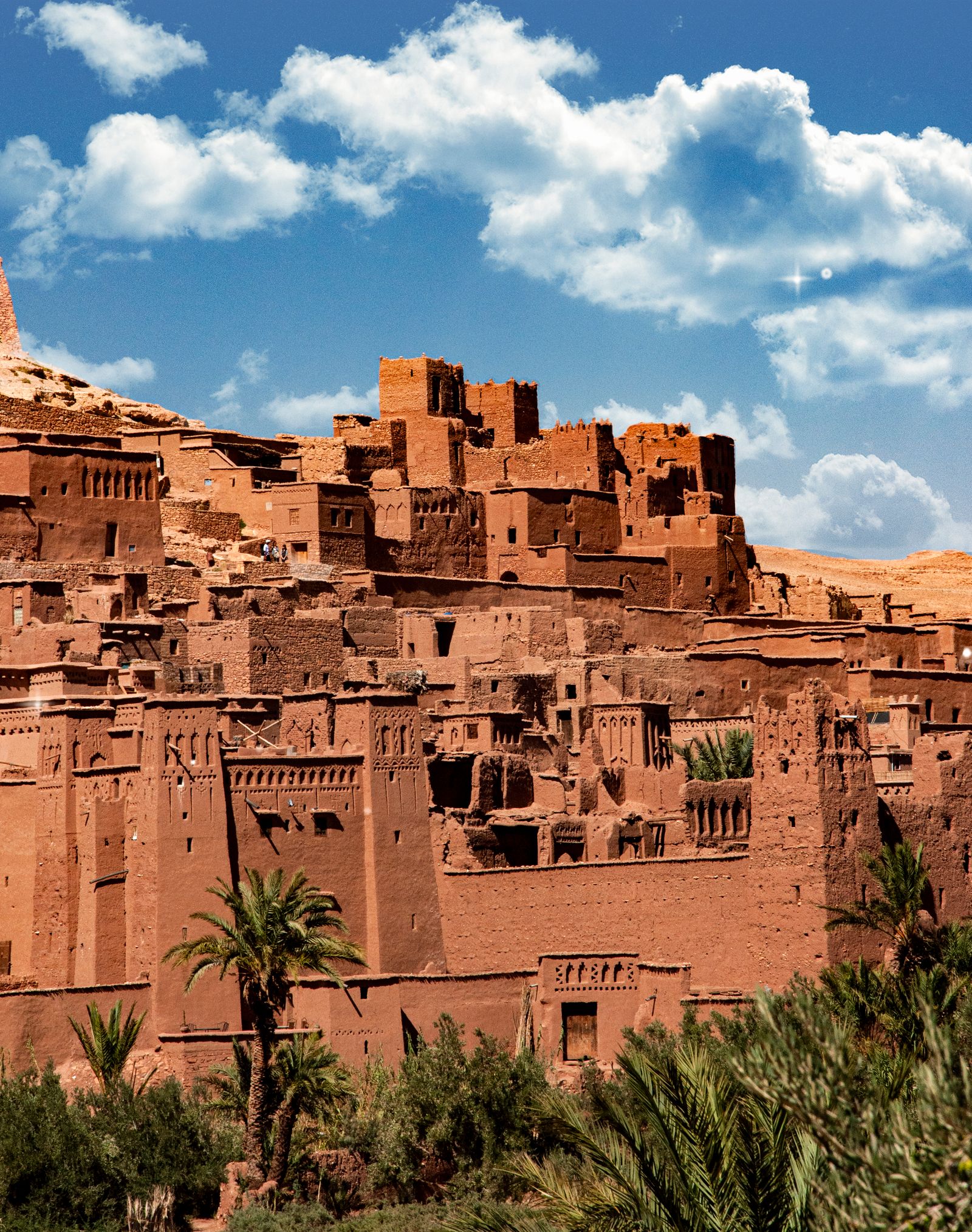
The first thing my guide Mohammed said when he met me at the taxi stand: "You have already seen this place." He was right. I had seen Aït Benhaddou a dozen times — in Gladiator, in Game of Thrones, in The Mummy, in Lawrence of Arabia — without ever knowing what it was or where it stood.
The 11th-century ksar rising from the red earth above the Ounila River, 30km northwest of Ouarzazate, is one of the most-filmed locations on earth. It has appeared in more major productions than almost anywhere, convincingly playing ancient Rome, Yunkai in Essos, and Egyptian palaces — because its earthen towers and labyrinthine passages look simultaneously ancient and otherworldly, and because the Moroccan light does things to red mud that no studio can replicate.
Why Morocco's Hollywood Is Here
Geography explains everything. Ouarzazate sits at the convergence of the High Atlas Mountains, the Draa Valley, and the Saharan transition zone. Within a 30km radius you have: reddish desert kasbah landscapes, dramatic mountain backdrops, vast flat plains that read as any desert on film, and a climate that offers 340+ sunny days per year — critical for outdoor shoots.
The Moroccan government also made it deliberately attractive. In the 1950s, the French established a garrison town here. After independence, Morocco invested in studios and offered generous co-production agreements, tax incentives, and an experienced local crew base. By the 1990s, every major production needing a "North African / Middle Eastern / ancient world" look was coming here.
"Morocco looks better on film than almost anywhere on earth. The light. The texture. The scale. There's nowhere like it." — Ridley Scott, after filming Gladiator
Aït Benhaddou — The Star of the Show
The ksar (fortified village) of Aït Benhaddou is a UNESCO World Heritage Site — not primarily because of its film career, but because it is one of the finest surviving examples of southern Moroccan earthen architecture. The towers, pisé walls, and intricate geometric decorations are the work of Amazigh (Berber) craftsmen working in a tradition 1,000 years old.
A few families still live in the old ksar. Most residents moved to the new village on the other side of the river when it was built in the 1960s. The old village is maintained, visited, and occasionally used as a set. You can cross the river on stepping stones (or a footbridge in the rainy season) and walk through the lanes at will.
The Films — A Complete Guide
Gladiator (2000)
The Roman city of Zucchabar was built and shot entirely near Ouarzazate. The fight arena scenes and several "Africa" sequences were filmed in the desert east of the city. Ridley Scott has used Morocco on multiple productions since.
Game of Thrones (2012–2019)
Aït Benhaddou served as Yunkai, the Yellow City. The streets of the ksar and the outer walls were used for multiple siege and political scenes. The production built additional structures around the ksar's perimeter — remnants are still visible.
Lawrence of Arabia (1962)
The production that first put Morocco on the film world's map. The Draa Valley, the kasbah landscapes around Ouarzazate, and the pre-Saharan desert were used for Arabia, Iraq, and Palestine sequences. Peter O'Toole filmed here for months.
The Mummy (1999)
The ancient Egyptian city sequences and the desert fort scenes were filmed in and around Ouarzazate. The production built several large structures that Atlas Studios maintained as permanent sets for subsequent productions.
The Jewel of the Nile (1985) / Babel (2006) / Exodus (2014)
Ouarzazate has appeared in 20+ major productions including Babel (Iñárritu's Oscar winner), Exodus: Gods and Kings (Ridley Scott), Prince of Persia, and Kingdom of Heaven. The local film crew community has worked on all of them.
Atlas Studios Tour
Atlas Studios, 7km west of Ouarzazate on the road to Marrakech, is one of the largest film studios in the world by area. Daily tours (50–80 MAD, 1.5 hours) take visitors through the standing sets — a walk through 40 years of cinematic history.
Current permanent sets include: Egyptian temple facades from The Mummy, Roman forum ruins from Gladiator, medieval fortress walls, and desert city streetscapes used in multiple productions. The prop warehouse alone — thousands of costumes, weapons, and set pieces — is an extraordinary archive.
The studio is still actively used. On my visit, a French television production was shooting in the rear lot. Guides speak good English and know their film history in impressive detail — many have worked as extras or crew on productions here.
Practical Details
- Hours: Daily 8am–6pm (tours depart every 30 minutes)
- Entry: 80 MAD / ~$8 for guided tour
- Getting there: Taxi from Ouarzazate centre, 20 MAD
- Photography: Permitted throughout
The Draa Valley Beyond the Kasbah
Most visitors see Aït Benhaddou and Atlas Studios, then return to Marrakech. What they miss: the 200km of the Draa Valley extending south from Ouarzazate toward Zagora and Mhamid — date palm oases, crumbling kasbahs, and Berber villages that have changed little since the caravan era.
The Draa Valley is also the entry point to Morocco's hidden Sahara — the vast, quiet desert around Erg Chigaga that most Sahara visitors never find. See our Hidden Sahara guide for the full route.
Practical Visit Guide
- Getting to Ouarzazate: CTM bus from Marrakech (3.5 hrs, 80 MAD) over the Tizi n'Tichka pass. Or rent a car — the mountain road is spectacular.
- Getting to Aït Benhaddou: Grand taxi from Ouarzazate centre, 30–40 MAD each way. Or join an organised half-day tour (200 MAD from most riads).
- Best time to visit: March–May and September–November. Summer is extremely hot (40°C+).
- Staying overnight: Staying in Aït Benhaddou itself (two or three guesthouses within the ksar) is a completely different experience to a day trip. After the day-trippers leave at 5pm, the village is yours.
The Draa Valley — Beyond the Postcards
The N9 south of Ouarzazate enters the Draa Valley — one of the longest rivers in Morocco, which cuts a 200km green corridor through the pre-Saharan plains before disappearing into the sand north of Mhamid. The drive is one of the finest in Africa: date palm oases interrupted by fortified ksars, red-earth kasbahs that blend into the landscape so completely that you notice them only when they're close, and the occasional Berber village market visible from the road as a cluster of coloured djellabas.
Most visitors do Aït Benhaddou (30min from Ouarzazate) and consider the region seen. What they miss: Agdz (the hillside ksar, 70km south), the Draa oases at Tamnougalt (90km), Zagora's camel market (160km), and the dune fields at Mhamid (200km) — smaller than Merzouga but almost entirely tourist-free. A full Draa Valley drive is one day's commitment that most people never make and everyone who does recommends to everyone else.
Self-Driving the Film Country
Ouarzazate is one of the few Moroccan cities where a rental car makes an obvious difference. The sights are spread: Aït Benhaddou (32km), Atlas Studios (7km), Taourirt Kasbah (city centre), the Fint Oasis (10km east), the Draa Valley (starts at the city's southern edge). Without a car you're in taxis all day, negotiating prices at each stop.
The drive between Ouarzazate and Marrakech over the Tizi n'Tichka pass (2,260m) is magnificent and is best done in daylight — the Atlas scenery is the point, not just the destination. Allow 4 hours rather than the minimum 3. Stop at Aït Benhaddou on the way south (it's directly on the route), picnic at the pass, and arrive in Ouarzazate for sunset over the kasbah.
The Fint Oasis — Ouarzazate's Secret
Ten kilometres east of Ouarzazate on a rough piste road, the Fint Oasis is an extraordinary landscape: a palm oasis carved into a canyon, completely hidden from the surrounding plateau until you descend into it. It has been used for filming (it appeared in Gladiator and several other productions) but remains almost unknown to tourists.
Access requires either a 4WD or the willingness to walk the last 2km. The oasis has one small café and a few Berber families who have lived there for generations. It is the counterpoint to Atlas Studios — the real landscape that inspired the constructed one.
Practical Tips for Getting the Most Out of Ouarzazate
- Base yourself in the city for at least 2 nights — Aït Benhaddou day-trippers from Marrakech miss the Draa Valley, the studios, and the best light on the kasbah at dawn and dusk.
- Aït Benhaddou at 8am — The ksar faces east. Morning light illuminates the mud towers in gold. Tour buses arrive at 10am. Go early.
- Atlas Studios: go Monday–Friday — Weekend crowds are larger and the guides are more rushed. On a Tuesday morning, you may have sections of the standing set entirely to yourself.
- The road south (N9 to Zagora) — Fill the tank before leaving Ouarzazate. Petrol stations exist at Agdz (70km) and Zagora (160km), but don't rely on them being stocked.
- Accommodation: kasbah hotels are worth it here — Ouarzazate has several genuinely beautiful riad-kasbah hotels built into the landscape. At 400–700 MAD/night they are more expensive than a standard hotel but provide an experience available nowhere else in Morocco.