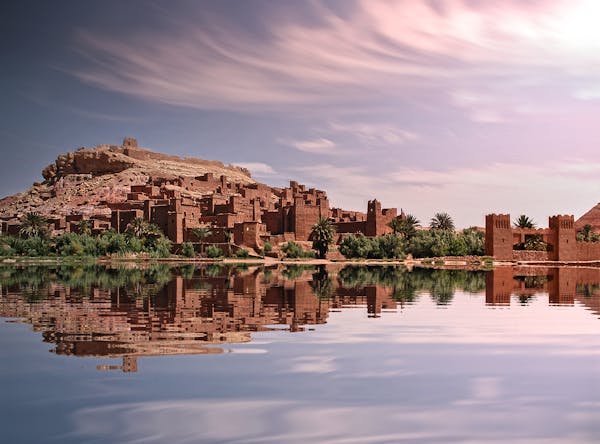
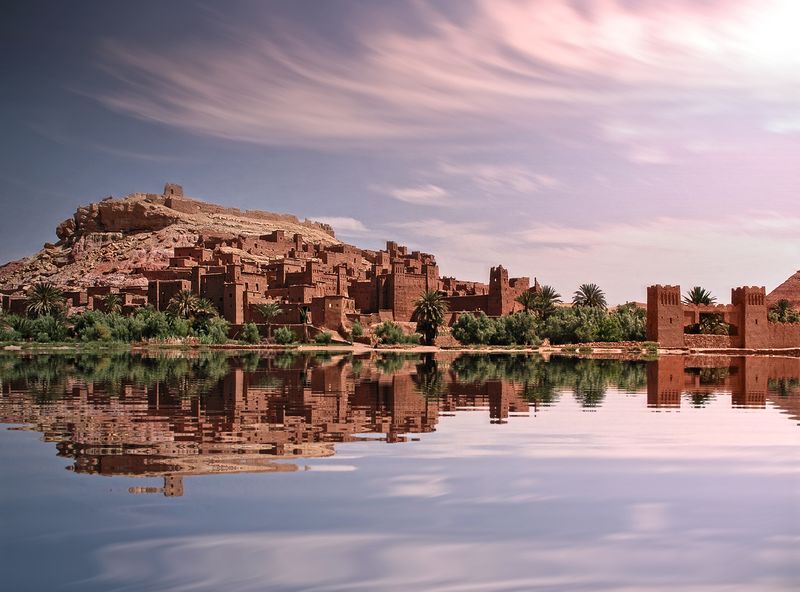
The Hollywood of Africa. Gateway to the Sahara. Home to the UNESCO kasbah of Aït Benhaddou — where Gladiator and Game of Thrones were filmed. A city of extraordinary light, ancient kasbahs and the dramatic road to the Sahara.
Ouarzazate sits at the edge of the Sahara on the southern slopes of the High Atlas — a gateway city in the most literal sense. To the north, the dramatic Tizi n'Tichka pass leads to Marrakech. To the east, the Road of a Thousand Kasbahs winds through the Draa Valley toward the dunes of Merzouga. To the south, vast pre-Saharan hammada stretches to infinity.
The city itself is large and functional — a former French Foreign Legion outpost that became Morocco's film capital. Atlas Studios and CLA Studios have hosted over 50 major international productions: Gladiator, Lawrence of Arabia, The Mummy, Babel, Alexander, Sahara, Game of Thrones. The light here is extraordinary — pure, clear and dramatic.
But Ouarzazate's greatest asset is 30km away: Aït Benhaddou, a UNESCO-listed ksar (fortified village) that ranks among the most spectacular sights in all of Africa.
Perfect 22–28°C. The rose harvest in the Dades Valley (April) turns the fields pink. Green Draa Valley before summer dries it. Aït Benhaddou in ideal light conditions. Best overall month.
Warm and clear (24–30°C) after the brutal summer heat. Date palm harvest in October. The kasbahs glow golden in autumn light. September is the sweet spot — hot enough but manageable.
Extremely hot — regularly 40–45°C. Outdoor sightseeing becomes gruelling by 10am. If you must visit, do everything before 9am and after 5pm. Film crews avoid summer for this reason.
Cool days (12–18°C), cold nights, occasional snow on the Atlas passes above. Aït Benhaddou in snow is extraordinary. The Atlas Studios are quieter — better access. Cheapest time.
Complete Insider Guide
The Ouarzazate Guide — Hotels, Restaurants & Hidden Gems
PDF guide · 40+ pages · Instant download · 30-day money-back
Ancient kasbahs, film sets and the road to the Sahara
The most spectacular earthen fortified village in Morocco — a UNESCO World Heritage Site that's been continuously inhabited since the 11th century. Appearing in Gladiator, Game of Thrones and dozens more films. Cross the river (or walk the footbridge), climb to the top, and be blown away by the view.
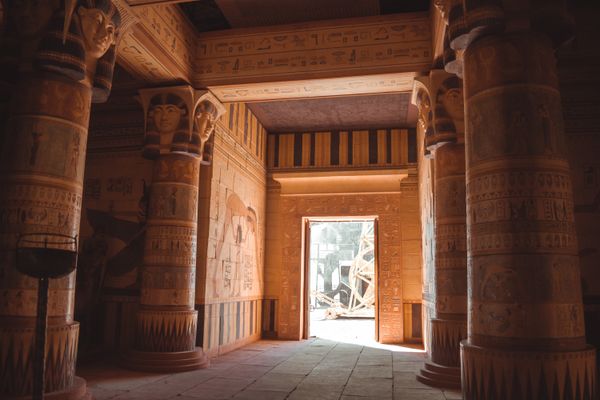
The world's largest film studio by surface area — an extraordinary mix of ancient Egypt, Jerusalem, ancient Rome and modern Moroccan sets all coexisting in the desert. Guided tours show you sets from Gladiator, Kingdom of Heaven and Game of Thrones. Surreal and fascinating.
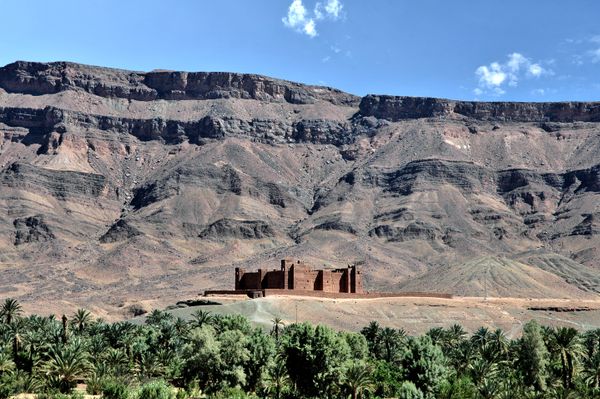
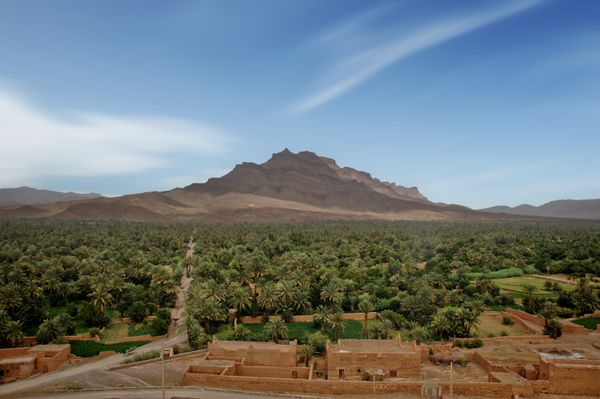
The road east from Ouarzazate follows the Draa river through 200km of lush palm oasis, mudbrick kasbahs and nomadic camps. One of the most scenic drives in Morocco — stop at the rose-red ksar of Agdz, the palm grove of Zagora, and the dramatic Tizi Beni Selmane pass.
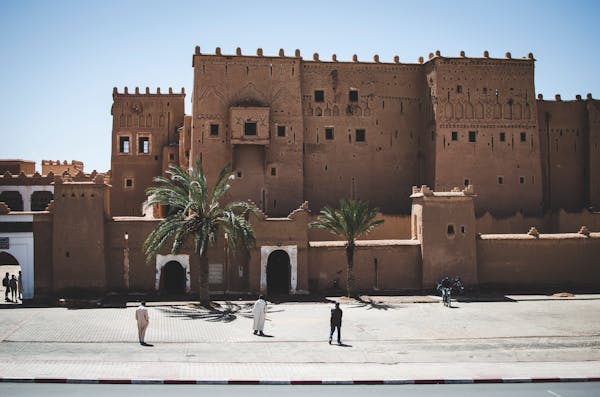
The stunning 17th-century kasbah in Ouarzazate city centre — the former palace of the Glaoui lord of the south. Only partially restored but atmospheric. The adjoining artisans' quarter has genuine craft workshops selling carpets, leather and silver at fair prices.
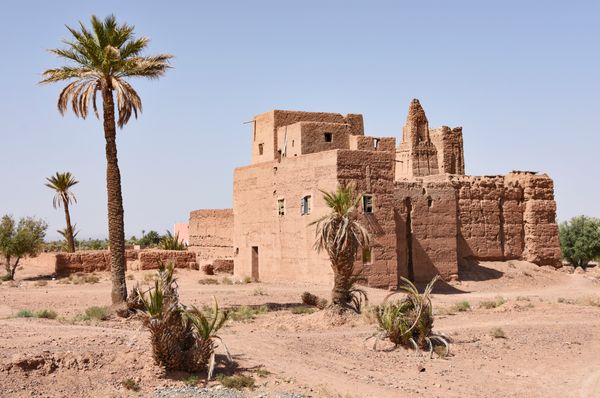
45km east, the Skoura oasis is a vast palm forest hiding ancient kasbahs and guesthouses. Amridil Kasbah (featured on the 50-dirham note) is one of the best-preserved kasbahs in Morocco and still inhabited. Explore by foot, bicycle or mule.
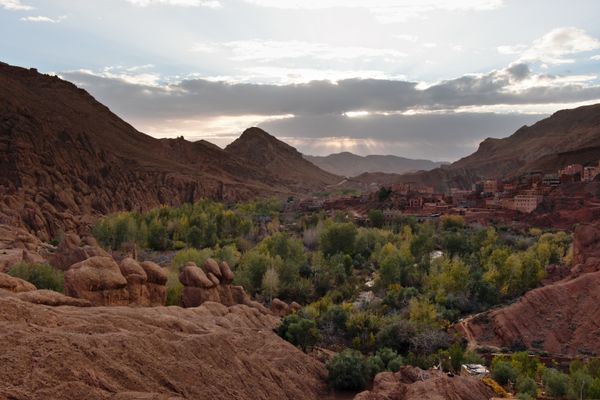
The extraordinary Dades Gorge — sharp hairpin bends carved into red rock walls — begins 2 hours from Ouarzazate. The Rose Valley (Vallée des Roses) blooms spectacularly in May. The Dades Gorge road is one of Morocco's most dramatic drives.
Just 12km from Ouarzazate, the Fint Oasis is a hidden palm grove with a river and traditional Berber village accessible only on foot or 4x4. A 3km walk from the road rewards you with one of the most beautiful oases in Morocco. Rarely visited by tourists.
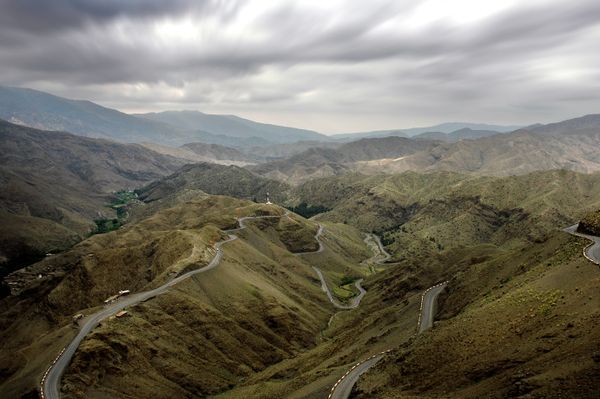
The magnificent mountain road between Ouarzazate and Marrakech crosses Morocco's highest road pass at 2,260m. Snow-capped Atlas peaks, Berber villages and vertiginous hairpin bends — one of the most dramatic road journeys in Africa. Drive slowly.
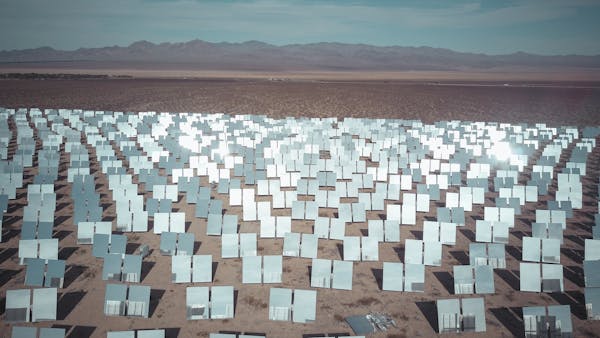
One of the world's largest concentrated solar power plants — visible from the road to Skoura. An extraordinary engineering feat and symbol of Morocco's renewable energy ambitions. Viewing from the perimeter road is free.
Ouarzazate is the ideal launch point for the classic Sahara circuit: Draa Valley → Zagora → Merzouga dunes → Todra Gorge → Dades → back to Ouarzazate. 4 days minimum, life-changing. See our Sahara guide for full details.
Our guide covers Aït Benhaddou photography tips (best light, best angles), the Atlas Studios tour insider route, full Draa Valley driving guide with GPS stops, the Fint Oasis hike, and the classic 4-day Sahara circuit from Ouarzazate.
Kasbah hotels and desert lodges with extraordinary views
Traditional earthen kasbah-style hotels in and around the city — the most atmospheric option. Several converted kasbahs offer rooftop terraces and pool. Best for history lovers.
Small guesthouses and boutique lodges near the UNESCO ksar — wake up to it at sunrise with no crowds. The most photogenic base in the region. Limited options but extremely special.
Eco-lodges and guesthouses hidden in the Skoura palm grove — no roads, reached on foot or mule. Utterly peaceful and surrounded by nature. Perfect for slow travel and detox.
Compare kasbah hotels, eco-lodges and Sahara gateways
The ksar glows deep gold at sunrise — and you'll have it almost entirely to yourself before 9am. Stay the night nearby and walk up before the coaches arrive. The difference between 7am and 10am crowds is extraordinary.
Atlas Studios is actively used — there's a chance a film is being shot when you visit. The "Game of Thrones Slaver's Bay" set and the ancient Egypt sets are the most photogenic. Go in the morning when light enters the open sets.
Ouarzazate's best sights — Aït Benhaddou, Skoura, the Draa Valley, Dades — are all spread out. Hire a car here or bring one from Marrakech. Taxis can be hired for day trips but a rental gives you full freedom.
Ouarzazate is also Morocco's solar energy capital — the Noor solar plant provides electricity to over 1 million homes. The city itself uses solar energy for street lighting. A fascinating modern contrast to the ancient kasbahs.
The nearby Vallée des Roses (near El Kelaa M'Gouna, 100km east) holds its famous rose festival every May. Fields of Damascus rose stretch for kilometres, rose water is distilled, and the festival draws huge crowds. Worth timing your visit for.
At 1,160m altitude with virtually no light pollution, Ouarzazate has extraordinary stargazing. The plateau between the city and Aït Benhaddou is ideal — a clear night here reveals the Milky Way as vividly as in the Sahara itself.
Ouarzazate itself can be covered in a day — Aït Benhaddou, Atlas Studios, the kasbah. Where you should spend your time is in the surrounding region: Skoura palmery, Dades Gorge and the Draa Valley each deserve a day of their own.
Ouarzazate sits at 1,160m in a desert basin — summer temperatures regularly hit 42–45°C. The golden rule: nothing outdoors between noon and 4pm in July and August. Plan all sightseeing for early morning and late afternoon only.
The 10 MAD entry to Aït Benhaddou goes to the families who still live inside the ksar. Stay for at least 2 hours — the upper levels are almost always empty and the views over the Ounila Valley are extraordinary. Many visitors rush through in 45 minutes and miss the best parts.
The classic route: 200km over the High Atlas via the Tizi n'Tichka pass (2,260m), Morocco's highest paved road. Stunning mountain scenery. Drive takes 3–4h depending on stops. CTM bus: ~3.5h, ~110 MAD. Supratours also runs this route. Do not rush this drive.
Small regional airport with RAM flights from Casablanca (1h15, from ~400 MAD) and seasonal connections from Paris and other European cities. Charter flights peak in spring/autumn. Check Royal Air Maroc and Transavia for European routes. Taxi to city: ~50 MAD.
Ouarzazate is a hub for exploring the surrounding region — Aït Benhaddou, Draa Valley, Dades Gorge, Todra Gorge. Without a car you'll spend a fortune on taxis. Rent in Marrakech and drive over the Atlas, or rent locally. 4WD useful for piste tracks.
Aït Benhaddou is 32km northwest of Ouarzazate on the N9. A petit taxi from the city costs 100–150 MAD each way. Grand taxis from the main square also run this route — negotiate a round trip with waiting time (~200–300 MAD total).
Grand taxis run the N9 between Ouarzazate and Zagora (180km south) in about 2.5h. The road passes through the Draa Valley's palm groves and kasbahs. No regular bus — taxis are the only practical option. Price: ~80–100 MAD/seat.
CTM runs overnight buses from Casablanca to Ouarzazate (8–9h, ~200 MAD). The night bus departs late evening and arrives at dawn — efficient if uncomfortable. From Fes: via Errachidia and the Ziz Valley (~9h). More scenic than flying.
UNESCO World Heritage ksar, the most-photographed site in southern Morocco. 4,000 years of continuous habitation, 11 families still resident. Cross the river on foot (sandals only — it's ankle-deep in summer), climb to the granary for Atlas panoramas. Allow 2–3 hours. Return to Ouarzazate for sunset.
The Draa Valley's ancient kasbah route leads south through 200km of date palms to Zagora — gateway to the Sahara. The Chigaga dunes (2h beyond Zagora) require a 4x4. Organised day tour from Ouarzazate: 600–900 MAD/person. Stay overnight if budget allows — dawn in the dunes is transformative.
The "Fingers of God" rock formations above Boumalne Dades are some of Morocco's most dramatic landscapes. The road up the gorge (Route 704) winds through Berber villages. Rent a car or hire a grand taxi for the day (~400 MAD). The gorge narrows spectacularly at km 25 — go past the main viewpoint.
The N10 east of Ouarzazate passes 30+ mud-brick kasbahs in a single valley — Skoura oasis, Kalaat M'Gouna (rose capital), Tinghir and the Todra Gorge. Full-day by car: ~300 km round trip. The Todra Gorge walls rise 300m on either side — walk the 100m-wide canyon floor at sunrise for extraordinary light.
Atlas Studios (the world's largest) has hosted Gladiator, Lawrence of Arabia, Game of Thrones, Babel and dozens more. Guided 45-min tours through Egyptian temples, Roman forums and desert villages — all permanent sets. Entry: 50 MAD. CLA Studios next door is smaller but has the Cleopatra set open.
The UNESCO ksar 30km west is best with a qualified guide who explains the pisé construction, the 11 families still living inside, and the film history (this is where Daenerys entered Yunkai). Guide: 150–200 MAD for 2h. Combine with an early arrival before tour buses (before 9am or after 4pm).
Ouarzazate sits at 1,160m with minimal light pollution. Organised stargazing tours head 20km into the desert for telescope sessions and Berber tea. 300–500 MAD/person. Best Dec–March when skies are most stable. The Milky Way is visible to the naked eye most nights.
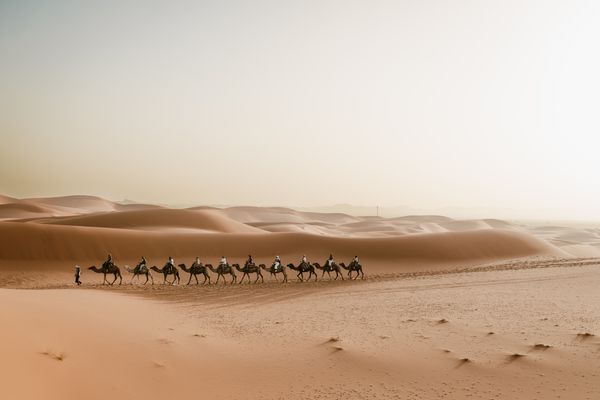
1–3 hour camel treks from the outskirts of the city into the pre-Saharan hamada (rocky desert). Watch the Atlas Mountains turn gold at dusk from camelback. 200–400 MAD/1h. Longer overnight treks to Zagora available (from 1,200 MAD/person all-inclusive).
Kasbah Taourirt and the Oued Ouarzazate river bend are extraordinary at golden hour. Hire a local photographer-guide (150–200 MAD/2h) who knows the rooftop access points above the kasbah for sweeping panoramic shots of the desert city.
Hands-on tajine cooking with a Draa Valley Berber family: market visit, spice blending, clay pot cooking. 400–600 MAD/person, 4h including meal. Specialists include rosewater bastilla and slow-cooked lamb with prunes — flavour profiles unique to the south.
A small city with surprisingly good food — slow-cooked Draa Valley lamb, rose water pastries and mint tea with views of the Atlas.
The oldest restaurant in Ouarzazate, founded by a Greek family and unchanged for 95 years. Moroccan classics alongside European dishes: chicken tagine, grilled lamb chops, excellent harira soup. 150–250 MAD/pp. Boulevard Mohammed V. The walls are covered with film-crew photos.
Rooftop dining with kasbah panorama views. Draa Valley lamb slow-cooked overnight, mechoui (whole roasted lamb), Berber bread baked in clay ovens. 200–350 MAD/pp. Reserve the rooftop table — best views in the city, especially at sunset.
Hidden inside a restored kasbah, Dar Kamar offers theatrical Moroccan hospitality: multi-course dinners by candlelight in a mosaic-tiled courtyard. 350–500 MAD/pp including tea ceremony. Booking essential. The bastilla au poulet is made to a family recipe.
The Talborjt neighbourhood has cheap, excellent local lunches: harira, msemen flatbreads, lamb brochettes. Under 50 MAD. Look for the stalls along Rue du Marché open from noon to 3pm. No tourist markup, no English menu — just point and eat.
Worth a visit even without a studio tour: the café overlooks the permanent Egyptian-set backdrop used in dozens of films. Mint tea, coffee and sandwiches. Under 60 MAD. Good for a rest between film studio tour and Ait Ben Haddou excursion.
If visiting in late April–May, the Dades Valley rose harvest transforms local markets. Rose water jams, rose-infused pastries, rosewater ice cream — a unique seasonal food experience within 1.5h of the city.
At the gateway of the Sahara, Ouarzazate's cuisine is rooted in Berber tradition — slow-cooked tagines, mechoui lamb, Valley dates and the rose-flavoured specialities of nearby Dades.
Whole lamb pit-roasted for 6–8 hours until the meat falls off the bone. The best mechoui in the region is found at weekend markets and traditional restaurants around Ouarzazate. Must be ordered in advance — often only available by the kilo.
The Dades Valley — 2h northeast — is Morocco's rose capital. Rose water, rose jam, rose face cream and rose liqueur are the regional specialities. In May, the rose festival fills the valley with colour. Buy rose products directly from cooperatives on the roadside.
The Draa Valley produces exceptional Medjool-style dates — sold fresh at roadside stalls between Ouarzazate and Zagora. Paired with crushed almonds and argan oil, they form the basis of the traditional desert breakfast eaten with smen butter and barley bread.
The local tagine is simpler than Marrakech versions — lamb, preserved lemon, green olives and wild herbs from the Atlas foothills. Cooked low and slow in clay over charcoal. Order at the clay-pot restaurants opposite the Taourirt Kasbah for an authentic version.
The round, dense Berber bread baked fresh each morning. In Ouarzazate's souks, women sell kesra from baskets — still warm, eaten with argan oil and honey for under 5 MAD a round. The best breakfast in the Saharan south.
Restaurant Chez Dimitri (a Ouarzazate institution since 1928) — great for tagine and atmosphere; Restaurant 3 Thés — local haunt near the Kasbah; desert herb tea with wild thyme and sage is served everywhere and is the best warming drink after a cold Atlas crossing.
Our complete Ouarzazate guide — Aït Benhaddou photography, Atlas Studios tour, Draa Valley route and the 4-day Sahara circuit from here.
Ouarzazate has earned its nickname 'the Hollywood of Africa' with a remarkable film history. Productions filmed here include Gladiator (2000), Lawrence of Arabia (1962), The Mummy (1999), Kingdom of Heaven (2005), Babel (2006), Game of Thrones (multiple seasons), and Spectre (2015). The Atlas Studios outside the city is one of the world's largest film studios and can be visited on a guided tour. Ait Benhaddou, 30 km away, has appeared in dozens of major films.
Ouarzazate is about 200 km southeast of Marrakech — a 3.5 to 4 hour drive over the Tizi n'Tichka pass (2,260 m), one of the most spectacular mountain roads in Morocco. CTM and Supratours buses run daily for around 80 MAD. Many travellers combine the journey with a stop at Ait Benhaddou (30 km before Ouarzazate), a UNESCO World Heritage site and Game of Thrones filming location.
Yes — Ouarzazate is an excellent base for exploring southern Morocco. The city itself is calm with the Taourirt Kasbah and Atlas Studios as the main in-town sights. Its real value is as a gateway: Ait Benhaddou is 30 min away, the Draa Valley starts here, the Dades and Todra gorges are 2 to 3 hours east, and the Sahara dunes at Merzouga are a 4.5-hour drive. Most travellers spend 1 to 2 nights here as part of a desert circuit.