In This Article
The most persistent myth about Morocco is that it is a summer destination. This myth is costing visitors one of the best travel experiences available in the Mediterranean world. Morocco in winter — particularly December through February — is quieter, cheaper, more atmospheric and, in the case of the Sahara, significantly more comfortable than in summer. The souks are navigable without being overwhelmed. The riads offer 30–50% discounts. The desert is warm by day and cold by night rather than lethally hot at all hours.
This guide will dismantle the myth with specific temperature data, explain what each winter month actually looks like across different regions, and make the case — supported by evidence — that for most travellers, winter is actually the best time to visit Morocco.
The Winter Myth Debunked
When people imagine "Moroccan winter," they picture cold, grey, wet and miserable. This is a projection of northern European winter onto a completely different climate. Morocco sits between 27° and 36° north latitude — roughly equivalent to the latitude of Los Angeles and northern Spain. Its winters are mild, its sunshine days numerous, and its cold confined to nights and high altitudes.
The confusion arises partly from Fes, which genuinely does get cold and occasionally wet in December–January (it's inland, at altitude, and the Rif Mountains to the north channel cold air). But Marrakech is significantly milder, the Atlantic coast warmer still, and the Sahara — the main tourist destination — is at its most comfortable precisely in winter.
What the Weather is Really Like
Advantages of Winter Travel
Dramatically Fewer Tourists
December–February sees 40–60% fewer international tourists than July–August. In practical terms: no queues at the Bahia Palace, the Ben Youssef Madrasa is peaceful rather than crowded, the Djemaa el-Fna is a local space rather than a tourist performance, and the souks are browsable rather than overwhelming. This is the medina experience that the photographs promise but summer crowds prevent.
Lower Prices
Riad prices drop 30–50% from peak season. A room that costs 1,800 MAD/night in April costs 900–1,100 MAD in January. Many riads offer breakfast-included deals in winter that don't exist in high season. Desert camps reduce rates by 30–40%. Internal transport prices don't change, but flight prices to Morocco from Europe are often at their lowest in January–February.
Authentic Atmosphere
Winter Morocco belongs to Moroccans. The souks are buying and selling, not performing for tourists. The cafés fill with locals rather than travellers. The hammams are packed with neighbourhood residents doing their weekly ritual. Ramadan (which falls in winter approximately every 30 years on the Islamic lunar calendar) transforms the entire social day — the nighttime atmosphere of iftar (breaking the fast) is one of the most extraordinary things you can experience in Morocco.
The Ski Resorts
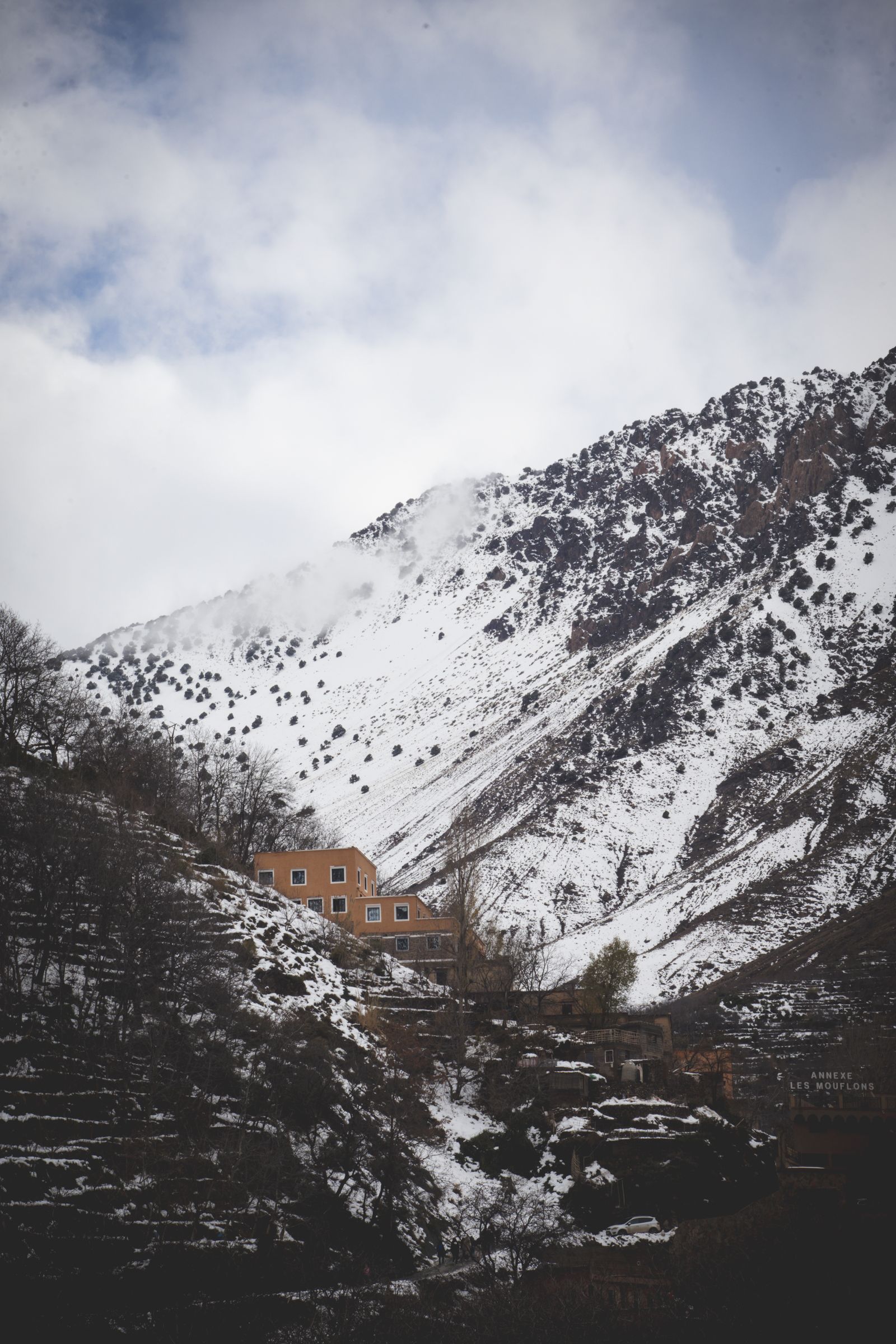
Morocco has two operating ski resorts — a fact that surprises most visitors and is entirely true.
Oukaimeden — 45 Minutes from Marrakech
At 2,600m in the High Atlas, Oukaimeden is Africa's highest ski resort. It typically opens December–March, with 40km+ of marked pistes at peak season. The infrastructure is modest compared to European resorts — T-bar lifts, a handful of runs, basic ski rental — but the experience of skiing within 45 minutes of a medina is extraordinary. Day trip from Marrakech: taxi up (150–200 MAD), ski hire (150 MAD/day), lift pass (120 MAD/day). Total day cost around 500 MAD — one of the cheapest ski days in the world.
Ifrane — Middle Atlas
The Middle Atlas ski area around Ifrane (the "Switzerland of Morocco") is more developed. Ifrane itself is a colonial-era town built to look like a Swiss village — surreal and charming. The Michlifen ski area above has longer runs and better infrastructure than Oukaimeden. 3-hour drive from Fes.
Sahara in Winter
Winter is arguably the best season for the Moroccan Sahara. The reasoning is simple: the desert is most comfortable when the daytime temperatures are manageable (18–22°C rather than 45°C in July) and the nights are cold enough to make the campfire and the warm blankets feel earned. The stars are clearest in winter — the dry, stable desert air combined with the longer nights produces extraordinary conditions for stargazing.
The camel trek at sunset is pleasant in winter temperatures. In summer, the same ride requires careful timing around the extreme heat — in December, you can ride in the afternoon without risk. The dunes themselves are at their most dramatic in winter light — lower sun angle, longer shadows, richer colours.
Coastal Morocco in Winter
Agadir is Morocco's winter sun resort — 300 days of sunshine per year, a 9km sandy beach, water temperatures around 18°C (cold for swimming but excellent for surfing). The city's beach promenade is busy year-round with Moroccan holidaymakers and European sun-seekers who have discovered that Agadir in January is warmer than the Algarve in October.
Essaouira in winter is magnificent in a different way — the wind picks up, the Atlantic is dramatic, the city gets occasional rain that makes the blue paintwork gleam. It is best experienced with good waterproofs and a willingness to embrace the dramatic rather than the idyllic. Taghazout surf season peaks in winter — the Atlantic swells are at their most powerful September–April.
What to Pack
- For medinas (Marrakech): Light layers, one warm jacket for evenings, comfortable walking shoes. A light scarf serves multiple purposes (sun, wind, medina modesty).
- For Fes and north: Proper warm jacket, sweater, waterproof outer layer. It genuinely gets cold.
- For the Sahara: Warm fleece or down jacket for evenings and early mornings, sleeping bag liner, hat and gloves for the desert night.
- For skiing: Full ski kit (rentable at the resort, but bringing your own gloves and goggles is worth it).
- For the Atlantic coast: Windproof layer essential in Essaouira. Wetsuit if surfing (3/2mm minimum).
Month-by-Month Guide
November
Technically autumn but the shoulder season advantages apply fully. Tourist numbers dropping, prices dropping, weather still warm in the south (22–25°C in Marrakech). The olive and orange harvests in the Atlas valleys — an agricultural tourism opportunity for those who seek it. Excellent month overall.
December
Low crowds, festive medina atmosphere (Moroccan Christmas equivalent is less visible but the general end-of-year energy is palpable). Marrakech comfortable at 18°C. Sahara perfect. Ski season beginning in the Atlas. Best month for combining city, mountains and desert.
January
The quietest month in Morocco. Lowest prices. Fes at its coldest — bring a serious jacket. Marrakech mild and manageable. Sahara at its clearest and coldest. Agadir sunny and 20°C. Best month for budget-conscious travellers who want the full experience without crowds.
February
Morocco begins warming noticeably through February. Almond trees blossom in the Atlas (spectacular). Sahara warming toward the ideal 22–25°C range. Ramadan may begin in February in some years (check the Islamic calendar for the exact year). The transition month — increasingly popular as spring approaches.