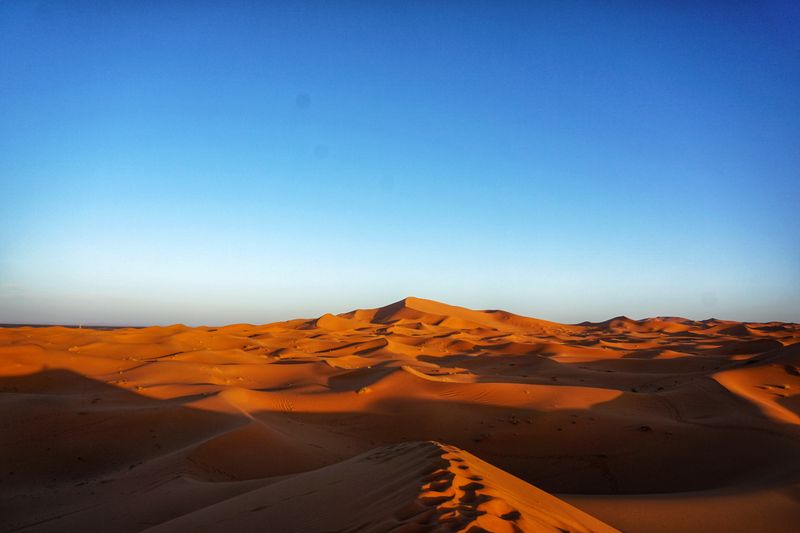
Where Morocco meets the infinite. The Erg Chebbi dunes rise 150 metres from the flat desert floor, turn deep orange at sunset, and reveal a sky of a million stars after dark. No journey to Morocco is complete without this.
The Moroccan Sahara β centered on the village of Merzouga and the towering dunes of Erg Chebbi β is one of the world's great travel experiences. These are the dunes you've seen in photographs, in films, in dreams. In person, they're even more extraordinary.
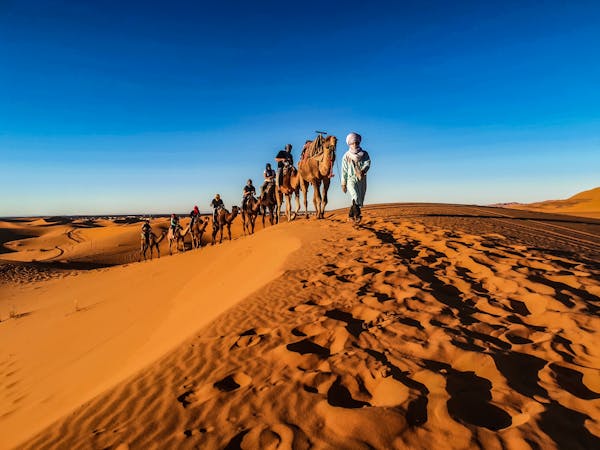
The experience is built around the overnight: arrive by camel at sunset, watch the sky turn gold then pink then purple, eat dinner around a fire under a canopy of stars, sleep in a Berber tent, and wake before dawn to climb the dunes for sunrise. A single night changes how you see everything.
Beyond Merzouga, the Draa Valley, Dades Gorge and Todra Gorge extend the Sahara experience into days of spectacular driving through landscapes that feel like another planet.
Best season β warm days (24β30Β°C), cold nights, zero rain. The dunes at their most photogenic. October is the sweet spot.
Second best β similar conditions to autumn. The Draa Valley adds wildflowers. Crowds build from February school holidays.
Extreme heat (40β50Β°C). Most desert camps close. Sandstorms (chergui) can be intense. Strongly avoid.
Cold nights (-5Β°C) and warm days (18β24Β°C). Clear skies make stargazing extraordinary. Bring many layers.
Complete Insider Guide
Sahara Desert Adventure Kit β Camps, Treks & Desert Photography
PDF guide Β· 14 pages Β· Instant download Β· 30-day money-back
From camel treks to stargazing β the best the Moroccan desert offers
The quintessential Sahara experience β a 90-minute camel ride into the dunes as the sun sets. You arrive at your desert camp just as stars begin to appear. Utterly magical. Book the full overnight package.
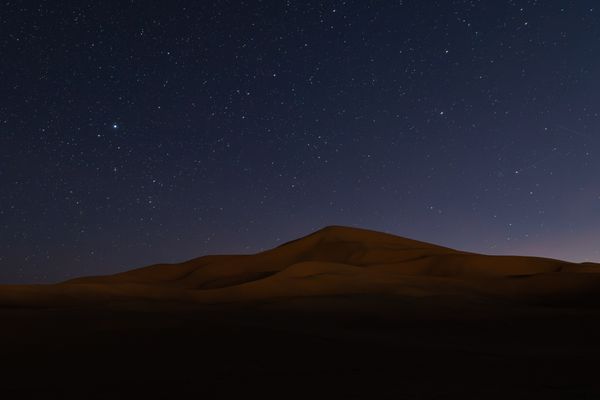
No light pollution for hundreds of kilometres. The Milky Way is so bright it casts shadows. Lie on a dune at midnight and let the scale of the universe rearrange your priorities. Nothing else compares.
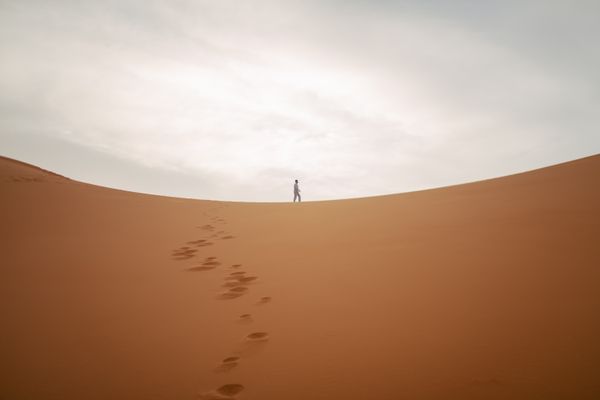
Wake at 5am and climb the tallest dune near camp for sunrise. The effort of climbing soft sand in darkness is completely repaid when the first light turns the dunes deep copper-orange. The best photographs of your life.
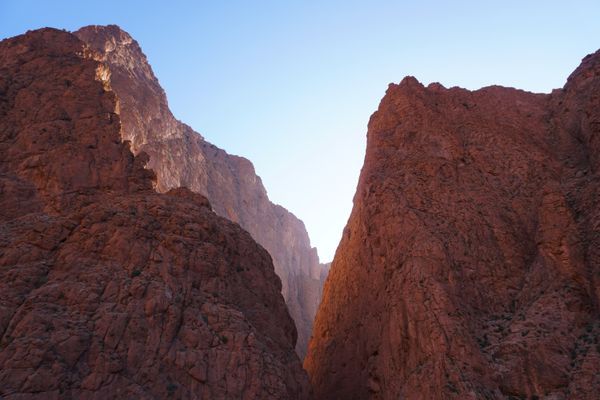
300-metre rock walls rising from the desert floor, with a river running between them. The narrow slot canyon is breathtaking. Rock climbers come from across the world. Stop for mint tea at a gorge-side cafΓ©.
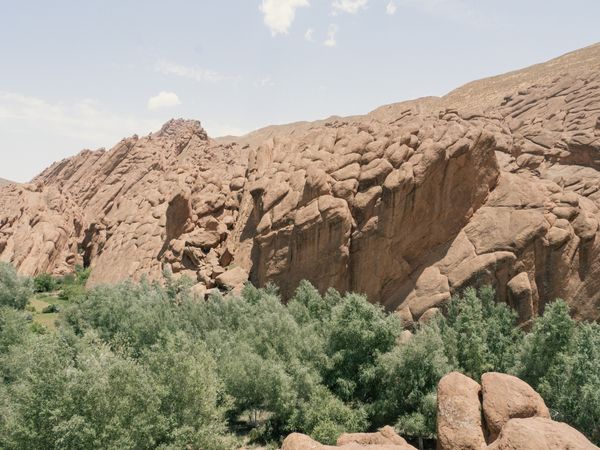
The "Road of a Thousand Kasbahs" β a stunning valley leading to the wild Dades Gorge with its dramatic curved road. Drive slowly, stop often. Rose fields bloom here in May (VallΓ©e des Roses).
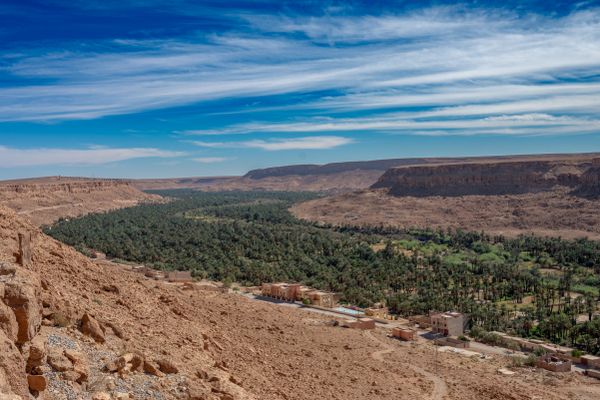
A 200km oasis valley stretching from Ouarzazate to the desert β endless palm groves, ancient kasbahs and Berber villages. The contrast between green palms and red desert is extraordinary.
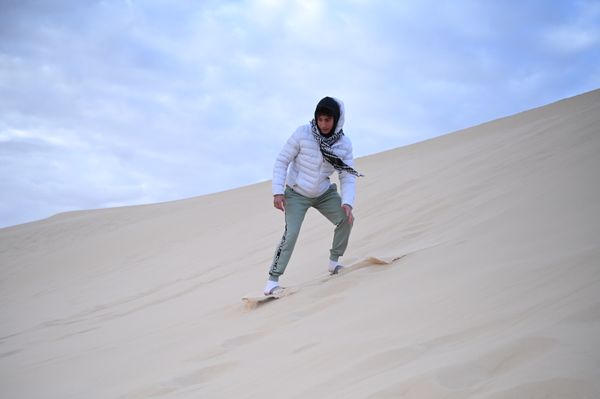
Rent a sandboard at Merzouga and spend a morning sliding down Erg Chebbi's steep dunes. Surprisingly fast, surprisingly fun, and absolutely covered in sand by the end. Kids love it, adults too.
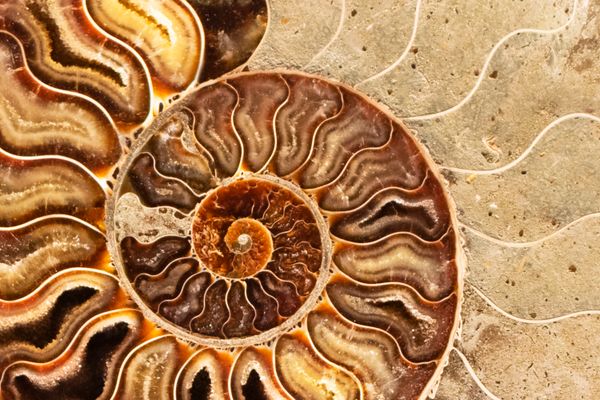
The Sahara region around Erfoud and Rissani sits atop one of the world's richest fossil beds β trilobites, ammonites and orthoceras from 400-million-year-old seas. Visit workshops where artisans polish fossil marble slabs, and small museums with marine creatures preserved in stone.
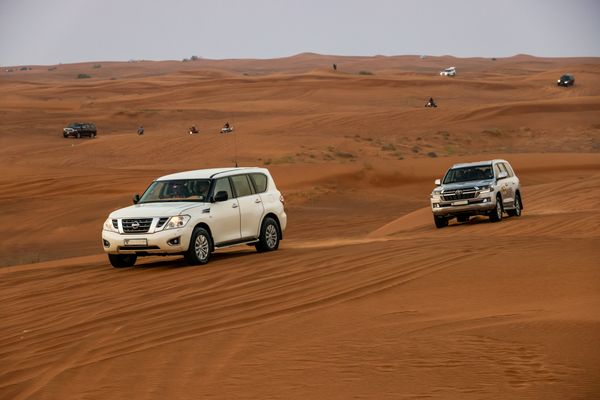
Explore the wider desert by 4x4 with a Tuareg guide β Gnawa music villages, fossils sites, nomad families, and remote dune fields far from the tourist camps. 2β4 hour tours available.
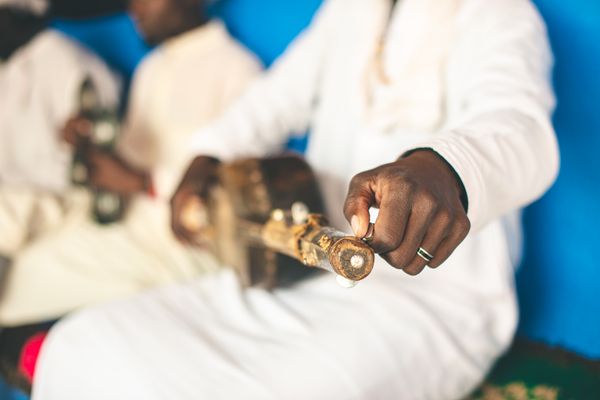
Visit the Gnawa musicians in the Khamlia village near Merzouga β West African-descended Moroccans with hypnotic traditional music. A private performance around a fire is an unforgettable experience.
From basic Berber tents to luxury glamping β pick your desert experience
Traditional haima tents with shared facilities. No electricity. Fall asleep to drums and wake to silence. The most authentic desert experience available.
Comfortable private tents with electricity, en-suite shower, and proper beds. Dinner with live music included. Excellent balance of comfort and authenticity. Most popular choice.
Private luxury tents with proper beds, hot showers, gourmet Moroccan dinner, and sometimes a private pool. Full electricity and wifi (if you must). The Sahara without sacrifice.
Compare desert camps, riads and guesthouses near the dunes
Avoid the tourist traps β our guide covers vetted camps with honest reviews, the best time of year, full route maps for the MarrakechβMerzougaβFes circuit, and what no one tells you about desert travel in Morocco.
How to have the best desert experience in Morocco
October to April is ideal β comfortable temperatures, no extreme heat. March is perfect: warm days, cold nights, and the desert is often blissfully quiet on weekdays.
A 90-minute camel ride is enjoyable. A 4-hour ride is genuinely painful. Most camps offer the 1-hour sunset ride β that's the sweet spot. Alternatively, take a 4x4 to camp and ride camels for just 30 minutes at sunrise.
Even in summer, Sahara nights can drop below 10Β°C. In winter they approach freezing. Always bring a warm layer regardless of the forecast β the camps rarely have heating.
The golden light lasts about 40 minutes before and after sunset/sunrise. The absolute best dune photography happens at the very first and last light. Set multiple alarms for sunrise.
Booking through your riad or tour operator adds a 30β50% markup. Contact camps directly via email or WhatsApp for best prices. Most have websites β search "Merzouga camp" + the camp name.
Don't just go to Merzouga and back. The best Morocco trip makes a loop: Marrakech β Ouarzazate β Draa Valley β Merzouga β Todra Gorge β Dades β Marrakech (or Fes). 5β7 days, life-changing.
Even outside summer, wind can kick up sand suddenly. A thin buff or scarf for your face, goggles or sunglasses, and a zip-up bag for electronics are essential. Your camera lens is the most vulnerable piece of gear you have.
A full moon washes out the stars entirely β one of the Sahara's great draws. Plan your desert night around a new moon for the most spectacular sky. Apps like Moon Phase Calendar show the cycle months ahead.
Dehydration comes fast in the desert β drink 3β4 litres a day even if you don't feel thirsty. Electrolyte tablets help. Carry twice the water you think you'll need on any dune hike. Camps provide water but bring backup.
Merzouga is remote β here's how to get there
The most flexible option. Rent a car in Marrakech or Fes and drive the desert circuit yourself. Roads are well-paved. 10h from Marrakech, 8h from Fes. 4x4 not needed on main roads.
CTM and Supratours run overnight buses from Marrakech and Fes to Rissani (20km from Merzouga). Take a taxi for the last stretch. Cheap β from 200 MAD β but a long night.
3β5 day organized tours from Marrakech or Fes are popular and good value β minibus, accommodation and desert camp included. Best option for solo travelers or those without a car.
Coming from Marrakech? Full Marrakech β Sahara route guide β 3-day itinerary, stops & transport compared β
Beyond the camel ride and the Instagram dune shot β the Sahara rewards travellers who go deeper.
The non-negotiable. Sunset camel trek to camp, Berber music around the fire, sleeping under the Milky Way, sunrise over Erg Chebbi. Even a basic camp delivers this. Budget camps: 400β600 MAD/person including dinner, breakfast and camel. Luxury camps (Erg Chebbi Luxury Camp, Azawad): 1,500β3,000 MAD. Book directly with the camp β skip tour operator markups.
The 150m dunes of Erg Chebbi provide Morocco's best sandboarding. Boards rent from camp operators and village shops for 80β120 MAD/half-day. Best conditions: the slip-face (east side) in morning; the west face for afternoon. The vertical drop on the main dune is exhilarating β about 45 seconds from top to base.
Guided 4x4 dune-bashing tours cover 50β80km through Erg Chebbi's interior β areas unreachable on foot. You'll encounter the deepest dune fields, nomad encampments and the salt lake (dayet Srij) in the sand. Half-day: 600β900 MAD for the vehicle (seats 4). Sunrise departures give the best light on the dunes.
15km south of Merzouga, Khamlia is a village of Gnawa musicians β descendants of sub-Saharan Africans brought to Morocco centuries ago. Afternoon tea and a traditional Gnawa music performance. Transport: 60 MAD grand taxi from Merzouga. No set schedule β ask your camp or riad to arrange a visit (most have contacts with families in Khamlia).
The Merzouga sky is consistently rated one of the darkest in the world. Away from camp lights: the Milky Way core, thousands of individual stars, occasional satellites and meteor showers. Organised astrophotography sessions: 300β500 MAD with telescope setup and guide. New moon nights in March and October are peak season for sky clarity.
A handful of nomadic Berber families still live seasonally in the desert between Merzouga and the Algerian border. A guide-arranged visit includes Hassani tea in a traditional tent, insight into desert water systems and conversation about the seasonal migration. Arrange through reputable camp operators: ~200 MAD/person. Avoid self-arranged visits β they often exploit families.
55 km northwest, Erfoud is world-famous for its Devonian fossil deposits β trilobites, ammonites and ancient sea creatures from 380-million-year-old ocean beds now turned to desert. The fossil workshops sell everything from β¬5 desk pieces to β¬500 museum-grade specimens. Grand taxi: 25 MAD/seat. Visit the polishing workshops to see how raw limestone becomes gleaming fossil marble.
The Todra canyon walls rise up to 160m on either side of a 10m-wide river. The light entering the gorge floor changes every 15 minutes β extraordinary for photography. Walk 2km through the canyon, then loop back through the palmery village of Tinghir. Grand taxi: 50 MAD/seat. Arrive at 9β10am for the best vertical light.
19km south of Erfoud, Rissani was the capital of the Alaoui dynasty (ancestors of the current Moroccan royal family) and the terminal of the trans-Saharan gold route. The Tuesday, Thursday and Sunday souks are extraordinary: livestock, silver, spices, dried dates and leather from across the deep south. Grand taxi: 20 MAD/seat from Merzouga.
15km south of Merzouga: the village of Khamlia is home to Morocco's southernmost Gnawa community. Walk the village, listen to traditional music, watch the intricate lila healing ceremony if you're fortunate enough to witness one. Grand taxi: 30 MAD. Best visited in late afternoon when the musicians are home from the dunes.
In the Sahara, hospitality and food are inseparable β the desert tradition of sharing what you have means meals are generous, communal and deeply authentic. Nomadic Amazigh and Sahrawi influences dominate.
The Sahrawi three-glass tea ceremony is the most important social ritual in the Sahara β each of the three glasses has a specific meaning. Strong as coffee, sweet as honey, gentle as love (the local saying). Never rush it.
Desert camps offer mΓ©choui (whole-roasted lamb or goat) for dinner under the stars β the most atmospheric meal in Morocco. The fire provides heat against the desert cold. Often included in camp packages; arrange at least 24h in advance.
The Draa Valley's most iconic dish β thick rounds of stuffed bread filled with spiced lamb, onion, egg and herbs, then cooked slowly in the embers of a fire. Crispy outside, richly fragrant inside. A specialty of Zagora and the desert south; ask for it at guesthouses rather than tourist restaurants.
Fresh camel milk is offered at Berber camps near Merzouga and Zagora β slightly saltier than cow's milk, very nutritious. Warm in the morning. An acquired taste, but authentic. Some camps ferment it into a mild yoghurt.
The Draa Valley's date palms produce Morocco's finest Medjool dates β fat, sweet and fresh in October. Paired with roasted almonds and argan oil at every desert breakfast. Buy at Zagora or Erfoud markets.
Desert camp dinners (included in most packages) are the main event β tagine at sunset, tea under the stars. In Merzouga village: Restaurant Yasmina and CafΓ© du Soleil are both reliable. In Zagora: Restaurant Timbouctou for Sahrawi cuisine.
Don't leave this to chance β our complete Sahara guide has vetted camps, the perfect route, and everything you need for a life-changing desert experience.
The most popular route is Marrakech β Ouarzazate β Dades Gorge β Todra Gorge β Merzouga, taking around 9 to 10 hours by car (best done over 2β3 days). Alternatively, overnight buses run from Marrakech to Merzouga in about 10 hours. Many travellers join a 3-day guided tour that covers the key stops and includes a camel trek into the dunes.
Yes β desert nights can be very cold, even in spring and autumn. Temperatures regularly drop to 5β10Β°C after sunset, and in winter it can fall below freezing. Reputable desert camps provide blankets and sleeping bags, but always pack a warm layer. Days are hot (25β40Β°C depending on season), so plan for a wide temperature swing.
Pack a headscarf or shemagh (sand protection and warmth), sunscreen (SPF 50+), sunglasses, a warm fleece for nights, a reusable water bottle, comfortable closed shoes for camel trekking, a headlamp for the dunes at night, and a power bank. Cash in dirhams is essential as camps rarely accept cards.