Morocco is hosting the 2030 World Cup across six very different cities. Each has its own personality, its own price level, its own type of magic — and its own stadium. Choosing the right base matters because it shapes not just the football experience but the whole trip. This guide gives you a clear-eyed comparison so you can pick the city (or cities) that fit your style and budget.
The Six Host Cities at a Glance
| City | Stadium | Capacity | Vibe | Price Level | International Airport |
|---|---|---|---|---|---|
| Casablanca | Grand Stade Hassan II | 115,000 | Modern, buzzing | $$–$$$ | CMN (Mohammed V) |
| Marrakech | Stade de Marrakech | ~70,000 | Culture, colour | $$–$$$ | RAK (Menara) |
| Rabat | Stade de Rabat | ~65,000 | Relaxed, regal | $$ | RBA (Salé) |
| Fes | Stade de Fes | ~55,000 | Ancient, authentic | $–$$ | FEZ (Saïss) |
| Tangier | Stade Ibn Battouta | ~65,000 | Cosmopolitan, breezy | $$ | TNG (Ibn Battouta) |
| Agadir | Stade d'Agadir | ~45,000 | Beach resort, easy | $$–$$$ | AGA (Al Massira) |
$ = budget-friendly | $$ = mid-range | $$$ = premium options available
Casablanca — The Big Smoke
Casablanca
The tournament's epicentre — biggest stadium, most matches, most flights
The Grand Stade Hassan II — currently under construction — will be one of the largest stadiums ever built at 115,000 seats. If the final is in Morocco, it will be here. Casablanca is where most fans will land (Mohammed V airport is the main hub), and it makes a natural base for catching multiple games across the north.
The city itself is modern and Mediterranean in feel — the Corniche beach front, the extraordinary Hassan II Mosque (the world's second-largest), Art Deco boulevards, proper restaurants and nightlife. It doesn't have the medina maze energy of Fes or the postcard looks of Marrakech, but it's easy to navigate, well connected, and unquestionably the most international city in Morocco.
- Getting there: Mohammed V airport (CMN) — direct flights from most European, American and African cities
- Getting to other cities: Rabat 45 min by train, Fes 3h45 by train, Tangier 3h45 by TGV
- Where to stay: City centre near Place Mohammed V, or the Corniche for beach access
- Don't miss: Hassan II Mosque at sunset, the Art Deco Central Market, Rick's Café
Marrakech — Culture, Colour and Chaos
Marrakech
The most photogenic city — best for culture and the full Morocco experience
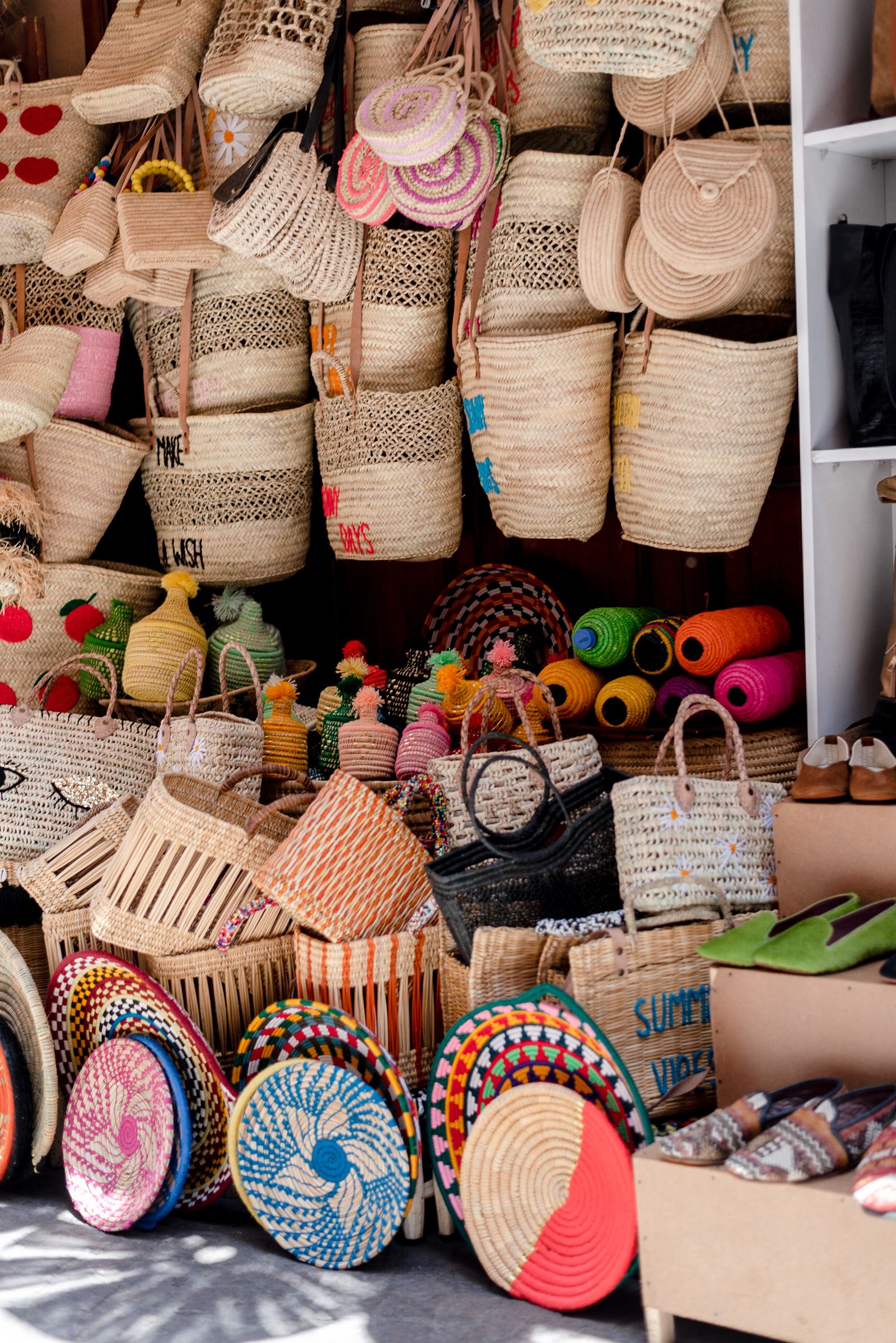
Marrakech is the Morocco that Instagram built its reputation on — the pink medina walls, the Jemaa el-Fna square filling with storytellers and food stalls at dusk, the souks piled high with leather and spices. The Stade de Marrakech is being expanded significantly for 2030, and the city will see some of the most atmospheric match days of the tournament.
One major thing to plan around: Marrakech in summer is very hot, regularly hitting 38–40°C in June and July. Afternoon matches will be intense. Plan for early mornings in the souks and late evenings in the Djemaa el-Fna. The heat is manageable with riads (traditional houses with internal courtyards), good sunscreen and a fan or air conditioning.
- Getting there: Menara airport (RAK) — excellent connections from UK, France, Spain, Germany, Italy, Netherlands
- Getting to other cities: Casablanca 3h by train, Agadir 2.5h by coach/car, no direct train to Fes (change at Casablanca)
- Where to stay: Inside the medina for atmosphere (riads), Guéliz neighbourhood for modern convenience
- Don't miss: Jemaa el-Fna at night, Majorelle Garden, Bahia Palace, the tanneries in the medina
Rabat — The Capital That Gets Overlooked
Rabat
The most underrated host city — relaxed pace, world-class historic sites, affordable
Rabat is Morocco's capital and one of the four Imperial Cities. It's quieter and more low-key than Casablanca or Marrakech — the population is well-educated and used to foreign visitors — and it has UNESCO World Heritage status for its ancient medina and historic sites. The Stade de Rabat has been built specifically for 2030, sitting on the outskirts of the city.
The big advantage of Rabat for World Cup visitors: it's 45 minutes by fast train from Casablanca, so you can easily stay in Casablanca and hop across for a match (or vice versa). It's also the coastal city most likely to have decent temperatures in summer, with Atlantic breezes keeping things a degree or two cooler.
- Getting there: Rabat–Salé airport (RBA) has limited international connections — most arrive via Casablanca then train
- Getting to other cities: Casablanca 45 min by train, Fes 3h by train, Tangier 2h by train
- Where to stay: The Agdal neighbourhood, or within walking distance of the medina
- Don't miss: Kasbah des Oudaias, Muhammad V Mausoleum, the Chellah ruins, the medina
Fes — The Soul of Morocco
Fes
The most atmospheric host city — medieval medina, ancient craft traditions, deeply authentic
Fes el-Bali — the old city — is the largest medieval medina in the world. 9,000 streets, almost none of which you will navigate correctly on your first attempt. That's the point. Getting lost in Fes is the experience. It's the least touristy of the host cities in its DNA, the most authentically Moroccan, and arguably the most rewarding for visitors who want to go deeper than Instagram.
Fes has the lowest prices of any host city. Riads in the medina are excellent value. The city is on the main train line from Casablanca, which means it's accessible but not overwhelmed. If the choice is between Fes and another city and you're genuinely interested in Moroccan culture and history, choose Fes.
- Getting there: Fes–Saïss airport (FEZ) — connections from Paris, Brussels, Amsterdam, Dubai; most Europeans fly via Casablanca
- Getting to other cities: Casablanca 3h45 by train, Rabat 3h, Tangier 5h; no direct train to Marrakech
- Where to stay: Inside the medina in a riad — it's worth the navigational chaos
- Don't miss: Chouara tanneries, Madrasa Bou Inania, day trip to the Roman ruins at Volubilis
Tangier — Gateway to Europe
Tangier
The most cosmopolitan — just 35 minutes by ferry from Spain, with a bohemian artistic legacy
Tangier sits at the northern tip of Africa, looking across the Strait of Gibraltar to Spain. For fans coming from Andalucía, the fastest route to Morocco is the Algeciras–Tangier ferry (35 minutes). For fans already in Morocco, Tangier is the most European-feeling city — broad boulevards, seafood restaurants, a Kasbah with Atlantic views — with a distinguished literary history (William S. Burroughs, Paul Bowles and the Beat writers lived here for years).
Stade Ibn Battouta was recently renovated and will host several group stage matches. Summer temperatures in Tangier are notably cooler than further south, rarely exceeding 30°C. If you're doing a Spain–Portugal–Morocco multi-country trip, Tangier is the natural entry point.
- Getting there: Tangier Ibn Battouta airport (TNG) — connections from Paris, Brussels, Amsterdam; Algeciras ferry 35 min from Spain
- Getting to other cities: Casablanca 3h45 by TGV high-speed train, Rabat 2h by train
- Where to stay: The Grand Socco area near the medina, or seafront hotels on the Corniche
- Don't miss: Cap Spartel (where Atlantic meets Mediterranean), Café Hafa, the Kasbah Museum
Agadir — The Beach Base
Agadir
The most resort-like host city — ideal for families and fans who want to combine football with beach time
Agadir was rebuilt after a devastating 1960 earthquake and has a very different feel from other Moroccan cities — wide modern streets, beach promenades, resort hotels. It's the least "traditionally Moroccan" host city but probably the easiest for families and visitors who want a gentler introduction to the country. The Atlantic beaches are excellent.
The main disadvantage is isolation. Agadir isn't on the train network. Getting to Casablanca requires either a 6-hour coach journey or a 75-minute flight. If you're based in Agadir, budget extra time and money for inter-city travel.
- Getting there: Agadir Al Massira airport (AGA) — connections from UK, France, Germany, Netherlands; Ryanair, Easyjet, Transavia routes
- Getting to other cities: No train link; Casablanca 6h by coach or 75 min by flight; Marrakech 2.5h by road
- Where to stay: The beach promenade area; resort hotels include international chains
- Don't miss: Agadir beach, Souss-Massa National Park, day trip to the walled city of Taroudant (80km)
How to Choose
Here's the honest guide to choosing your base:
- You want maximum football and don't care about sightseeing → Casablanca. Most matches, best transport, biggest stadium.
- You want the full Morocco experience and don't mind heat → Marrakech. Nothing else comes close for colour and atmosphere.
- You want to travel light and move between cities → Casablanca or Rabat. Both are on the main train spine.
- You're a history and culture person → Fes. One of the world's great medieval cities, genuinely cheap.
- You're coming from Spain by ferry → Tangier. Don't fight it — it's the natural first stop.
- You're bringing family, or want beach time → Agadir. Easiest, most familiar, best beaches.
- You have 10 days or more → Consider two or three cities. Morocco's train network makes it viable.
Moving Between Cities: Journey Times
| From → To | Best Method | Journey Time | Approx. Cost |
|---|---|---|---|
| Casablanca → Rabat | Train (Al Boraq or Intercity) | 45 min | €4–8 |
| Casablanca → Tangier | TGV high-speed train | 3h 45 min | €20–35 |
| Casablanca → Fes | Train (Intercity) | 3h 45 min | €14–22 |
| Casablanca → Marrakech | Train (Intercity) | 3h | €12–18 |
| Casablanca → Agadir | Flight or coach | 75 min / 6h | €40–90 / €12–18 |
| Marrakech → Fes | Train via Casablanca | ~7h | €22–30 |
| Tangier → Spain (Algeciras) | Ferry (FRS / Baleàlia) | 35 min | €30–50 |
Prices are estimates for 2026 — tournament-time prices in 2030 may be higher. Book trains in advance via oncf.ma.
Frequently Asked Questions
Which city will host the final?
This hasn't been officially confirmed by FIFA yet. The most likely venue is the Grand Stade Hassan II in Casablanca, given its 115,000-seat capacity — which would make it the largest final in World Cup history.
Can I visit multiple host cities during the tournament?
Absolutely. Morocco's train network makes it very practical. Casablanca–Rabat–Fes–Tangier are all connected by fast intercity trains. Marrakech is 3 hours from Casablanca by train. Only Agadir requires flying or a long coach journey.
Which city is cheapest to base myself?
Fes is consistently the cheapest for accommodation, food and activities. Rabat is good value too. Casablanca and Marrakech have the widest range — from budget guesthouses to five-star riads — but average prices are higher.
Where should I stay if I want to see as many matches as possible?
Casablanca. The Grand Stade will host the most games including (likely) the final. It's also the hub for the train network, so match days in Rabat, Fes or Tangier are all feasible as day trips.
Know the moment FIFA opens ticket sales
Morocco 2030 tickets will sell out fast. We'll alert you the second official sales open.
No spam. Unsubscribe any time.
Related guides: Where to Stay for Morocco 2030 | What to Do Between Matches | Complete Fan Guide | Back to Morocco 2030 Hub