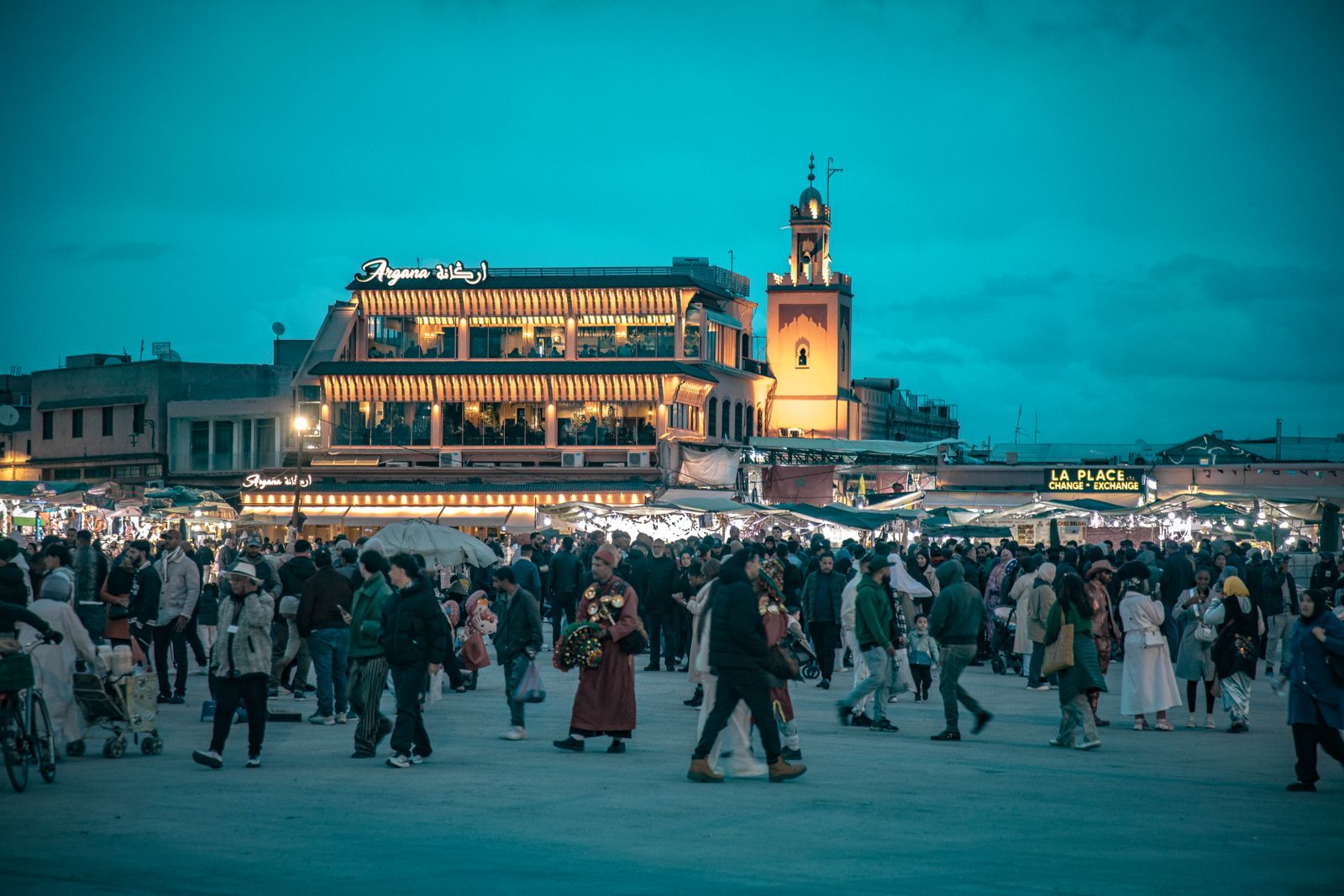
Morocco 2030 is a once-in-a-generation trip for football fans. The country is extraordinary — medinas, desert, mountains, coast — and the tournament gives you an excuse to see all of it. This guide covers everything a first-time visitor to Morocco needs to know: visas, getting around, safety, culture, money, and how to make the most of the time between matches.
Do I Need a Visa?
Morocco operates one of the most generous visa regimes in Africa. Citizens of the following countries do not need a visa for stays under 90 days:
- All EU countries and Schengen Area
- United Kingdom
- United States and Canada
- Australia and New Zealand
- Most Latin American countries
- Japan, South Korea, UAE, Saudi Arabia
You arrive, present your passport at the border, get a stamp. That is it. No pre-application, no online form, no fee. Check the full visa requirements page if your country is not listed above — some nationalities will need to apply in advance.
Getting to Morocco
Morocco has three main international entry points for World Cup fans:
- Casablanca Mohammed V (CMN) — the main hub, connected to most European and international cities. Hosting the biggest venue, this is where most fans will land.
- Marrakech Menara (RAK) — heavily served from Europe, especially UK, France, Germany, and Spain. Dozens of direct budget airline routes.
- Tangier Ibn Battouta (TNG) — ideal for fans arriving from Spain who want to cross by ferry (Algeciras–Tangier is 35 minutes).
Agadir, Fes, and Rabat also have international airports with European connections, though fewer routes. For fans attending matches across multiple cities, flying into Casablanca and travelling by train gives the most flexibility.
Getting Between Host Cities
This is where Morocco shines. The ONCF train network is excellent, affordable, and comfortable:
- Casablanca → Tangier — Al Boraq high-speed: 2h 10min, ~$15
- Casablanca → Rabat — 45 minutes, ~$5
- Casablanca → Fes — 3h, ~$18
- Casablanca → Marrakech — 3h 15min, ~$20
- Agadir — no train link; CTM bus from Marrakech is 3h, ~$10
For match days, expect trains to be packed. Book seats in advance through the ONCF app or website — do not rely on turning up at the station on the day of a high-profile match.
Full getting around Morocco guide →
Safety
Morocco is a safe country for tourists. Violent crime targeting visitors is extremely rare. The main issues to be aware of:
- Hustlers in medinas — in Marrakech and Fes especially, persistent touts will offer to guide you and lead you to shops. Say no firmly and keep walking. They are annoying, not dangerous.
- Taxi overcharging — always agree a price before getting in a petit taxi, or insist on the meter. Shared grands taxis have fixed rates.
- Petty theft — as in any major city with crowds. Keep valuables in a front pocket or money belt at the stadium and in busy medina squares.
The World Cup period will see a significant increase in policing and tourism infrastructure at all host cities. Morocco hosted AFCON 2025 with zero major incidents. The country has a strong track record with major football events.
Culture: What to Know Before You Arrive
Morocco is a Muslim country
Ramadan aside (which is not in summer 2030), this mostly means: dress modestly outside tourist areas and beaches, no public displays of affection, and alcohol is available but not universal. Licensed restaurants, hotel bars, and some supermarkets sell alcohol. Do not expect a beer in a medina cafe — you won't find one.
Greetings matter
Moroccans are warm and formal in initial greetings. A handshake, "Salam alaikum" (peace be upon you), and a moment of eye contact goes a long way. Diving straight into a transaction without greeting first is considered rude.
Bargaining is normal
In souks, the first price is never the real price. Counter at roughly 40–50% and meet somewhere in the middle. In restaurants and taxis, prices are generally fixed (always confirm for taxis).
Friday is the holy day
Government offices and some shops close on Friday afternoons. Mosques are busiest at Friday noon prayer — give way to worshippers and don't block entrances for photos.
Money
The currency is the Moroccan Dirham (MAD). As of 2026, the exchange rate is approximately 10 MAD = 1 USD / 11 MAD = 1 EUR / 13 MAD = 1 GBP. During the World Cup period, street exchange rates at tourist spots will be worse — use bank ATMs for the best rates.
- ATMs are widely available in all host cities
- Most hotels and large restaurants accept card
- Souks and street food are cash only
- Keep small bills: change is often an issue for large notes
The SIM Card Question
Get a local SIM at the airport. Maroc Telecom and Orange Morocco both sell tourist SIMs with generous data packages for under $10. This is far cheaper than international roaming and gives you maps, translation apps, and ride-hailing access throughout your trip.
What to Eat
Moroccan food is extraordinary and extremely affordable. Do not eat at tourist restaurants facing major squares — the food is worse and the price is triple. Instead:
- Tagine — slow-cooked lamb or chicken with preserved lemon and olives. The definitive Moroccan dish. Order it at a local restaurant away from the main tourist drag for 40–70 MAD ($4–7).
- Harira — tomato, lentil, and lamb soup. A bowl costs 10–15 MAD from street stalls.
- Merguez sandwich — spiced lamb sausage in bread with harissa. Street food staple, 15–25 MAD.
- Pastilla — flaky pastry filled with pigeon or chicken, almonds, and cinnamon. Sounds bizarre, tastes extraordinary.
- Fresh orange juice — squeezed to order everywhere, 5–8 MAD a glass.
Fan FAQs
Can I drink alcohol in Morocco?
Yes, in licensed venues. Most hotels have bars; many restaurants are licensed. Alcohol is not available in medina cafes or non-licensed restaurants. Stock up at a licensed supermarket (Carrefour, Marjane) if you want drinks in your accommodation.
Is Morocco LGBTQ+ safe?
Same-sex relationships are illegal under Moroccan law. Public displays of affection between same-sex couples are not advisable. That said, foreign tourists are rarely targeted. Exercise the same discretion you would in any conservative country.
What language do people speak?
Arabic (Darija dialect) and Tamazight are the national languages. French is widely spoken in cities and is the second language of business. English is common in tourist areas. Spanish is useful in Tangier and the north.
How hot is Morocco in summer 2030?
The World Cup will be in June–July 2030. Marrakech averages 38°C in July — seriously hot. Casablanca and Rabat are coastal and more moderate (26–30°C). Agadir benefits from Atlantic breezes. Tangier is the coolest of the host cities in summer. Pack light, drink water constantly, and use the midday break to rest or explore cooled riads.
Is the tap water safe to drink?
In host cities, tap water is technically treated but most visitors and locals drink bottled water. 1.5 litre bottles cost 5–8 MAD everywhere. Carry a refillable bottle to fill from your hotel's filtered water if they provide it.
Related Articles
- Morocco World Cup 2030 Stadiums Guide →
- Where to Stay for Morocco World Cup 2030 →
- How Much Will Morocco World Cup 2030 Cost? →
- Morocco World Cup 2030 Tickets Guide →
- 32 Essential Morocco Travel Tips →
Morocco Unveiled Travel Bible
218 pages — every host city covered in full: Casablanca, Marrakech, Fes, Rabat, Tangier, Agadir — with neighbourhood guides, riad picks, and restaurant lists tourists don't find on their own.
Get the Guide →